Reduced Energy Consumption Thanks to Slow Metabolism
Variety of Food Sources: Plants, Insects, and Feces
A land turtle that survived for more than 10 years was discovered beneath the floor of a house in Brazil.
On January 17 (local time), CNN Brazil reported that a turtle was found during a home remodeling project in Itacaj?, Tocantins State, while workers were removing floor tiles. The family explained that the floor had been installed 13 years ago and was completely sealed, with no gaps or holes. It is believed that the turtle either fell under the floor during the original construction or became trapped while moving around at that time.
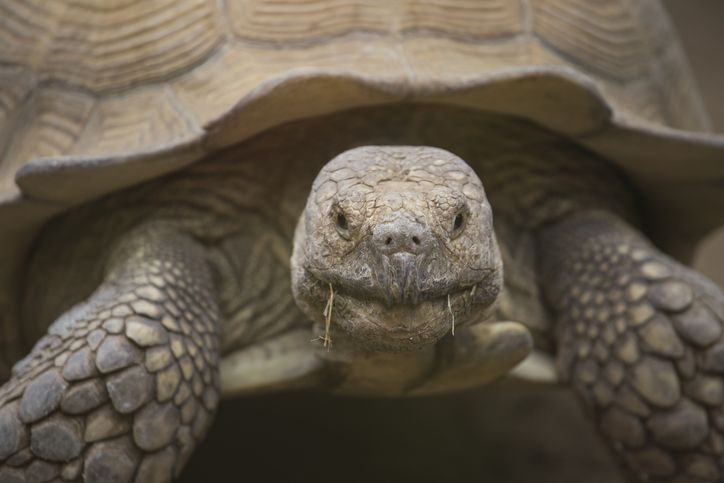
When rescued, the turtle exhibited an extreme aversion to light, and its shell was found to be deformed. After the rescue, it reportedly consumed food rapidly, as if it were starving.
Environmental educator Mateus Silva Mesquita explained, "The turtle's slow metabolism is key to its long-term survival," adding, "In a dark and humid environment, turtles can enter a state of metabolic suppression similar to hibernation, which greatly reduces energy consumption." He also analyzed that the turtle's ability to consume a variety of food sources-including plants, insects, and feces-likely contributed to its prolonged survival.
As cold-blooded animals, turtles rely on external conditions to regulate their body temperature, resulting in a much lower basal metabolic rate than mammals. This means they use less energy and can survive for extended periods without eating.
According to veterinary sources, some turtles can reduce their metabolism by up to 70% by using stored fat, and certain species have been documented surviving for several months without food. For example, studies have shown that red-eared sliders can last 8 to 12 weeks, box turtles up to 90 days, and some herbivorous turtles in hibernation can endure for more than 160 days.
Experts believe these characteristics are also linked to the turtle's longevity. A low metabolic rate reduces cellular damage, enabling them to live for several decades or more. This case is considered a representative example demonstrating the advantages of turtles in this regard.
© The Asia Business Daily(www.asiae.co.kr). All rights reserved.

















