Matsuya Asakusa Sales Down 20%
Sharp Drop in Lunar New Year Tourism Amid China-Japan Tensions
Inbound Sector Faces Crisis as Travel Restrictions Prolonged
The Chinese government's advisory for its citizens to refrain from traveling to Japan is dealing a direct blow to Japan's retail and tourism industries. In particular, the decline in performance is especially pronounced among Japanese department stores, which have been highly dependent on Chinese tourists.
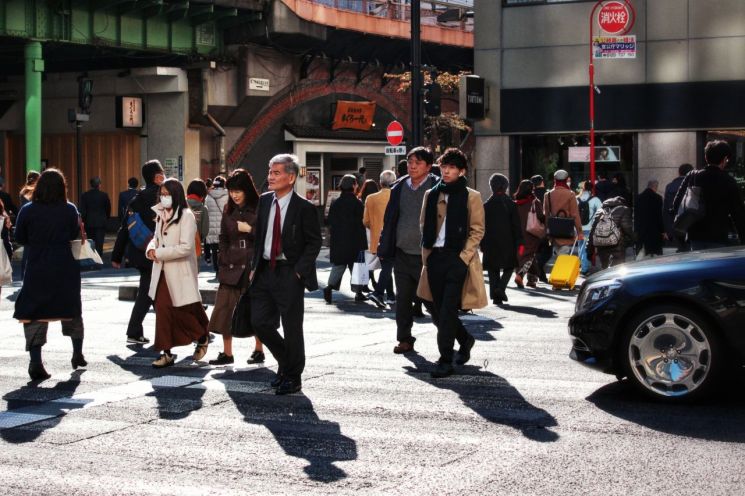 The Chinese government has advised its citizens to refrain from traveling to Japan, dealing a direct blow to Japan's retail and tourism industries. (Photo for illustrative purposes only and unrelated to the article content). Pixabay
According to a report by Nikkei on January 17, the area around Sensoji, a major tourist attraction in Tokyo, has seen a noticeable drop in Chinese tourist visits since the Chinese government began to strongly discourage travel to Japan in November of last year. Typically, the period from December to February is bustling with Chinese tourists around the Lunar New Year, but this year the scene is markedly different from previous years.
As the number of Chinese tourists-classified as high-spending consumers-has plummeted, major Japanese department stores have been unable to avoid a decline in sales. As of December 2025, sales at Daimaru's Osaka Shinsaibashi, Umeda, and Kyoto branches, operated by J. Front Retailing, dropped by about 6 to 8 percent compared to the same month the previous year. At Matsuya, sales at the Ginza flagship store saw a double-digit percentage decrease, while the Asakusa branch experienced a decline of nearly 20 percent. Takashimaya also reported a significant contraction in sales to Chinese customers.
The industry expects this negative trend to continue for the time being. Keiichi Ono, President of J. Front Retailing, stated, "We cannot rule out the possibility that China's travel advisory will be prolonged." In fact, as reductions in flights from China persist, each department store has drastically lowered its performance outlook for the period from December 2025 to February 2026. J. Front Retailing expects its operating profit for that period to fall by more than half year-over-year, while Matsuya forecasts a decline of over 80 percent.
Chinese tourists have been a key driver of inbound consumption in Japan. As of 2024, spending by Chinese visitors to Japan amounted to approximately 1.7 trillion yen, accounting for more than one-fifth of all foreign tourist spending. The impact is particularly severe for department stores, as Chinese tourists tend to purchase high-end products such as luxury cosmetics, watches, and jewelry, making the hit to this retail channel greater than others.
Diplomatic tensions are at the root of these changes. After Prime Minister Sanae Takaichi hinted at the possibility of Japan's involvement in the event of a Taiwan contingency in November of last year, the Chinese government has intensified its advisory against visiting or studying in Japan. As a result, Chinese airlines have suspended or reduced flights to Japan.
Meanwhile, South Korea, along with Vietnam and Thailand, is emerging as an alternative travel destination to Japan and is said to be benefiting as a result. Experts believe that if diplomatic tensions persist, the tourism landscape in East Asia could undergo structural changes.
© The Asia Business Daily(www.asiae.co.kr). All rights reserved.
![Clutching a Stolen Dior Bag, Saying "I Hate Being Poor but Real"... The Grotesque Con of a "Human Knockoff" [Slate]](https://cwcontent.asiae.co.kr/asiaresize/183/2026021902243444107_1771435474.jpg)











