Growth Expectations Are High for AI, but Talent and Technology Foundations Are Weak
The big data and artificial intelligence (AI) startup ecosystem in Korea currently scores an average of 5.0 out of 10, and is expected to reach only 5.6 in three years.
While there are expectations for market expansion and the growth of leading companies, experts commonly diagnose that the role of universities and government-funded research institutes as technology suppliers is weakening, and concerns are growing about the outflow of top talent amid the global AI talent war.
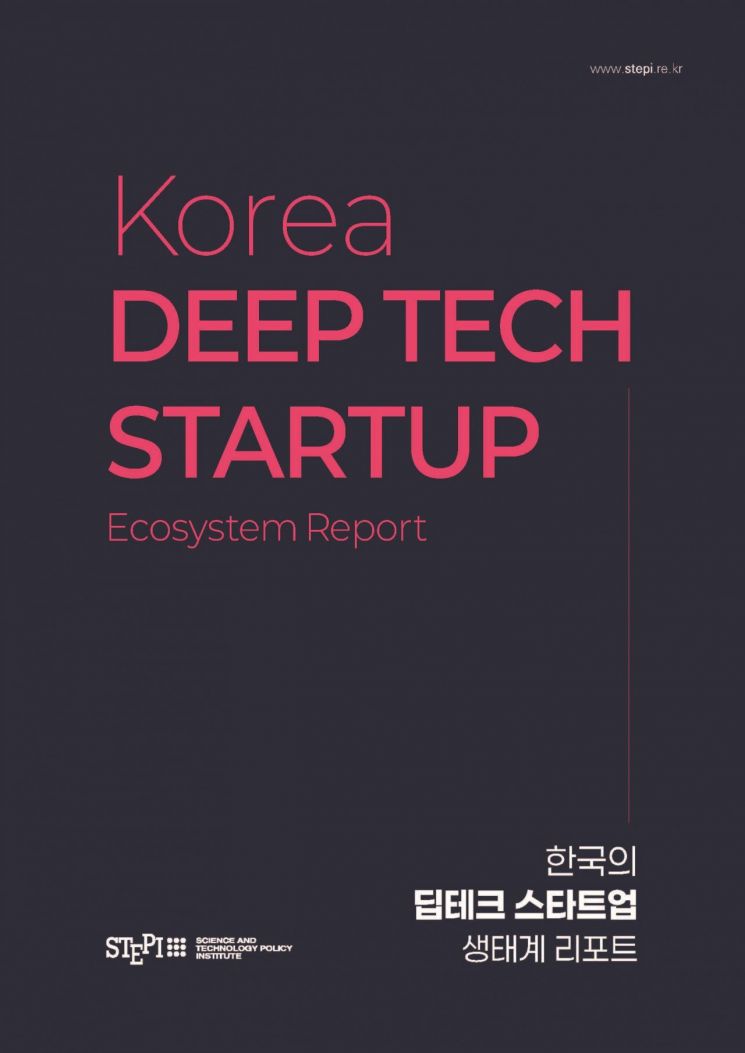
The Science and Technology Policy Institute (STEPI) published the "Korea Deep Tech Startup Ecosystem Report" on January 16, stating that a structural advancement of the support ecosystem for deep tech startups is necessary to strengthen national innovation competitiveness.
This report analyzes the startup ecosystem across Korea’s ten major deep tech sectors-system semiconductors, bio-health, future mobility, eco-friendly energy, robotics, big data and AI, cybersecurity, aerospace, next-generation nuclear power, and quantum technology-dividing it into six main categories and 17 sub-elements: companies and market, business model and competitive landscape, technology and talent, investment and finance, policy and regulation, and support infrastructure. Key indicators for each sector are presented in infographics, allowing for a clear comparison of ecosystem levels and challenges at a glance.
Growth Expectations Are High, but Talent and Technology Foundations Remain Stagnant
According to the report, big data and AI is the fastest-growing area among Korea’s deep tech sectors, with 2,028 startups. The market size is projected to expand to 4.463 trillion won by 2027.
However, patent competitiveness remains at only 50-80% of the level seen in the United States, and expert evaluations currently stand at 5.0, with the three-year outlook at 5.6, indicating only limited improvement. Structural limitations identified include paradigm shifts in development due to the spread of foundation models, the need to secure cloud sovereignty, and a shortage of advanced AI talent.
The system semiconductor sector, considered a core foundational technology in the AI era, also revealed vulnerabilities in its ecosystem. There are 252 system semiconductor startups in Korea, with investment concentrated around a few leading companies such as Rebellions, FuriosaAI, and Sapeon Semiconductor. Experts rated the current ecosystem at 4.6, expecting improvement to 5.8 in three years. However, challenges cited include the burden of prototype demonstration costs, lack of connections with client companies, and underdeveloped software platforms and developer ecosystems.
Demonstration, Investment, and Regulation: Structural Bottlenecks Hindering Deep Tech
The eco-friendly energy sector was analyzed as having high growth potential but facing significant regulatory barriers. There are 534 startups in this sector, with investment totaling 278.6 billion won as of 2024. However, for 60 out of the world’s top 100 climate tech startups, it is difficult or impossible to conduct business in Korea due to domestic regulations. Expert evaluations currently rate the sector at 4.4, but it is expected to improve to 6.4 in three years.
STEPI identified the following as common challenges for deep tech startups: a shortage of advanced talent, difficulties in large-scale demonstration and early market creation, a lack of private capital willing to make long-term investments, and regulations that cannot keep pace with technological change. The institute suggests that policies on talent, demonstration, investment, and regulation should be differentiated according to the characteristics and technological maturity of each sector.
Yoon Jiwoong, President of STEPI, stated, "Deep tech involves high technological complexity and takes a long time to commercialize, but it is a strategic technology directly linked to national innovation competitiveness. Long-term and focused support from a perspective different from general startups is needed, and we hope that this report will serve as a foundation for developing customized support strategies for each sector."
© The Asia Business Daily(www.asiae.co.kr). All rights reserved.
![Clutching a Stolen Dior Bag, Saying "I Hate Being Poor but Real"... The Grotesque Con of a "Human Knockoff" [Slate]](https://cwcontent.asiae.co.kr/asiaresize/183/2026021902243444107_1771435474.jpg)
















