A total of 410,000 illegal or substandard winter household products that did not meet safety standards have been detected by customs authorities.
The Korea Customs Service announced on January 16 that it had achieved these results through a special crackdown conducted over six weeks starting from November 11 of last year.
The special crackdown was carried out to examine compliance with safety standards in three categories: ▲items with surging demand in winter, ▲food products purchased directly from overseas, and ▲goods infringing intellectual property rights.
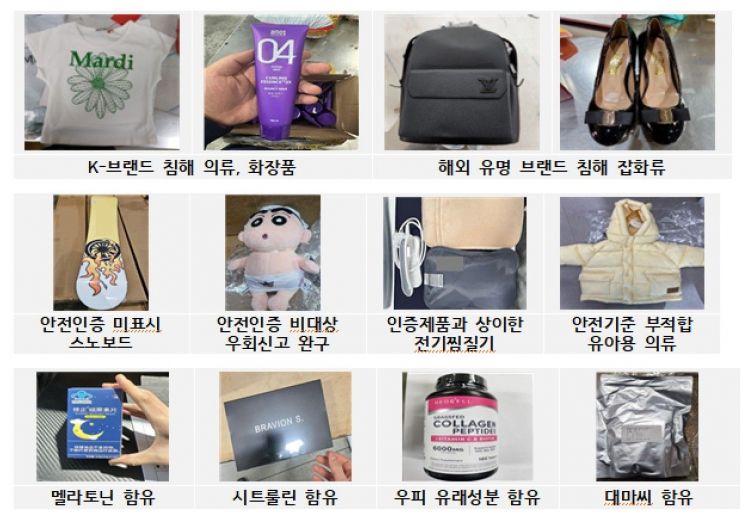
In the crackdown on four product groups with rising winter demand, such as heating and thermal products and winter sports equipment, the focus was on products lacking safety certification or bearing false certifications. Through this process, the Korea Customs Service detected 410,000 products that did not meet domestic safety standards.
The majority of the detected products were heating packs, lighting fixtures, and lighting fixture components, all of which could directly cause hazards such as fire or burns. In particular, component analysis of imported products detected during the crackdown revealed that 742 pieces of infant padding contained heavy metals (lead) at levels 1.2 times higher than the permissible standard.
The special crackdown also targeted food products brought in via express delivery and international mail during the U.S. Black Friday and China's Singles' Day shopping events.
The crackdown uncovered 90,000 food items that either contained ingredients banned for import into Korea or had unclear product names and ingredients, posing potential health risks to consumers.
Many of the detected products were found to contain melatonin (a sleep aid), bovine-derived ingredients (such as collagen for skin and joint health), and citrulline (which enhances athletic performance)-all substances designated by the Ministry of Food and Drug Safety as prohibited for import into Korea.
In addition, the Korea Customs Service strengthened crackdowns on goods suspected of infringing K-brands and counterfeit products, such as chargers and portable batteries. As a result, 74,830 counterfeit items-including cosmetics, chargers, and footwear-were detected.
The Korea Customs Service noted that, unlike in the past when most counterfeit goods were luxury brand bags and sneakers, there is now a trend of counterfeit cosmetics disguised as domestic brands with unknown ingredients being sold on overseas direct purchase platforms, driven by the global boom in K-beauty.
Lee Myunggu, Commissioner of the Korea Customs Service, stated, "As the agency responsible for protecting our borders, the Korea Customs Service will make every effort to eradicate transnational crimes that threaten the daily lives and safety of our citizens. We will continue to focus on intensive safety crackdowns on imported products used in everyday life, in order to prevent consumer harm and ensure the safety and health of the public."
© The Asia Business Daily(www.asiae.co.kr). All rights reserved.

















