Flagship Models Symbolizing the Shift to SDV
Achieved Fourth Place in the Imported Car Market Last Year
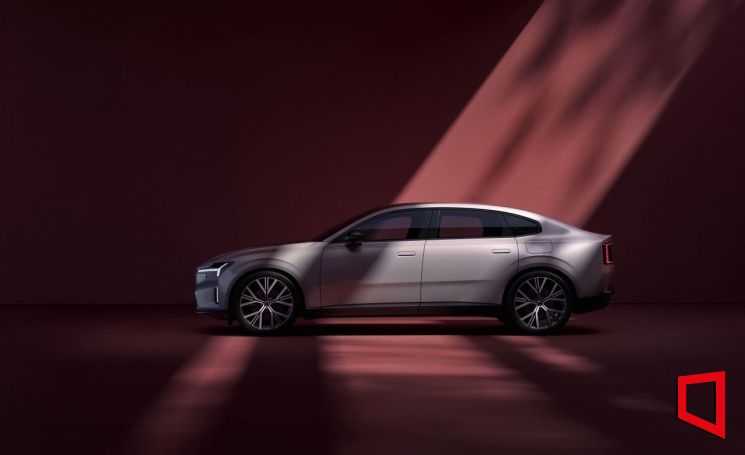
Volvo Cars Korea announced on January 15 that it will launch its electric flagship lineup, the EX90 and ES90, in the first and second halves of this year, respectively.
These two vehicles symbolize the transition to Software-Defined Vehicles (SDV). Built on a proprietary core computing architecture and an integrated software system, they are designed to continuously update performance, safety technologies, connectivity, and the overall driving experience.
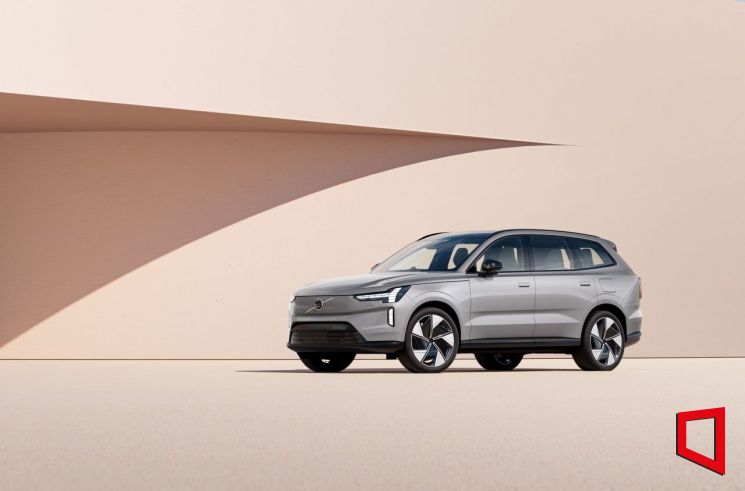
In particular, Volvo highlighted its collaboration with global IT companies such as Nvidia, Qualcomm Technologies, and Google, which enables the vehicles to learn new data and support over-the-air (OTA) updates, creating a new automotive experience described as a "smartphone on wheels." Based on Scandinavian design philosophy, the vehicles offer an intuitive user experience and spatial design that simplifies the complexity of life, setting a new standard for premium vehicles.
Volvo will build a portfolio encompassing both electric and hybrid vehicles by introducing the electric flagships EX90 and ES90 alongside its existing hybrid lineup, including the XC90 and S90.
Last year, Volvo sold a total of 14,903 units, maintaining its position as the fourth-largest brand in the imported car market. By model, the XC60 led the way as the best-selling model with 5,952 units, followed by the XC40 (2,849 units), S90 (1,859 units), XC90 (1,820 units), and EX30 (1,228 units).
Lee Yoonmo, CEO of Volvo Cars Korea, stated, "This achievement reflects customers' recognition of Volvo's safety philosophy and our ongoing efforts for the Korean market. We will continue to innovate not only by expanding our lineup but also by enhancing every stage of vehicle ownership, so customers can experience the value of Swedish luxury more deeply through differentiated customer experiences."
Meanwhile, Volvo plans to expand support for Naver's in-car browser "Whale" to models from 2022 to 2025 free of charge within the first quarter. In addition, the company aims to further advance its global Wi-Fi infrastructure, allowing vehicle status checks not only at service center work bays but also while parked, thereby establishing a next-generation service environment that enables not only routine maintenance but also diagnostics, software downloads, and updates.
© The Asia Business Daily(www.asiae.co.kr). All rights reserved.
![Clutching a Stolen Dior Bag, Saying "I Hate Being Poor but Real"... The Grotesque Con of a "Human Knockoff" [Slate]](https://cwcontent.asiae.co.kr/asiaresize/183/2026021902243444107_1771435474.jpg)












