Somyeon Noodles and Even Hotteok Used Instead of Kadaif
"Misleading Consumers in Advertising Can Lead to Penalties"
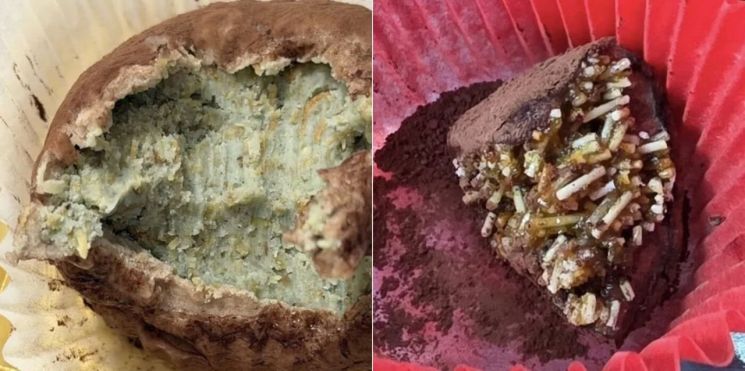
As the craze for Dubai chewy cookies (Dujjonku) continues, there have been numerous cases of manufacturers using substitute ingredients without proper disclosure, driven by rising raw material costs and the dessert's growing popularity.
Recently, a post titled "Dujjonku Scam Listings Are Starting to Appear" gained attention on online communities. The post featured photos of various so-called "Dujjonku" products, along with a series of consumer complaints.
One consumer commented on a product sold as "Hotteok Dujjonku," saying, "The outside was chewy and the taste was good, but it seemed as if a hotteok mix was used instead of kadaif. Considering the price of 9,500 won per piece, it's hard to accept."
"Not the Texture of Kadaif"... Allegations of 'Somyeon Noodle' Usage Raised
One consumer posted a photo of a cross-section of Dujjonku ordered from a particular store, with the title, "Why did they put somyeon noodles in a Dujjonku that costs 9,500 won?" The post was shared via social networking services and surpassed 1.06 million views in just one day.
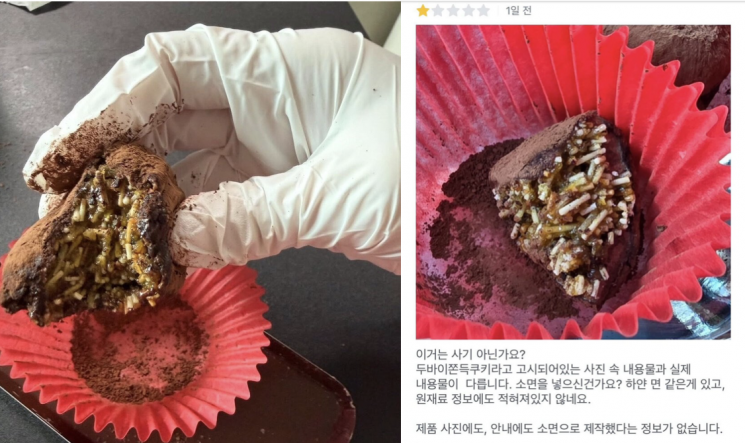 The appearance of Dubai chewy cookies, presumed to be made with somyeon noodles, which are currently controversial online. X
The product this consumer received looked significantly different from typical Dubai chewy cookies. The author claimed, based on the photo, "Instead of kadaif, there was an ingredient that looked like somyeon noodles." He added, "There was no mention of somyeon in either the product description or the list of ingredients. Just by looking at the appearance, it was clearly somyeon, not kadaif."
Complaints were raised not only about the appearance but also about the texture. The author explained, "It didn't have the signature crispy texture of kadaif; instead, it felt hard and rough." However, he did not request a refund and instead left a review stating that "the contents of the cookie received looked different from those shown in the posted photo."
"Misleading Consumers Can Lead to Punishment... Lawyer Issues Warning"
Although high prices themselves are not illegal, experts have warned that advertisements that mislead consumers could be subject to penalties.
According to the Chosun Ilbo on January 9, attorney Lee Donho pointed out on his social networking service, "Selling at a high price is not illegal, but advertising that misleads consumers can be punishable."
He explained, "If you advertise, for example, '100% premium pistachios from Dubai used' and sell the product for 12,000 won, but in reality use low-cost paste, it's not just a pricing issue. It is an act of deceiving consumers and could constitute a violation of the country-of-origin labeling law."
Regarding the price controversy, he said, "Punishment is only possible if there is price collusion among sellers or if a specific company monopolizes the market and controls prices. Simply raising the price is not grounds for punishment." He also added, "Dujjonku is not a staple good subject to price regulation like rice or water, but a preference-based food. The increased cost of pistachio spread, the shortage of kadaif, and rising labor costs are being reflected in the final price."
Dubai chewy cookies are a dessert created in Korea, inspired by the "Dubai chocolate" trend that became popular in 2024. The dessert is made by combining kadaif (a thin Middle Eastern noodle) and pistachio cream for the filling, then wrapping it in a cocoa-powdered marshmallow to form a round shape.
© The Asia Business Daily(www.asiae.co.kr). All rights reserved.


















