FSS: "Insurers Overemphasize Only Foreign Exchange Gains"
"Neglecting to Explain Risks of Exchange Rate and Interest Rate Fluctuations"
"Dollar-Denominated Insurance Is Not a Product for Currency Speculation"
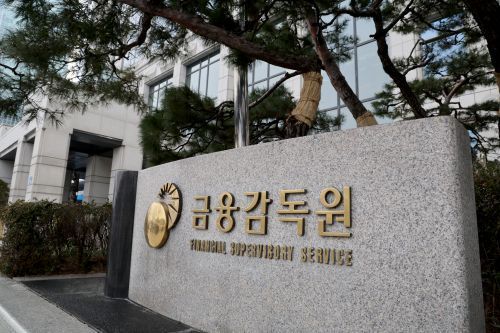
The Financial Supervisory Service announced on January 15 that it would issue a consumer alert (caution) to prevent consumer damage related to dollar-denominated insurance policies.
Dollar-denominated insurance is a high-risk product whose premiums and payouts fluctuate according to exchange rates and overseas bond interest rates. Recently, due to the high exchange rate and expectations of further increases, sales of dollar-denominated insurance have surged as consumers seek foreign exchange gains. In 2023, 11,977 such policies were sold, and in 2024, 40,594 were sold. From January to October last year alone, 95,421 policies were sold.
Recently, insurance companies have increasingly focused on emphasizing only the potential for foreign exchange gains when selling dollar-denominated insurance, while neglecting to properly explain the risks associated with exchange rate and interest rate fluctuations. As a result, the risk of mis-selling has grown.
Dollar-denominated insurance is structured so that premiums increase as the exchange rate rises, and payouts decrease as the exchange rate falls. If overseas interest rates decline, the accumulation rate for premiums also decreases, which can lead to a reduction in the payout amount.
Dollar-denominated insurance is not a financial product intended for foreign exchange speculation. Aside from the fact that both premium payments and insurance payouts are made in foreign currency, it is fundamentally similar to Korean won-denominated insurance products. Only the portion of the premium left after deducting costs for risk coverage, such as death benefits, and business expenses is accumulated, meaning the full amount of the premium is not invested. Therefore, it is not suitable as a product for foreign exchange gains.
When exchange rates fluctuate, the amount of premium to be paid may increase or the insurance payout may decrease, potentially resulting in consumer losses. Since both premiums and future payouts are in foreign currency, the value of premiums and insurance payouts in Korean won may vary depending on the exchange rate at the time of payment or payout.
If overseas market interest rates fall, insurance payouts and refund amounts may also decrease. Insurance products accumulate a portion of the premiums paid by consumers as reserves for future payouts. Depending on the structure of the interest rate applied to these reserves, products are categorized as either interest rate-linked or interest rate-fixed. Among dollar-denominated insurance products, interest rate-linked types determine the accumulation rate based on the interest rates of target overseas bonds. Therefore, if overseas market interest rates decline, the insurance payout may be lower than expected.
It is a long-term product that may result in principal loss if canceled mid-term. Dollar-denominated insurance is a long-term product (5 years, 10 years, or more) with a fixed payout date, and aside from canceling the contract, there is no way to actively respond to exchange rate fluctuations. If canceled mid-term, the refund amount may be less than the principal paid.
A Financial Supervisory Service official stated, "We will thoroughly monitor the possibility of consumer damage, such as mis-selling, due to the increase in sales of dollar-denominated insurance, and take all necessary measures to protect consumers." The official added, "For insurance companies where sales of dollar-denominated insurance are rapidly increasing, we will hold meetings with management to discuss consumer protection measures, and through on-site inspections, we will promptly and strictly sanction any illegal activities in the sales process of dollar-denominated insurance under a zero-tolerance policy."
© The Asia Business Daily(www.asiae.co.kr). All rights reserved.

















