A group based in Cambodia that committed no-show scams against hundreds of people by impersonating public institution employees has been indicted and will stand trial while in detention.
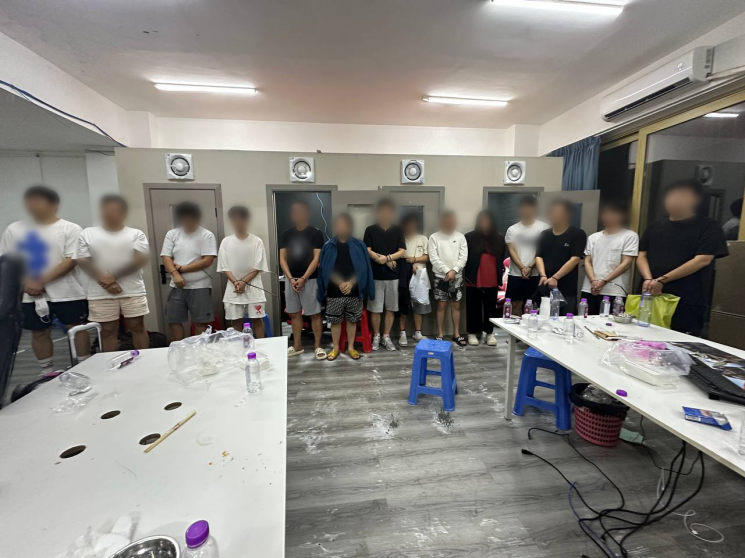 A member of the no-show scam voice phishing organization who was arrested and prosecuted by the Joint Investigation Unit of the Seoul Eastern District Prosecutors' Office Voice Phishing Crime Division. Seoul Eastern District Prosecutors' Office
On January 15, the Joint Investigation Unit of the Seoul Eastern District Prosecutors' Office Voice Phishing Crime Division announced that it had arrested and indicted 23 members of a voice phishing organization, including Korean general manager A (age 40), team leader B (age 34), and recruiter C (age 38), on charges of participating in a criminal organization and violating the Act on the Recovery of Damages for Communication Fraud, among other offenses.
According to prosecutors, from May to November of last year, the group operated out of Cambodia and used fake business cards and forged official documents related to purchase approvals to impersonate employees of hospitals, military bases, and other institutions. They targeted 215 business owners, such as restaurant operators, with no-show scams, stealing approximately 3.8 billion won (about 3.8 million USD).
The scam involved a first recruiter pretending to be a public institution employee, making restaurant reservations, and requesting proxy purchases of items such as wine. Then, a second recruiter would deceive the business owner by pretending to be a seller of those items, collecting the fraudulent payments. Each member had a specific role in the operation.
The organization had a clear hierarchy, including a ringleader, Korean general manager, team leader, and recruiters. Recruiters received a base salary plus performance incentives, such as 150 dollars for a loss of 20 million won and 200 dollars for a loss of 30 million won, with the fraudulent proceeds distributed and collected accordingly.
A prosecution official stated, "We will continue to conduct a thorough investigation into domestic participants, such as foreign ringleaders and recruiters." The official also warned, "Public institutions, including military bases, never request proxy purchases through specific companies. If you receive a call asking for a proxy purchase of goods, you should always assume it is a scam and be suspicious."
© The Asia Business Daily(www.asiae.co.kr). All rights reserved.
![A Woman Who Jumps Holding a Stolen Dior Bag... The Mind-Shaking, Bizarre Con of a "Human Knockoff" [Slate]](https://cwcontent.asiae.co.kr/asiaresize/183/2026021902243444107_1771435474.jpg)
















