Bank of Korea Releases "Financial Market Trends for December 2025"
Mortgage Loans Down 700 Billion Won from Previous Month; Household Loans Fall by 2.2 Trillion Won
Decline in Jeonse Demand and Stricter Year-End Loan Management by Banks Drive Decrea
In December of last year, bank mortgage loans decreased by 700 billion won, marking the first decline in outstanding balances since February 2023. This was due to a reduction in jeonse (long-term rental deposit) loans and the banks' strengthened management of total household loan volumes at the end of the year. The decline in mortgage loans, combined with a slowdown in domestic and international stock investments and year-end sales and write-offs of non-performing loans, led to the largest-ever decrease in household loans.

According to the "Financial Market Trends for December 2025" released by the Bank of Korea on the 13th, the outstanding balance of bank mortgage loans at the end of December last year was 935 trillion won, down by 700 billion won from the previous month. This marks a return to a declining trend for the first time in 34 months since February 2023, when the decrease was 300 billion won. On an annual basis, the outstanding balance increased by 32.4 trillion won last year.
The shift to a decrease in bank mortgage loans was mainly due to an 800 billion won reduction in jeonse loans, which are included in mortgage loans. Jeonse loans have been declining for four consecutive months since September last year. Park Mincheol, Head of the Market Operations Team at the Bank of Korea's Financial Markets Department, explained, "Banks have strengthened their own loan policies in response to government measures, and the overall volume of jeonse transactions has also decreased, further widening the decline." According to the Ministry of Land, Infrastructure and Transport, the number of apartment jeonse transactions nationwide in November was 33,000, down from 85,000 in the previous month.
The banks' continued management of total household loan volumes through the year-end also contributed to the decrease in mortgage loans. Park added, "With financial institutions tightening their total loan volume targets at the end of the year, the growth in mortgage loans for living expenses was particularly reduced."
With the decrease in mortgage loan balances, total household loans, which include mortgages, also dropped by 2.2 trillion won to 1,173.6 trillion won. This is the largest decrease on record. Park commented, "Typically, the scale of increase in December is reduced due to year-end sales and write-offs, but this time, the banks' strengthened total volume management further amplified the decline."
Other loans also turned to a decrease for the first time in three months, falling by 1.5 trillion won from the previous month, due to factors such as a slowdown in domestic and overseas stock investments and year-end sales and write-offs of non-performing loans. Other loans include general credit loans, credit line loans (overdraft accounts), commercial real estate collateral loans, deposit and savings collateral loans, and mortgage loans.
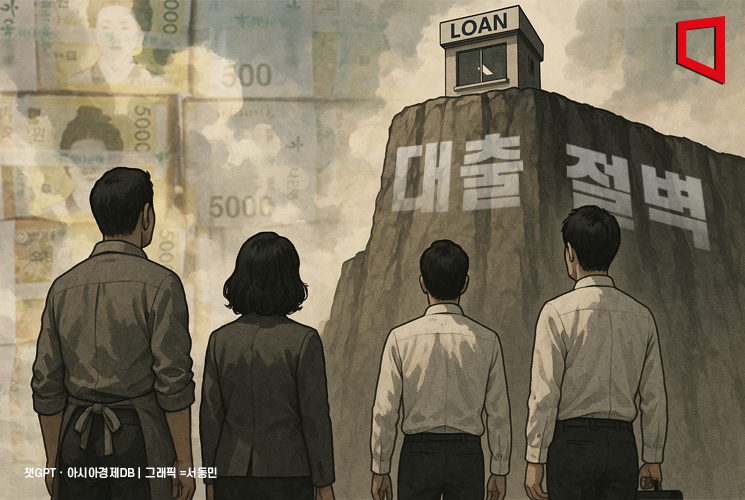
There is a possibility that mortgage loans may increase again in the new year as banks resume lending. Park stated, "Even after the October 15 measures, the housing market has not fully stabilized, and with moving demand for the new school year at the beginning of the year, the upward pressure on mortgage loans is expected to persist to a significant extent."
However, he predicted that the increase would not be large, as year-beginning bonuses and performance incentives tend to be concentrated during this period. He said, "Other loans typically decrease at the beginning of the year due to seasonal factors such as the payment of bonuses. Considering this, while household loans may not decrease further, the slowdown is likely to continue for the time being."
Corporate loans also turned to a decrease, with both large corporations and small and medium-sized enterprises (SMEs) reducing their borrowing. At the end of December last year, the outstanding balance of bank corporate loans was 1,363.9 trillion won, down by 8.3 trillion won from the previous month. Loans to large corporations decreased by 2 trillion won, while SME loans declined by 6.3 trillion won. Park explained, "Large corporations reduced their working capital loans mainly by temporarily repaying loans to manage financial ratios, while major banks cut back on SME lending and engaged in sales and write-offs of non-performing loans to manage capital ratios, resulting in a significant decrease."
In December last year, bank deposits increased by only 7.7 trillion won from the previous month, as time deposits declined. This is a significant slowdown compared to the 36.6 trillion won increase in the previous month. Demand deposits increased by 39.3 trillion won in just one month, as corporate funds were temporarily deposited for year-end financial ratio management and surplus household funds such as bonuses flowed in. In contrast, time deposits fell by 31.9 trillion won due to decreased loan demand, pre-emptive fundraising, and year-end withdrawals by local governments, which reduced banks' need to raise funds.
During the same period, deposits at asset management companies decreased by 3.9 trillion won compared to the previous month. Money market funds (MMFs) fell by 19.7 trillion won as corporations withdrew funds for year-end financial ratio management, a much larger decrease than the 1 trillion won decline in the previous month. Equity funds and other funds increased by 10 trillion won and 12.1 trillion won, respectively, continuing their inflow trend. In contrast, bond funds continued to decline, decreasing by 6.8 trillion won.
© The Asia Business Daily(www.asiae.co.kr). All rights reserved.