Suspicions of Using Somyeon Noodles Instead of Kadaif, the Original Ingredient
Criticism Spreads: "Disclosure Is Necessary When Substitute Ingredients Are Used"
Controversy has arisen over the popular dessert "Dubai Chewy Cookie," with some consumers suspecting that certain stores may be using somyeon noodles instead of kadaif, the ingredient known to be used in the original recipe. As consumer reviews have rapidly spread online, concerns have been raised regarding product quality and proper disclosure of ingredients.
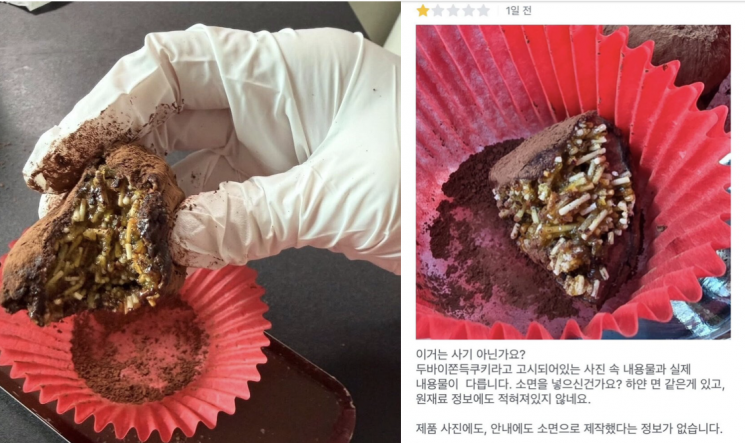 The appearance of Dubai chewy cookies, presumed to be made with somyeon noodles, which are currently controversial online. X
"This Is Not the Texture of Kadaif"... Allegations of 'Somyeon Noodle Use'
The controversy began on January 11, when a consumer posted a review on a delivery application and shared a post in an online community. The consumer uploaded a cross-sectional photo of the "Dubai Chewy Cookie" ordered from a particular store, with the post titled, "Why did you put somyeon noodles in a cookie that costs 9,500 won?" The post was shared via social media and surpassed 1.06 million views in just one day.
The Dubai Chewy Cookie is a dessert that originated in Korea, inspired by the "Dubai Chocolate" trend of 2024. The typical method involves mixing kadaif (a thin Middle Eastern noodle) with pistachio cream to create the filling, then wrapping it in a cocoa powder-coated marshmallow to form a round shape.
The issue is that the product the consumer received looked significantly different from the typical Dubai Chewy Cookie. Based on the photo, the reviewer claimed, "Instead of kadaif, it contained an ingredient that looked like somyeon noodles." The consumer stated, "There was no mention of somyeon noodles in the product description or ingredient list," adding, "Just by looking at it, it was clearly somyeon, and it was difficult to believe it was kadaif."
Complaints were raised not only about the appearance but also about the texture. The reviewer explained, "It didn't have the signature crispiness of kadaif, but rather a hard and coarse feel." However, the consumer did not request a refund and instead left a review noting that "the contents in the posted photo and the actual cookie received appeared to be different."
"Disclosure Required If Using Substitute Ingredients"-Consumer Criticism Spreads
However, the seller reportedly responded with a brief reply unrelated to the review, simply stating, "Thank you for leaving a nice review."
Other consumers who claimed to have purchased from the same store posted similar reviews. These reviews included comments such as, "It was difficult to experience the unique texture or flavor of kadaif," and "The presence of marshmallow or pistachio cream was weak."
Alongside the quality controversy, complaints about the price were also raised. Consumers responded, "The quality does not meet expectations for a price exceeding 9,000 won."
Netizens who saw the post pointed out the obligation to disclose, saying, "If substitute ingredients were used, this should have been clearly stated in the product name or description." Some also commented, "If the ingredients have changed, the price should be adjusted as well."
© The Asia Business Daily(www.asiae.co.kr). All rights reserved.

















