Finance Ministers from Korea, Invited Countries, and G7 Gather in Washington
Introduction of Leading Korean Companies in Critical Mineral Refining and Processing
"Strong Request for Korean Cooperation in Refining and Recycling Technologies"
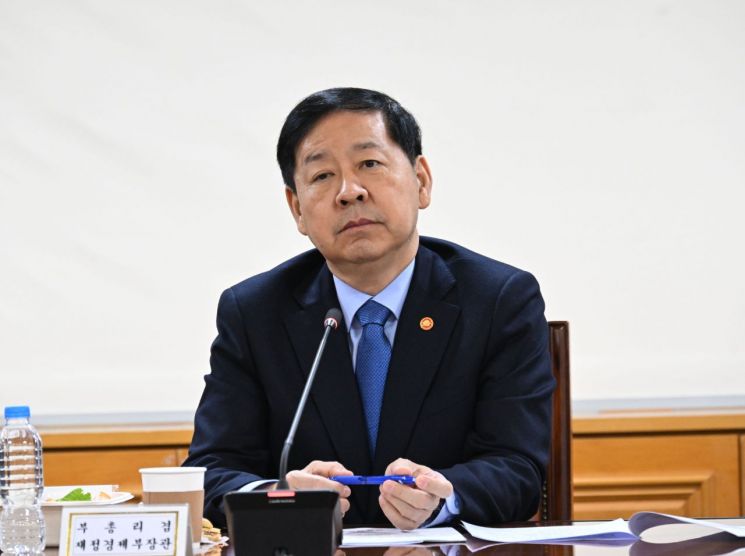
Under the leadership of the United States government, Korea and 11 other countries have expressed a joint commitment to swiftly address vulnerabilities in the critical minerals supply chain in response to China's weaponization of rare earth elements. This agreement, which focuses on "de-risking" to reduce China's influence, marks the beginning of full-scale international cooperation discussions aimed at stabilizing global supply chains. The Korean government emphasized the need to strengthen global value chain connections by leveraging comparative advantages among countries.
On January 13, the Ministry of Economy and Finance announced that Deputy Prime Minister and Minister of Economy and Finance Koo Yoon-chul attended the Critical Minerals Finance Ministers’ Meeting in Washington D.C. the previous day, where he discussed cooperation measures for stabilizing global supply chains. The meeting was attended by finance ministers from invited countries, including Korea, Australia, India, Mexico, and the European Commission (EC), as well as the Group of Seven (G7) member states. Convened by the U.S. Department of the Treasury, the meeting was organized to discuss solutions for stabilizing and diversifying the supply of critical minerals, including rare earth elements. These countries are major consumers of critical minerals, and their combined demand accounts for 60% of global critical minerals consumption.
In a statement released by the U.S. Department of the Treasury, the United States expressed a shared commitment with its allies to quickly address vulnerabilities in the critical minerals supply chain in response to China's weaponization of rare earth elements. U.S. Treasury Secretary Scott Bessent emphasized the need for concrete actions and investments, proposing a cautious approach to de-risking rather than decoupling. He also pointed out that the critical minerals supply chain has become overly concentrated and highly vulnerable to disruption and manipulation, urging participants to strengthen the resilience of their domestic supply chains.
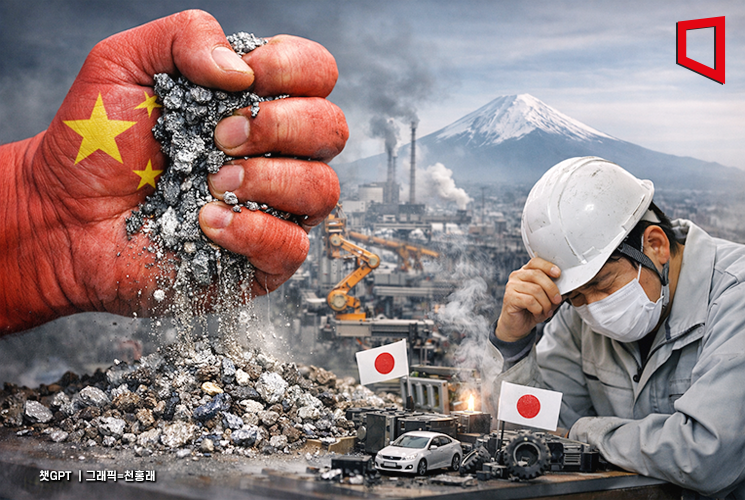
This international cooperation discussion comes as the power struggle between the United States and China shifts from tariffs to strategic assets such as rare earth elements, with China formalizing stricter export controls on rare earths. Rare earth elements, which are used in a wide range of advanced industries such as electric vehicles and semiconductors, are dominated by China across the entire refining and processing supply chain. In April of last year, China restricted exports of seven types of rare earths to the United States, forcing the U.S. to yield in the tariff war. More recently, after Japanese Prime Minister Sanae Takaichi suggested possible military intervention in the event of a Taiwan contingency, China also blocked rare earth exports to Japan.
The Trump administration has been fostering domestic supply chains, but recognizing the difficulty of achieving self-sufficiency in the entire chain from mining to refining in a short period, it is pursuing cooperation within allied blocs. In trade negotiations with Korea, the two countries agreed to include critical minerals in the scope of Korean investments in the United States.
Deputy Prime Minister Koo, who attended the meeting, introduced Korean companies with strong refining and processing capabilities for critical minerals, stating, "It is necessary to strengthen global value chain connections by leveraging comparative advantages among countries." He also highlighted the importance of recycling critical minerals to restore supply chain stability and stressed the need to create opportunities for Korean companies to pursue project-based cooperation.
Deputy Prime Minister Koo also met with the finance ministers of the United Kingdom and Japan to discuss measures for stabilizing supply chains. At the meeting with UK Chancellor Rachel Reeves on January 11, both sides agreed on the importance of international cooperation to address global supply chain instability and decided to strengthen collaboration in areas such as critical mineral recycling. The finance ministries of both countries welcomed the conclusion of negotiations to improve the Korea-UK Free Trade Agreement (FTA) and exchanged views on ways to further enhance economic cooperation.
In discussions with Japanese Finance Minister Satsuki Katayama, they talked about recent global economic trends and cooperation in both bilateral and multilateral forums. Deputy Prime Minister Koo requested the interest and participation of Japanese investors in relation to Korea’s inclusion in the World Government Bond Index (WGBI) in April, to which Minister Katayama expressed active support.
© The Asia Business Daily(www.asiae.co.kr). All rights reserved.


















