Following Dujjonku, the Dubai Bungeoppang Craze
Open-Run Frenzy Despite Bungeoppang Costing Seven Times More
"Dubai Bungeoppang" Store Locations Shared on SNS
The craze for "Dubai Chewy Cookie (Dujjonku)" shows no signs of fading, and now a variation called "Dubai Bungeoppang" has emerged. Despite its high price of 7,500 won per piece, some stores are so popular that customers must line up before opening to purchase it. On January 12, numerous online communities and social networking services (SNS) were flooded with photos of the product alongside signs reading "Dubai Bungeoppang 7,500 won." The cross-section of the bungeoppang in the photos was filled with kadaif, a key ingredient in Dubai chocolate. Considering that regular bungeoppang typically costs between 1,000 and 2,000 won, this is an unusually high price.
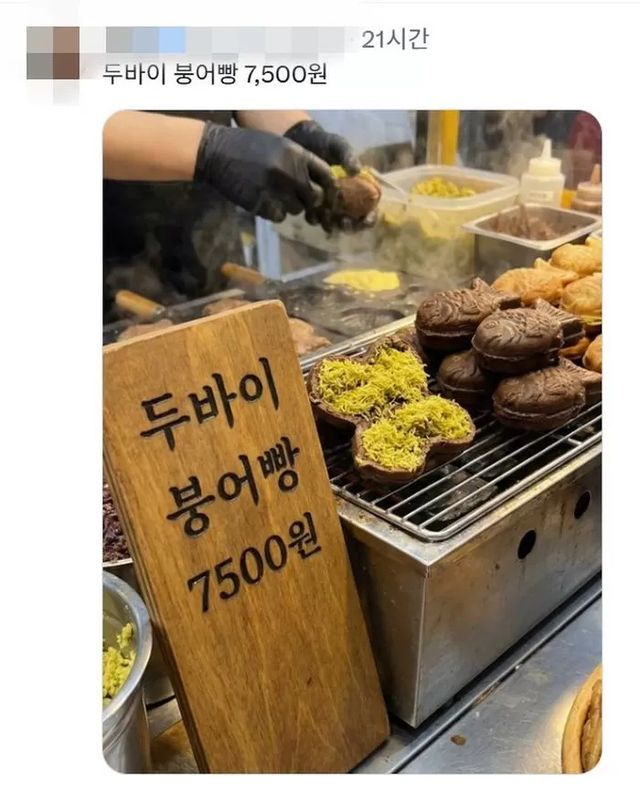 Dubai Bungeoppang is characterized by fillings such as Nutella chocolate, pistachio spread, and kadaif instead of red bean paste, and it has recently become popular along with the rising trend of Dubai chocolate. X
Dubai Bungeoppang is characterized by fillings such as Nutella chocolate, pistachio spread, and kadaif instead of red bean paste. It is being reinterpreted as a "premium dessert," moving beyond its traditional role as a classic winter snack. However, this has also sparked debate over whether the satisfaction justifies the price. Dujjonku is a dessert made by wrapping kadaif mixed with pistachio spread in marshmallow and coating it with cocoa powder. It was inspired by the globally popular "Dubai chocolate" trend last year and was created in Korea. The original creator remains unknown.
This dessert gained rapid mainstream recognition after Jang Wonyoung of the girl group IVE posted a photo of it on SNS in September last year. Following mentions by celebrities such as actors Go Yoonjung and Kim Sejeong, a video featuring chef Ahn Sungjae-known as a judge on the variety show "Black and White Chef"-making Dujjonku with his daughter also attracted significant attention.
The Dubai chocolate craze, initially considered a temporary trend, has been reignited with the emergence of Dujjonku. As new variations such as "Dujjonku Gimbap" (a rolled version) and "Dujjonku Cake" have appeared, and now even bungeoppang, some analysts believe it has expanded into a full-fledged dessert phenomenon. As demand surged, a user-created "Dujjonku Map" was launched on January 6, providing a website to share store locations and stock status by region. This quickly spread across SNS.
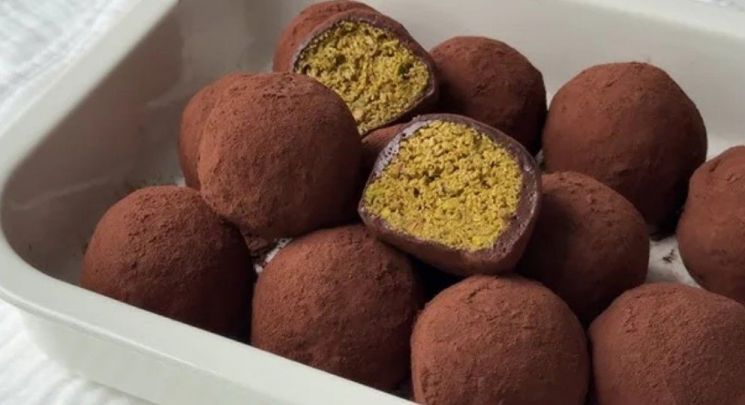 The Dubai chocolate craze, initially considered a temporary trend, is reignited with the emergence of Dujjonku. Photo by The Asia Business Daily Database
The distribution industry is also actively capitalizing on this trend. Lotte Department Store has been operating Dujjonku pop-up stores at major locations since January, while SPC Group’s Paris Croissant has launched "Dubai-style Chewy Balls" at select stores in the Seoul metropolitan area. Convenience store chains have also joined the competition by releasing related products.
The Dujjonku craze is spreading overseas as well. In the Shin-Okubo area of Tokyo, Japan, a hub for Korean culture, stores have begun selling related products. Ironically, however, "Dujjonku" does not actually exist in Dubai. Industry experts describe this as a classic example of trend consumption driven by SNS, celebrity endorsements, and scarcity marketing, but warn that consumer fatigue over price and quality could become a factor.
Nevertheless, the trend is not without controversy. In addition to the debate over high prices, there are criticisms about "authenticity disputes" and "excessive commercial tactics." There have even been reports of unrelated eateries such as sashimi restaurants, sushi bars, and gukbap (soup with rice) shops making and selling Dujjonku. Some have questioned whether it is appropriate to market a dessert under the Dubai name when it does not actually exist there.
© The Asia Business Daily(www.asiae.co.kr). All rights reserved.
![From Bar Hostess to Organ Seller to High Society... The Grotesque Con of a "Human Counterfeit" [Slate]](https://cwcontent.asiae.co.kr/asiaresize/183/2026021902243444107_1771435474.jpg)

















