Annual Sales of 41.3 Billion Won Prove Industrial Potential
A Successful Public Cultural Content Model Built on Mutual Collaboration
Efforts to expand cultural heritage from being merely objects of preservation to becoming cultural resources that can be experienced and consumed in everyday life are yielding visible results. Through a collaborative model led by the public sector with private sector participation, new possibilities for utilizing cultural heritage are emerging, and the field is being established as a key pillar of the cultural content industry.
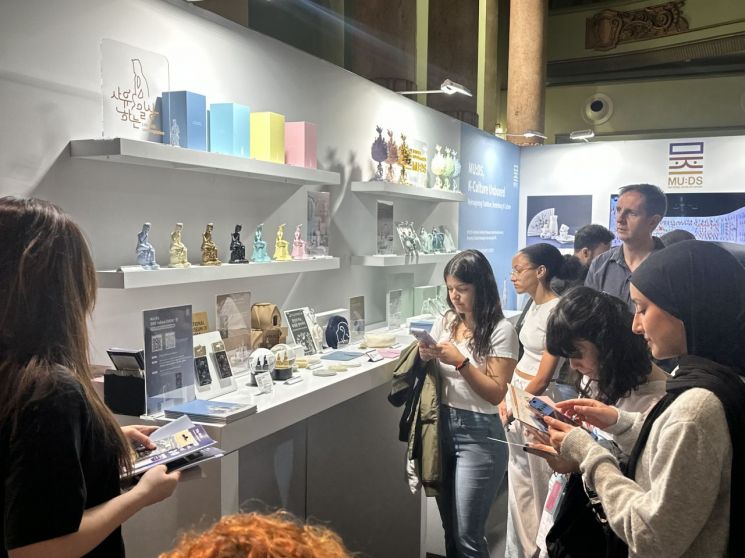
The museum product brand 'MU:DS,' operated by the National Museum Cultural Foundation, is a symbolic example of this trend. By reinterpreting cultural heritage as products with a modern sensibility, it has gained attention as a successful model of a public sector-led cultural content industry.
The achievements are tangible. In 2025, the National Museum of Korea recorded an all-time high of 6.5 million visitors, and annual sales of museum products reached 41.3 billion won. This demonstrates that the strategy of expanding cultural heritage from simply being exhibited or preserved to becoming resources enjoyed in daily life has been well received by the market.
MU:DS has broadened the touchpoints of cultural heritage into everyday life by transforming artifacts and symbols, which traditionally remained in exhibition halls, into design objects, household goods, and lifestyle products. It is recognized for moving beyond one-off commemorative souvenirs and clearly establishing the direction of utilizing cultural heritage as a sustainable industrial resource.
In particular, MU:DS goes beyond being a simple brand to serve as a platform where a public institution connects private creators and companies. The foundation regularly discovers creative ideas through open calls and supports the entire process of planning, production, distribution, and promotion, thereby reducing the market entry burden for creators and businesses.
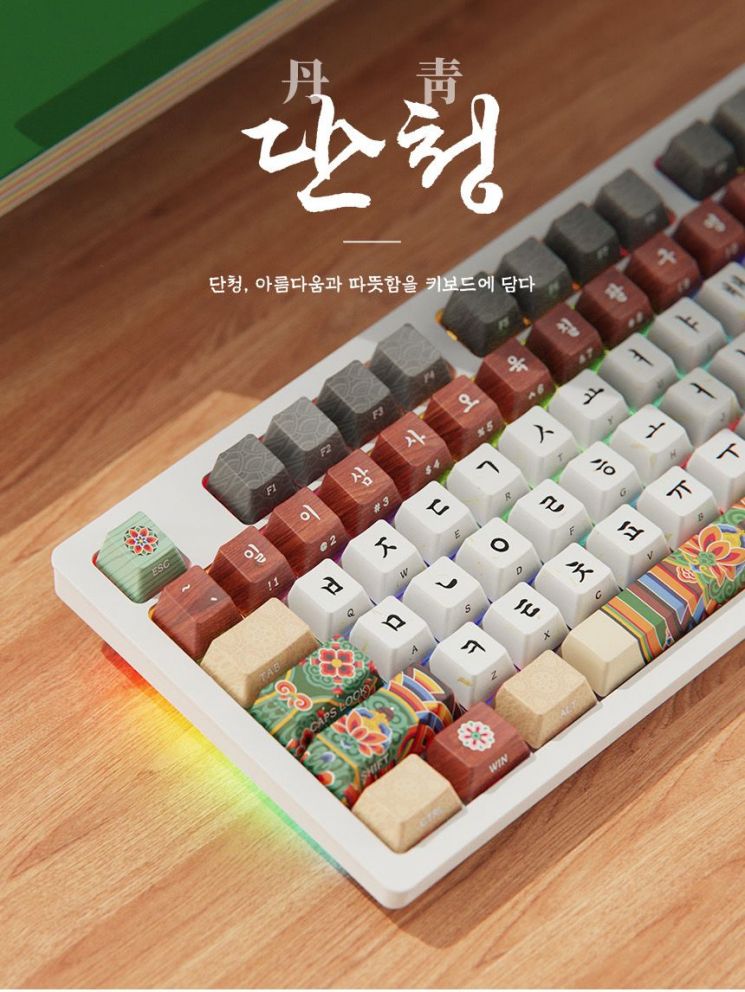
This structure has led to concrete results. Products born from these open calls, such as the 'Magpie and Tiger Badge' and the 'Drunken Scholar Color-Changing Cup Set' inspired by a figure from Kim Hongdo's 'Banquet for the Governor of Pyongan Province,' have each recorded sales in the tens of thousands, achieving high revenue. Other items, such as the Dancheong Pattern Keyboard, a brooch modeled after the Silla Gold Crown, and a beach towel featuring Gonryongpo patterns, have also attracted consumer interest.
The operation method based on mutual growth is also cited as a competitive edge for MU:DS. The foundation has pursued co-development and regular communication with numerous partner companies, promoting shared growth. As a result, sales from partner companies account for a significant portion of total revenue, proving the effectiveness of the public sector-led mutual growth model.
Expansion through cross-industry collaboration is also noteworthy. The scope of cooperation is widening to include not only global brands but also the sports, food, and beauty industries, thus broadening the utilization of cultural heritage. These efforts demonstrate that cultural heritage is not a static asset confined to specific spaces but a content resource applicable across diverse industries.
The response on the global stage has also been positive. MU:DS products have been introduced at international expos and exhibitions, conveying the value of Korean cultural heritage to the global market. Notably, the fact that products showcased at the Smithsonian National Museum of Asian Art in Washington, D.C., sold out in a short period is a symbolic example of the overseas competitiveness of Korean cultural heritage products.
Meanwhile, as brand awareness rises, the issue of counterfeit product distribution has also surfaced. In response, the foundation is working with relevant agencies to strengthen copyright education and protection systems, while also taking measures to protect design and trademark rights.
Starting in 2026, the foundation plans to further expand MU:DS into a cultural heritage brand connecting local and global communities. The strategy includes revitalizing local areas through specialized products utilizing regional museum heritage and expanding a premium product line to meet official gift demand. The foundation also intends to continue linking with major international events and collaborating with overseas museums.
President Jeong Yongseok stated, "MU:DS is a brand that keeps cultural heritage alive in the present, rather than leaving it in the past," adding, "We will continue to broaden the new possibilities for utilizing cultural heritage."
© The Asia Business Daily(www.asiae.co.kr). All rights reserved.


















