Full Judges' Meeting Convened
Follow-up Measures for the Special Act on Dedicated Insurrection Panels
Meeting Moved Up by a Week from Original Schedule
With the formal implementation of the law establishing dedicated courts for insurrection cases-passed by the National Assembly under the leadership of the Democratic Party-judges at the Seoul Central District Court began discussions on January 12 regarding the composition of the dedicated insurrection panels and judges responsible for warrants.
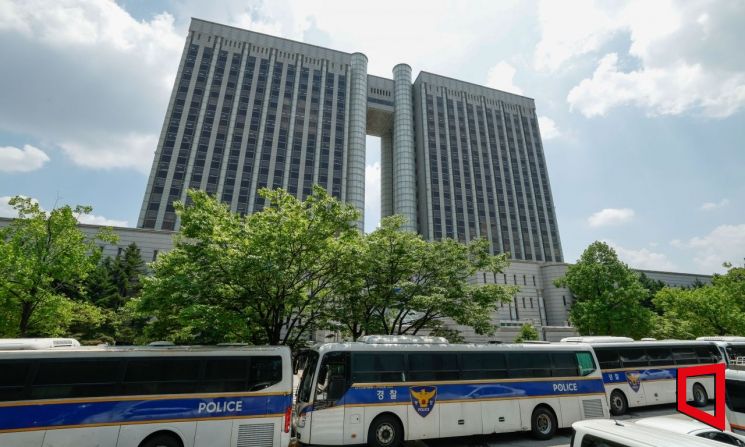
Starting at around 2 p.m. that day, the Seoul Central District Court convened a full judges' meeting (chaired by Chief Judge Oh Minseok) to deliberate on the criteria for forming the dedicated insurrection panels. This follows the enforcement of the "Special Act on Criminal Procedures for Crimes such as Insurrection, Treason, and Rebellion" on January 6.
During the meeting, judges discussed the number of dedicated panels required under the special act, the qualifications for judges handling warrants and those serving on the dedicated panels, as well as the basic principles for the allocation of judicial duties for the year.
The regular judges' meeting at the Seoul Central District Court was originally scheduled for January 19 but was moved up by about a week. The court explained, "We decided to hold the meeting a week earlier to promptly appoint judges responsible for warrants in preparation for the possible receipt of cases requiring warrant reviews under the special act."
According to the special act, the committee for the allocation of judicial duties at the Seoul Central District Court will prepare a plan for assigning duties based on the standards set by the full judges' meeting. The appointment of judges to the dedicated panels will be finalized through a resolution at the full judges' meeting. A court official stated, "We will make thorough preparations, including the full judges' meeting, to ensure that cases subject to the special act are handled fairly and expeditiously."
The special act stipulates that, for insurrection, treason, and rebellion cases with significant political, economic, or social impact and high public interest, at least two dedicated panels must be established each at the Seoul Central District Court and the Seoul High Court.
In principle, the dedicated panels are to be established from the first trial. However, a supplementary provision specifies that cases already underway at the time the law takes effect will continue to be heard by the existing panels.
The Seoul High Court also plans to hold a full judges' meeting on January 15 to discuss criteria for forming its dedicated panels. On the previous day, the Seoul High Court announced, "We will hold a full judges' meeting on January 15 to establish criteria for the dedicated panels and to deliberate on the basic principles for the allocation of judicial duties for 2026." High-profile cases such as the insurrection ringleader charges against former President Yoon, which are awaiting a first-instance verdict, will be subject to the dedicated panel system from the appellate stage.
© The Asia Business Daily(www.asiae.co.kr). All rights reserved.

















