Gangwon Province to Invest 2.3669 Trillion Won in 87 Strategic Projects
Announces Five-Year Industrial Transition Plan for Former Mining Areas
By 2030: Targeting 129 Companies and 30,000 Jobs
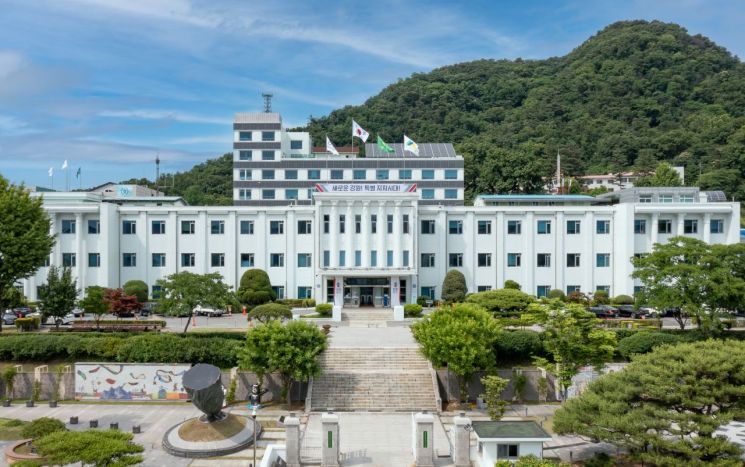
Gangwon Special Self-Governing Province (Governor Kim Jin-tae) announced on January 12 that from 2026 to 2030, it will invest a total of 2.3669 trillion won in 87 projects across four former mining areas-Taebaek, Samcheok, Yeongwol, and Jeongseon-to actively foster these regions as coal industry transition zones.
This initiative is part of the “2026-2030 Mid- to Long-Term Investment Plan for Former Mining Areas,” a statutory plan that comprehensively outlines the investment direction and management standards for mining fund projects to be implemented over the next five years.
The province independently established the plan, based on strategies developed jointly with the relevant cities and counties, and after consulting with private sector experts, without relying on external contractors.
By investment sector, alternative industries account for the largest share, with 23 projects totaling 1.5679 trillion won, or 66% of the total. Key projects include: ▲ Clean Methanol Cluster (354 billion won), ▲ Underground Research Facility Construction (532.4 billion won), and ▲ Heavy Ion Medical Cluster (360.3 billion won).
In particular, to ensure the smooth implementation of the Taebaek Clean Methanol Cluster and the Samcheok Heavy Ion Medical Cluster-both considered core drivers of industrial transformation-the province plans to actively collaborate with city and county governments, the Gangwon Research Institute, and relevant private sector experts to secure approval in the central investment review process.
The environment and welfare sector will see 20 projects with a total investment of 325.6 billion won (14%), including: ▲ Jeongseon Central Region Public Rental Housing (53.8 billion won), ▲ Construction of Regionally Tailored Specialized Housing (46.5 billion won), and ▲ Modernization of Waste Landfill Facilities (30.9 billion won).
The tourism promotion sector includes 19 projects with a total investment of 291.1 billion won (12%), such as: ▲ Cosmo Bongrae Project (31.9 billion won) and ▲ Installation of Mindungsan Monorail (18 billion won).
Additionally, the education and infrastructure sector will see 21 projects with a total investment of 180.5 billion won, including: ▲ Support for Dormitory Expenses at Dogye Campus (20 billion won) and ▲ Deokpo District Urban Development Project (17.9 billion won).
This plan moves away from the previous city- and county-driven allocation method and introduces a full-cycle performance management system, including preliminary feasibility studies, interim reviews, and post-project evaluations, to strengthen the efficiency and accountability of fund projects.
To this end, the province will establish and operate a private expert evaluation advisory group centered on the Mining Area Development Support Center, which is responsible for evaluations, and will enhance the evaluation system so that projects with high regional impact and completion rates are prioritized.
Furthermore, the province will use its common fund to focus support on key local issues and, in conjunction with the implementation of the “Ordinance on Support for Investment Companies in Former Mining Areas,” will strengthen the foundation for attracting businesses.
Governor Kim Jin-tae stated, “Each of the 87 projects, totaling 2.3 trillion won, is important. We are aiming to attract 129 companies, create 30,000 jobs, and draw 1.5 million tourists annually.”
He added, “This plan is not just about fiscal allocation, but about the province making strategic investments. In particular, this year we have developed a master plan and added preliminary evaluation consulting to enhance project completion.”
Meanwhile, starting March 31, the designation of “former mining areas” will be changed to “coal industry transition zones.” The province plans to shift perceptions of these regions and accelerate industrial transformation through this name change.
© The Asia Business Daily(www.asiae.co.kr). All rights reserved.

















