SCIA and Prosecution Agency Bills Announced and Legislation Notice Issued at 2 p.m. on January 12
Investigative Scope Set for 'Nine Major Serious Crimes'
SCIA Personnel to Be Divided into Investigative Judicial Officers and Specialized Investigators
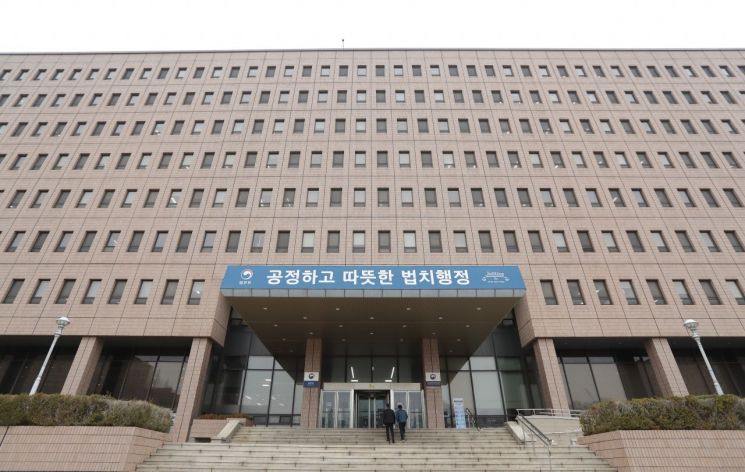
On January 12, the specific roles and division of work for the new Serious Crimes Investigation Agency (SCIA) and the Prosecution Agency, which are set to replace the prosecution within the year, were made public. The latest reform plan significantly expands the investigative scope of the SCIA and emphasizes a dual system for investigative personnel, dividing them into "investigative judicial officers" and "specialized investigators." However, the plan does not address the retention or abolition of the "supplementary investigation authority," a core issue in the abolition of the prosecution office.
The Prosecution Reform Task Force under the Prime Minister's Office announced the Prosecution Agency Act and the Serious Crimes Investigation Agency Act containing these details at 2:00 p.m. at the Government Complex Seoul. Accordingly, the Ministry of Justice and the Ministry of the Interior and Safety will conduct a legislative notice for these bills until January 26.
Prosecution Agency Reorganized as a 'Prosecution-Only Institution' by Removing 'Crime Investigation and Initiation'
First, the Prosecution Agency Act completely reorganizes the duties of prosecutors in line with the principle of "separation of investigation and prosecution." The bill removes "crime investigation" and "initiation of investigation" from the primary duties of prosecutors and specifies their role as "filing and maintaining prosecutions." As a result, prosecutors will no longer be able to initiate investigations, and the Prosecution Agency will be transformed into an institution dedicated solely to prosecution.
Internal and external controls over prosecutors' duties will also be introduced. Case review committees will be established at each High Prosecution Agency to deliberate on matters such as requests for arrest warrants and decisions to prosecute in high-profile cases, ensuring that a range of public opinions are reflected in the legal process. In addition, the proportion of external members (not recommended by the Minister of Justice) on the Prosecutor Qualification Review Committee will be increased.
The accountability of prosecutors in performing their duties will also be strengthened. The rates of appeal, re-appeal, and acceptance of requests for judicial review, as well as the rates and reasons for acquittals, will be included as criteria for performance evaluations. In particular, the bill specifies political involvement by prosecutors and introduces penalties for such conduct, significantly reinforcing controls to ensure political neutrality.
SCIA Expands Investigative Scope to 'Nine Major Serious Crimes'
The SCIA is designed to prevent any gaps in the national investigative response. While its primary focus will be on sophisticated and organized white-collar crimes, the agency's scope will also include large-scale disasters and cybercrimes with significant social impact.
Specifically, the SCIA will be responsible for investigating not only corruption and economic crimes previously handled by the prosecution, but also ▲public officials ▲elections ▲defense procurement ▲major disasters ▲narcotics ▲national security crimes such as insurrection and treason ▲cybercrimes, collectively referred to as the "nine major serious crimes."
Through a presidential decree, specific types of serious crimes-such as large-scale economic crimes, technology leaks, international drug trafficking, and major hacking incidents-will be designated. Additionally, the SCIA will be able to investigate crimes committed by public officials belonging to the Prosecution Agency or other investigative bodies, as well as cases referred to the SCIA under individual statutes.
SCIA Personnel System: Dual Structure of Investigative Judicial Officers and Specialized Investigators
The SCIA's personnel will be divided into "investigative judicial officers" and "specialized investigators." The system will allow specialized investigators to be promoted to investigative judicial officers or appointed to senior positions, increasing flexibility in personnel management. The agency also plans to recruit police officers and experts from various fields, in addition to former prosecutors, to enhance investigative capabilities.
When overlapping jurisdiction with other investigative agencies occurs, the SCIA will be able to request case transfers or transfer cases to other agencies, minimizing confusion in the field. However, for cases involving the Corruption Investigation Office for High-ranking Officials (CIO), the CIO chief will decide on case transfers.
Control mechanisms to protect basic rights of citizens will also be established. The Minister of the Interior and Safety will have general authority to direct and supervise SCIA operations, but only the SCIA chief will have authority over specific cases. In addition, the SCIA will have an internal inspector and a citizen-led investigation review committee to enhance transparency in investigations.
Minister of Justice Jeong Seongho explained the significance of the bill, stating, "With this legislation, we are establishing a principle that the agency initiating an investigation cannot also conclude it, while maintaining the nation’s ability to respond to crime and focusing on our fundamental role of protecting the daily lives of citizens from crime."
Minister of the Interior and Safety Yoon Hojung stated, "This bill prioritizes the protection of citizens' basic rights by ensuring that investigation and prosecution serve as checks and balances on each other, and aims to restore public trust in the overall criminal justice system."
Task Force Leader Yoon Changryeol said, "We will work to ensure that the legislative process for these establishment bills proceeds swiftly in the National Assembly, and will meticulously prepare subordinate regulations, organizational structures, personnel, and systems to ensure a successful launch within the designated timeframe. At the same time, we will also advance amendments to related laws, such as the Criminal Procedure Act, and submit them to the National Assembly without delay."
© The Asia Business Daily(www.asiae.co.kr). All rights reserved.


















