Accommodation, Departure, and Admission Fees Rise... 30 More Locations Added This Year
2 to 3 Times Higher for Foreigners... From Railways to Museums
Overtourism Cited as Reason, Taxes Increase Without Entry Limits
For those planning to travel to Japan this year, the issue of accommodation taxes is expected to become a significant variable. The number of Japanese local governments introducing accommodation taxes is increasing, and even those that have already implemented such taxes are making notable moves. In particular, major tourist destinations such as Tokyo and Kyoto have announced plans to raise tax rates, which is expected to increase the perceived cost for foreign tourists.
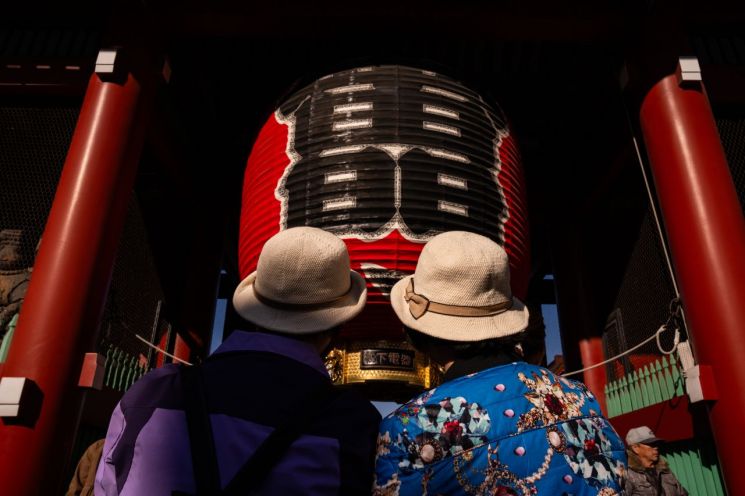 Chinese tourists visiting Sensoji Temple in the Asakusa district of Tokyo, Japan, are touring the temple grounds. Photo by AP Yonhap News
According to the Nihon Keizai Shimbun on January 10, nearly 30 Japanese local governments are planning to newly introduce accommodation taxes within this year. Considering that as of the end of last year only 17 local governments had adopted accommodation taxes, this represents a significant increase in just one year. Among these, 26 have already completed the process of enacting ordinances and obtaining approval from the Ministry of Internal Affairs and Communications, the central government.
To begin with, Miyagi Prefecture and Sendai will start imposing accommodation taxes from January 13. Hotel guests in Sendai City will pay 100 yen to Miyagi Prefecture and 200 yen to Sendai City, for a total accommodation tax burden of 300 yen.
In April, Hokkaido will introduce an accommodation tax of up to 500 yen, and 13 other basic local governments, including Sapporo City, will also begin additional taxation. In the same month, Hiroshima Prefecture and Kanagawa Prefecture, and in June, Nagano Prefecture and Karuizawa Town, are scheduled to implement accommodation taxes as well.
There are also noticeable moves to raise taxes among local governments that already collect accommodation taxes. Kyoto City will increase the upper limit of its accommodation tax tenfold in March, from the current maximum of 1,000 yen to a maximum of 10,000 yen. Guests staying at luxury accommodations costing over 100,000 yen per night will have to pay an additional 10,000 yen in accommodation tax, making it the highest among Japanese local governments.
The Tokyo Metropolitan Government is also considering shifting from the current flat rate of 100 to 200 yen to a proportional tax rate of 3% of the accommodation fee. If this system is implemented, tourists using high-end accommodations will see their tax burden increase severalfold.
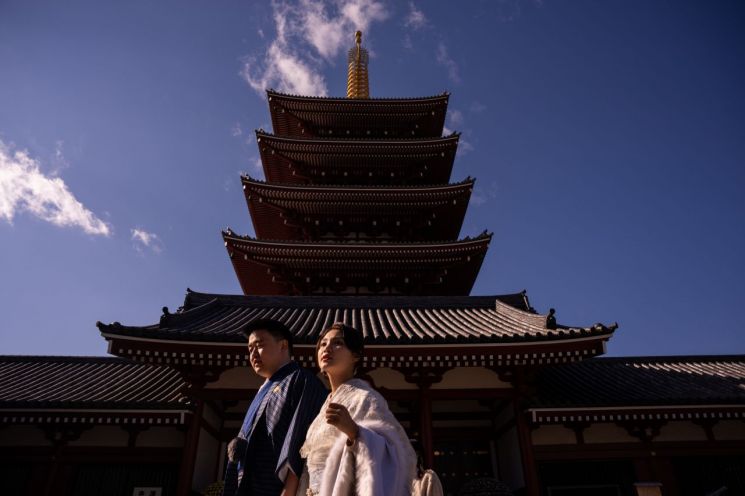 Tourists visiting Sensoji Temple in the Asakusa district of Tokyo, Japan, are touring the temple grounds. Photo by AP Yonhap News
Although this trend is being justified as a response to overtourism, some point out that it will result in higher perceived costs for foreign tourists. Since Korea is the largest inbound market for Japan, the increase in accommodation taxes is highly likely to directly lead to higher travel costs for Korean visitors to Japan.
For example, if a traveler stays three nights at a hotel in Tokyo costing around 20,000 yen per night, the accommodation tax burden will rise from several hundred yen to several thousand yen if the proportional tax system is introduced.
On top of this, the Japanese government is also considering raising the International Tourist Tax (departure tax) and introducing differential admission fees for public museums and art galleries, which is fueling further controversy. Some facilities are considering a dual pricing system that would charge foreign tourists two to three times the rate charged to Japanese nationals.
In response, the Japanese government explains that these measures reflect the social costs caused by overtourism. However, criticism is mounting that the government is only increasing taxes and fees without implementing practical measures to limit visitor numbers or protect the environment.
© The Asia Business Daily(www.asiae.co.kr). All rights reserved.
!["I'd Rather Live as a Glamorous Fake Than as a Poor Real Me"...A Grotesque Success Story Shaking the Korean Psyche [Slate]](https://cwcontent.asiae.co.kr/asiaresize/183/2026021902243444107_1771435474.jpg)

















