Securing Emergency Operating Funds and Disposing of Underperforming Stores
Including Sale of Express Business and Workforce Redeployment
"Profitability Expected by 2029 if Rehabilitation Plan Succeeds"
Homeplus announced on January 9 that it has decided to begin full-scale discussions with its creditors regarding the rehabilitation plan it submitted to the Seoul Bankruptcy Court at the end of last year.
In a media briefing on the same day, Homeplus explained, "The court requested the creditors to submit their initial opinions regarding the receipt of the rehabilitation plan. In the creditors' opinions submitted on January 6, there were no objections raised to the submission and review of the structural innovation rehabilitation plan." The company added, "This indicates that a consensus has been formed among the creditors on the need for structural innovation to ensure the sustainability of Homeplus."
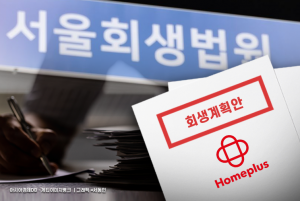
Accordingly, Homeplus plans to proceed with in-depth reviews and discussions on the details of the rehabilitation plan among the company, the labor union, and the creditors. The current rehabilitation plan includes measures to secure emergency operating funds, strategies for improving cash flow by disposing of underperforming stores, and plans to enhance business profitability through organizational restructuring. Specifically, the plan calls for securing 300 billion won in emergency operating funds through a Debtor-In-Possession (DIP) loan, selling 10 self-owned stores and the Express business division over the next three years, closing 41 underperforming stores over the next six years, and improving workforce efficiency through redeployment and natural attrition.
Homeplus expects that if the rehabilitation plan is implemented without setbacks, its EBITDA (earnings before interest, taxes, depreciation, and amortization) will turn positive, reaching 14.36 billion won by 2029. The company further stated, "The most urgent issue at present is securing emergency operating funds to ensure stable operations until the effects of structural innovation become visible. We have proposed that the major shareholder MBK Partners and the largest creditor Meritz participate proactively to share the burden, and, based on this, state-run institutions such as Korea Development Bank would also partially participate in providing emergency operating funds through loans." However, the feasibility of this plan remains uncertain.
A Homeplus representative stated, "We will continue to do our utmost to pursue structural innovation without delay through sincere consultations with all stakeholders, including the court, creditors, and the labor union, and to achieve a sustainable corporate turnaround."
© The Asia Business Daily(www.asiae.co.kr). All rights reserved.
![Clutching a Stolen Dior Bag, Saying "I Hate Being Poor but Real"... The Grotesque Con of a "Human Knockoff" [Slate]](https://cwcontent.asiae.co.kr/asiaresize/183/2026021902243444107_1771435474.jpg)










