Arrest and Court Appearance Fashion Becomes a Trend
Negative News Drives Consumer Demand
The Blame Look Phenomenon Spreads at Home and Abroad
The so-called "Blame Look" phenomenon, where fashion items worn by individuals who have caused public controversy or are accused of crimes become popular and drive consumer purchases, is once again trending. Regardless of the actions of the person in question, the clothes and brands they wear are highlighted and spread like a trend. On January 9, Yonhap News focused on the Blame Look phenomenon, citing examples such as Venezuelan President Nicolas Maduro’s tracksuit after his recent arrest in the United States and Hwang Hana’s outfit during her pre-arrest interrogation.
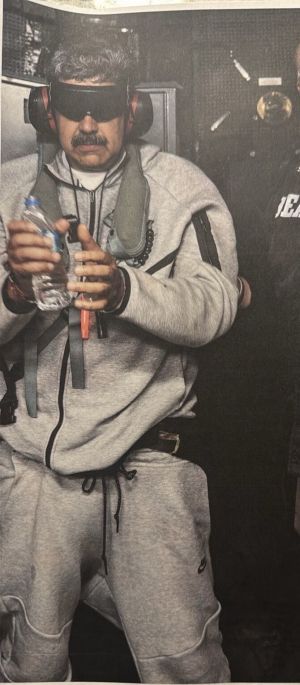 The tracksuit worn by President Maduro, nicknamed the 'Maduro Look' and 'Maduro Gray,' became a top search term on Google Trends. Truth Social Yonhap News
The most notable recent case is Venezuelan President Nicolas Maduro. When U.S. President Donald Trump shared on social media the image of Maduro being arrested by the U.S. military, the gray tracksuit from the American brand Nike that Maduro was wearing became a sensation online. This product was nicknamed the "Maduro Look" and "Maduro Gray," rising to the top of Google Trends searches, and some sizes even sold out. Foreign media also reported reactions such as "the tracksuit from the arrest scene has become a meme" and "Maduro has brought back the tracksuit trend."
From Shin Changwon’s T-shirt to Min Heejin’s Fashion: Selling Out Fast
In Korea, there have also been a series of Blame Look cases. The khaki long padded jacket worn by Hwang Hana, the granddaughter of the founder of Namyang Dairy Products, when she appeared for a pre-arrest interrogation on drug charges, was revealed to be a high-end luxury brand Rick Owens product and quickly spread, mainly through online communities. Posts inquiring about the product and where to purchase it followed, and some distribution channels reported that it had sold out.
 The casual T-shirt and hat worn by former Adore CEO Min Heejin at the press conference during the management rights dispute with HYBE also became a hot topic and sold out completely. Photo by Jinhyung Kang
The jumper, glasses, and shoes worn by trot singer Kim Hojoong, who appeared before the police on drunk driving charges, also sparked posts estimating the brands and price ranges. The casual T-shirt and hat worn by former Adore CEO Min Heejin at a press conference during the management rights dispute with HYBE also became a hot topic and sold out completely. One of the earliest domestic examples of the Blame Look is the flashy T-shirt worn by fugitive Shin Changwon when he was caught after escaping from prison in 1999. Later examples include Shin Jeongah’s airport fashion in 2007 and Choi Soon-sil’s luxury shoes during the 2016 political scandal.
Repeated Abroad... The Paradox of "Negative Fame"
Similar phenomena have consistently appeared overseas. In 2015, the American brand shirt worn by Joaquin Guzman (El Chapo), known as the "drug king," during an interview with Rolling Stone, was dubbed the "most wanted shirt" and saw a surge in sales. In 2019, the sweatshirt worn by entertainer Jung Joonyoung, who was arrested on sex crime charges, and the black turtleneck worn by Elizabeth Holmes when she appeared in court in the United States, also drew attention as "incident fashion." In the United Kingdom, there was a case where the coat and scarf worn by a politician involved in an illegal party scandal gained popularity on social media, leading to increased sales of similar products.
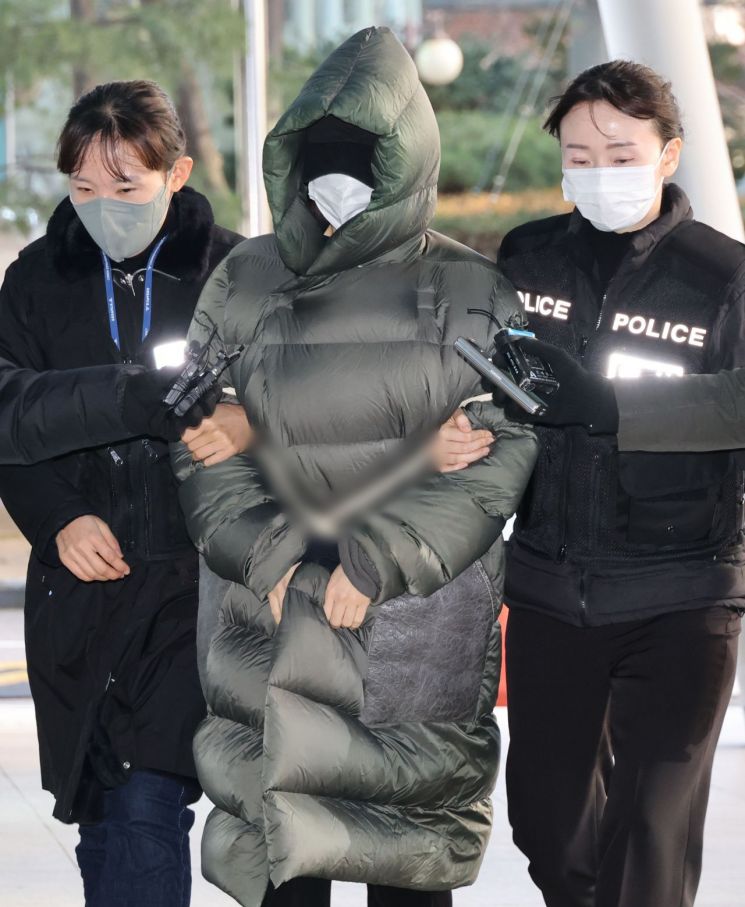 Hwang Hana, the granddaughter of the founder of Namyang Dairy Products, who appeared for a pre-arrest interrogation on drug charges, was seen wearing a khaki-colored long padded jacket known to be a high-end luxury brand Rick Owens product, which quickly spread mainly through online communities. Photo by Yonhap News Agency
In the marketing industry, the popularity of the Blame Look is explained by public psychology and the effect of media exposure. Regardless of negative evaluations of the wearer, the level of exposure to the public stimulates consumption. Furthermore, the core of the Blame Look is that the perception of "the choice of a successful person" takes precedence, regardless of whether the celebrity wearing the item has committed a crime.
The fashion industry’s response to the Blame Look is somewhat mixed. Some brands, concerned about the spread of negative images, request that their logos not be shown, while others, seeing products sell out, cautiously sense a "promotional effect." An industry insider commented, "We have no choice but to walk a fine line between increased sales and potential damage to brand image."
© The Asia Business Daily(www.asiae.co.kr). All rights reserved.
![A Woman Who Jumps Holding a Stolen Dior Bag... The Mind-Shaking, Bizarre Con of a "Human Knockoff" [Slate]](https://cwcontent.asiae.co.kr/asiaresize/183/2026021902243444107_1771435474.jpg)


















