Four Sessions Starting January 12
Entire Process, Including Korea Aerospace Administration, Broadcast Live on YouTube and KTV
A large-scale government-level work briefing will begin to review overall science and technology and artificial intelligence (AI) policies and to unify policy directions among institutions. The Ministry of Science and ICT announced on January 9 that, from January 12 to 14, it will conduct a total of four work briefings over three days, receiving reports from 55 affiliated, public, and related organizations, including the Korea Aerospace Administration.
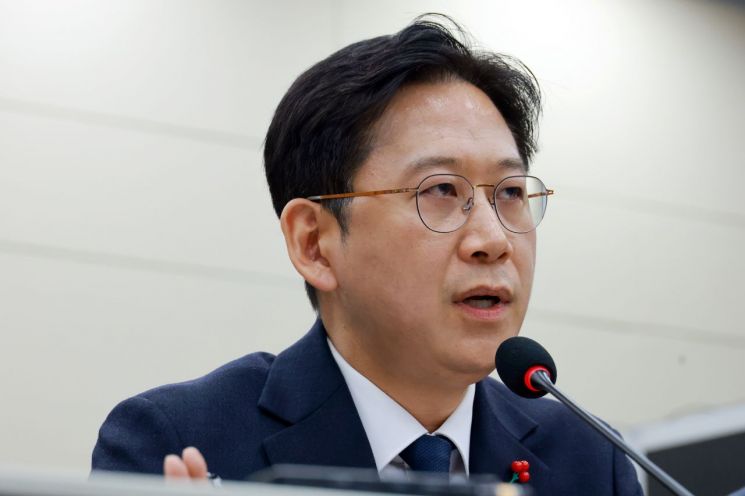
This work briefing will be presided over directly by Paik Kyung-hoon, Deputy Prime Minister and Minister of Science and ICT. Through this process, the Ministry aims to coordinate policies and consolidate capabilities between the Ministry and its affiliated organizations on key national tasks, including: launching a full-fledged strategy to become one of the top three AI powerhouses; shifting the paradigm of science and technology research and development (R&D) through AI utilization; and redefining the missions and roles of each institution after the abolition of the PBS system.
Sequential Review from Government-Funded Research Institutes and Public Institutions to Space and AI Organizations
The work briefings will be conducted by type of institution. On the morning and afternoon of January 12, government-funded research institutes and public institutions in the field of science and technology will be the focus. A total of 28 organizations, including 21 government-funded research institutes such as the National Research Council of Science & Technology (NST) and the Korea Institute of Science and Technology (KIST), as well as the National Research Foundation of Korea, the Korea Technology Commercialization Promotion Agency, the Innopolis Foundation, the Korea Institute of S&T Evaluation and Planning (KISTEP), and the Institute for Basic Science (IBS), will present their work briefings.
On the afternoon of January 13, institutions in the fields of science museums and postal services will report. This includes 12 organizations such as the National Science Museum, the Gwacheon, Gwangju, Daegu, and Busan National Science Museums, the Korea Post, the Korea Post Financial Development Institute, and the Korea Post Logistics Support Agency.
Then, on the morning of January 14, research institutes in the space sector, including the Korea Aerospace Administration, the four major Institutes of Science and Technology, and affiliated and public organizations in the AI and ICT sectors will conduct their work briefings. A total of 15 organizations are included, such as the Korea Aerospace Research Institute, the Korea Astronomy and Space Science Institute, Korea Advanced Institute of Science and Technology (KAIST), Gwangju Institute of Science and Technology (GIST), Daegu Gyeongbuk Institute of Science and Technology (DGIST), Ulsan National Institute of Science and Technology (UNIST), National IT Industry Promotion Agency (NIPA), National Information Society Agency (NIA), and Korea Internet & Security Agency (KISA).
'Performance Review + Discussion' Format... Entire Process Open to the Public
During the work briefings, each institution will present its core functions, major achievements to date, and key initiatives for 2026. This will be followed by a free discussion led by Deputy Prime Minister Paik Kyung-hoon, with participation from all attendees. The Ministry of Science and ICT plans to use this process to identify overlapping roles among institutions and clarify the priorities for future policy implementation.
In particular, this work briefing will be broadcast live in its entirety through the Ministry of Science and ICT's YouTube channel and KTV. The Ministry stated, "We plan to transparently release the policies and work being promoted by each institution to the public and use this as an active platform for communication."
© The Asia Business Daily(www.asiae.co.kr). All rights reserved.

















