The Resource Curse of Oil Dependence
Excessive Welfare Spending During the Boom Years
Maduro Finances Budget by Printing Money
Inflation Rate Surges to 130,000% in 2018
A Vicious Cycle of Widespread Poverty
Venezuela is the country with the largest proven oil reserves in the world, yet it is also considered one of the nations with the highest poverty rates, with over 90% of the population living in poverty. Venezuela's dire economic situation is the result of an overreliance on oil resources, the reckless expansion of welfare policies, and the nationalization of the oil industry, which led to a decline in technological competitiveness.
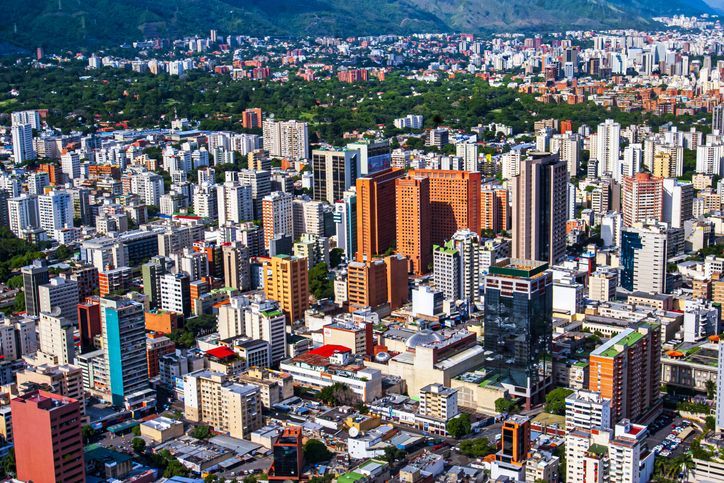 Until the early 2010s, Venezuela was a wealthy country, but from 2015, the economy became unstable due to hyperinflation combined with a drop in oil prices. Getty Images
Until the early 2010s, Venezuela was a wealthy country, but since 2015, its economy has become unstable due to hyperinflation combined with a drop in oil prices. Venezuela's per capita Gross Domestic Product (GDP) fell from $12,700 (approximately 18.47 million KRW) in 2012 to $1,533 (about 2.33 million KRW) in 2020. As of 2024, it stands at $4,511 (about 6.56 million KRW), which is just one-seventeenth of Norway's per capita GDP of $80,000 (116 million KRW), another oil-producing country.
One of the causes identified for the collapse of Venezuela's economy is the so-called "resource curse" phenomenon, also known as "Dutch disease." The resource curse refers to a situation where a temporary economic boom from natural resource exports undermines the competitiveness of other industries, such as manufacturing, ultimately leading to long-term economic stagnation and wealth inequality.
Since Venezuela first exported oil in 1918, more than 95% of its exports have consisted of oil. After the period of high oil prices, when crude traded above $100 per barrel (2011-2014), Venezuela's economy began to destabilize.
During the oil export boom, the Ch?vez administration (1999-2013) excessively increased welfare spending, resulting in government debt exceeding $100 billion. In this situation, the succeeding Maduro administration financed the budget by printing money through the central bank. As prices soared, even more money was printed, and as a result, Venezuela's inflation rate in 2018 reached 130,060% compared to the previous year.
During the 14 years of the Ch?vez administration, the complete nationalization of oil companies also caused problems. The Ch?vez government carried out large-scale layoffs in advance, and as skilled workers left, the technological competitiveness of the state oil company PDVSA declined. After President Maduro took office, loyalists filled executive positions. The oil reserves in Venezuela consist of heavy crude, which requires highly complex refining processes, but with aging facilities and a mass exodus of experts, PDVSA's technological capacity collapsed.
 A Venezuelan child (5) is playing with a toy on the banks of the Rio Grande in Ciudad Juarez, Mexico, bordering the United States, on December 28, 2022. Photo by AFP News Agency
The situation worsened further in 2019 when U.S. sanctions were imposed. President Maduro secured re-election through a fraudulent vote, but the Trump administration, which refused to recognize the results, blocked all transactions with PDVSA in 2019. As a result, Venezuela's daily oil production fell below 1 million barrels, just one-third of the 3.55 million barrels produced in 1999.
Poor government policies have directly led to widespread poverty among the population. According to the "2021 National Life Standards Survey" conducted by a research team at Andr?s Bello Catholic University in Venezuela, the proportion of the population living in extreme poverty reached 76.6%. The World Bank defines extreme poverty as living on less than $1.90 per day. The same survey found that Venezuela's overall poverty rate was 94.5%.
© The Asia Business Daily(www.asiae.co.kr). All rights reserved.


















