NFT Market Downturn After 2021 Acquisition
Gradual Business Shutdown in 2024
It was belatedly reported that Nike, the sports brand, has sold its non-fungible token (NFT) subsidiary, RTFKT (Artifact). This decision comes four years after its acquisition.
According to Bloomberg, a U.S. financial news outlet, on January 7 (local time), Nike completed the sale of Artifact to an anonymous buyer on December 17 of last year. A Nike spokesperson issued a statement saying, "Artifact was transferred to a new owner on December 17, 2024," and added, "This marks a new chapter for the company and its community." However, Nike did not disclose the specific sale price or the identity of the buyer.
Nike acquired Artifact in 2021, when NFTs were enjoying significant popularity. Artifact, founded in 2020 by Benoit Pagotto and others, gained attention by creating virtual sneakers and collectibles, which it combined with blockchain and augmented reality (AR) technologies.
At the time of the acquisition, former Nike CEO John Donahoe expressed his ambition, stating, "We will expand Nike's digital footprint and support athletes and creators at the intersection of gaming, culture, and creativity."
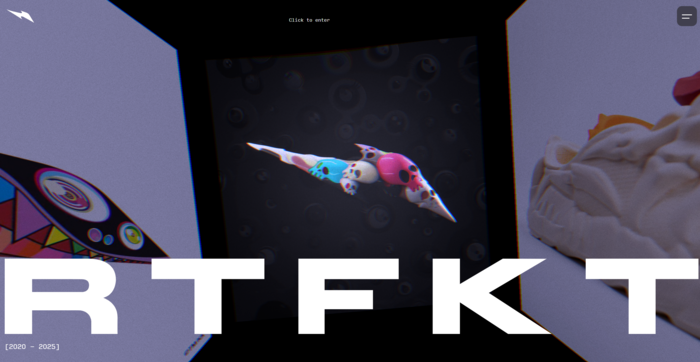
However, as the virtual asset market as a whole entered a downturn and NFTs continued to underperform, Artifact's business expansion also faced setbacks. Ultimately, in December 2024, Nike decided to discontinue the operation of the Artifact division. At that time, Artifact also announced it would gradually wind down its business, stating, "We will build an archive website to commemorate everything we have created and built together."
The media interpreted this sale as part of new CEO Elliot Hill's efforts to improve the company's structure. Hill, a veteran with over 30 years at Nike, stated upon taking office that he would focus on simplifying the company's complex business structure and restoring the competitiveness of its core products.
Regarding this, Nike told the media, "We will continue to invest in providing innovative products and experiences across physical, digital, and virtual environments."
© The Asia Business Daily(www.asiae.co.kr). All rights reserved.
![Clutching a Stolen Dior Bag, Saying "I Hate Being Poor but Real"... The Grotesque Con of a "Human Knockoff" [Slate]](https://cwcontent.asiae.co.kr/asiaresize/183/2026021902243444107_1771435474.jpg)












