With the full-scale implementation of the Integrated Care main project scheduled for March, local governments across the country are ramping up their preparations. On January 8, the Ministry of Health and Welfare announced that, after reviewing the readiness of 229 cities, counties, and districts nationwide, key foundations such as dedicated organizations, personnel, and project operations have been significantly strengthened. For local governments that are still lacking in some areas, both central and local governments are working together to address these shortcomings.
Integrated Care will be launched in all cities, counties, and districts nationwide on March 27, with the full enforcement of the Act on Integrated Support for Community-Based Medical and Care Services. The core of the program is to provide integrated medical, nursing, and care services to seniors and people with disabilities who have difficulty maintaining daily life, allowing them to receive support in their own homes. The goal is to shift the existing hospital- and facility-centered care system to a home-based and preventive approach, thereby reducing the burden on families and increasing the sustainability of care.
The system can be accessed by individuals or their families applying at local community centers or National Health Insurance Service branches, or by the heads of city, county, or district governments applying ex officio. For those who apply, an assessment of their medical, nursing, and care needs is conducted, after which an Integrated Support Committee led by the local government establishes an individualized support plan. Services are then provided in coordination with medical institutions, long-term care facilities, and social welfare organizations.
The Ministry of Health and Welfare explained that support from the central government has been significantly strengthened to ensure stable operation of Integrated Care by local governments. The budget for Integrated Care in 2026 has been increased from 7.1 billion won in the previous year to 91.4 billion won. Of this, 62 billion won will be allocated to expanding local services, with differential support provided to each local government based on factors such as the aging rate and whether the area is medically underserved.
Currently, 5,346 dedicated Integrated Care personnel have been deployed across provinces, cities, counties, districts, towns, townships, neighborhoods, and public health centers, responsible for everything from identifying eligible recipients to service coordination and monitoring. The entire process, from application to service provision, is being digitized through the Integrated Care Information System. In addition, the legal foundation for the system's operation was established through the enforcement ordinances and rules announced at the end of last year.
The level of preparedness among local governments is improving rapidly overall. As of January 2 of this year, 197 cities, counties, and districts-accounting for 86.8% of the total-had enacted relevant ordinances. The establishment of dedicated organizations (87.3%) and deployment of dedicated personnel (91.3%) have also been mostly completed. In 83.4% of cities, counties, and districts, the process of application and identification of eligible recipients is in operation, and 59.8% have implemented the entire process up to service coordination. Gwangju and Daejeon have achieved the highest level of readiness, with all cities, counties, and districts under their jurisdiction having completed ordinances, organizational structures, and personnel assignments, and having begun actual service coordination.
However, some local governments that joined the pilot project later are still lagging behind. In particular, among the cities, counties, and districts that joined after September of last year, there are some that have not yet secured dedicated personnel or identified local medical and nursing resources. All 38 cities, counties, and districts with no record of applications or identification of eligible recipients joined the project after last September.
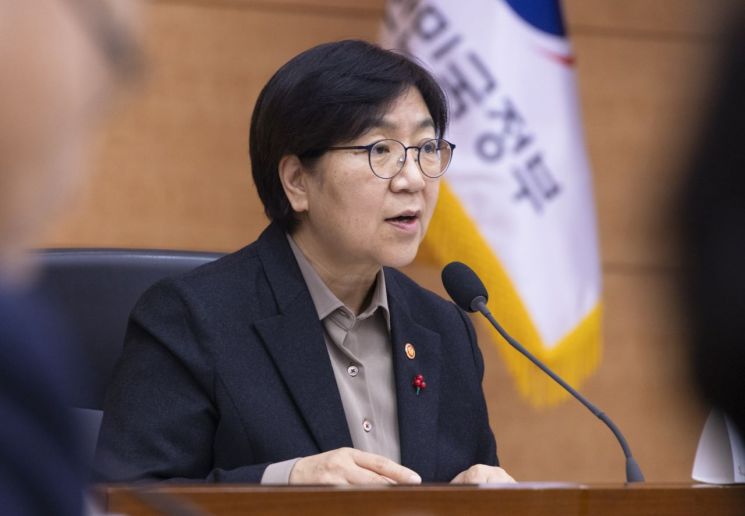
Minister of Health and Welfare Chung Eun-kyung stated, "Integrated Care is a new care system for which both the central and local governments share responsibility. The key to success is for each city, county, and district to prepare thoroughly according to local circumstances. We will ensure transparency in reporting on the state of preparations, work closely with local governments, and push forward with the main project without delay."
© The Asia Business Daily(www.asiae.co.kr). All rights reserved.
![Clutching a Stolen Dior Bag, Saying "I Hate Being Poor but Real"... The Grotesque Con of a "Human Knockoff" [Slate]](https://cwcontent.asiae.co.kr/asiaresize/183/2026021902243444107_1771435474.jpg)
















