Up to 50% Tariffs on Non-FTA Countries
Automotive and Steel Sectors Face Direct and Indirect Impact
Will CPTPP Membership Talks Gain Renewed Momentum?
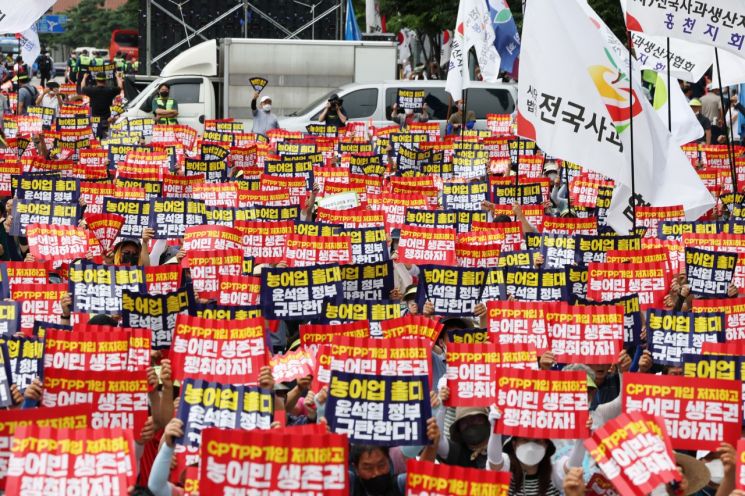
As Mexico moves to significantly raise tariffs on countries with which it has not signed a Free Trade Agreement (FTA), the need for South Korea to join the Comprehensive and Progressive Agreement for Trans-Pacific Partnership (CPTPP) has resurfaced. With the global trade order shifting toward multilateral trade blocs, there is a growing awareness that South Korea will find it difficult to avoid disadvantages if it remains outside major trade zones.
According to government sources on January 8, the Mexican government has, since the beginning of this year, imposed tariffs of up to 50% on a total of 1,463 items-including automobiles, steel, home appliances, and textiles-from countries without an FTA, such as South Korea, China, and India. In contrast, CPTPP member countries such as Japan, Canada, and Australia continue to enjoy either zero or low tariffs. This has made it clear that price competitiveness in the same market and for the same products now depends on whether a country is part of a trade bloc.
For South Korea, major export items such as automobiles, steel, home appliances, and textiles are directly affected. Industry experts estimate that tariff rates have generally increased by 10 to 25 percentage points compared to previous levels.
The sectors most heavily impacted are automobiles and steel. South Korea exports over $1.6 billion worth of auto parts to Mexico annually, with a higher proportion of intermediate goods than finished vehicles. Tariffs on parts will inevitably raise local assembly costs, leading to either higher prices or pressure for supply chain restructuring. For steel, more than 1.9 million tons are exported to Mexico each year, and for some items, tariff rates could rise as high as 50%.
The electronics and home appliance industries are also indirectly affected. Large corporations such as Samsung Electronics and LG Electronics, which have a high proportion of local production in Mexico, may experience limited short-term impact. However, concerns are rising that their domestic suppliers of parts and materials will face mounting cost pressures. Some analyses estimate that manufacturing costs for home appliances in Mexico could increase by as much as 3% to 4%.
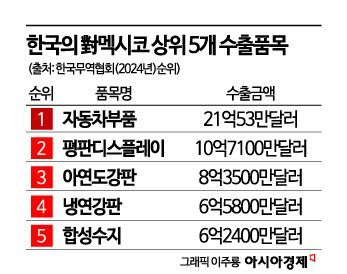
The government believes that, for key sectors such as automobiles and electronics, the high proportion of local production will limit the short-term impact. However, it is pointed out that export companies focusing on intermediate goods and parts will inevitably face accumulating burdens.
This tariff structure highlights a phase where competitive conditions are clearly divided based on trade bloc membership, rather than simply on a country-to-country basis. Most notably, the significance lies in the fact that this is not limited to a single country’s trade policy shift. As protectionism intensifies, countries are moving beyond bilateral FTAs to reorganize their trade strategies around multilateral economic alliances. For Mexico, which leverages both the United States-Mexico-Canada Agreement (USMCA) and CPTPP, this is seen as a choice that simultaneously strengthens domestic industry protection and trade negotiation power.
These changes in the environment are reigniting discussions about joining the CPTPP. The CPTPP is a large-scale multilateral trade agreement involving key countries in Asia and the Americas, including Mexico, Japan, Canada, Australia, and Vietnam. It not only eliminates tariffs among member countries but also covers supply chains, digital trade, and intellectual property regulations. If South Korea joins, it is expected to both resolve the tariff risks posed by Mexico and secure a “broad safety net” that would protect against abrupt changes in any single country’s trade policy.
Industry perspectives are increasingly shifting toward pragmatism. One manufacturing industry official stated, “Trying to sign FTAs one by one with individual countries cannot keep pace with the spread of protectionism. The CPTPP is no longer a matter of choice, but the minimum requirement to level the playing field.”
However, domestic discussions surrounding CPTPP membership are not proceeding smoothly. The most sensitive issue remains the import of Japanese seafood following the release of contaminated water from the Fukushima nuclear plant. If South Korea attempts to join the CPTPP, there is a strong possibility that Japan, as the leading member of the agreement, will raise the issue of seafood import restrictions at the negotiation table. This is cited as a source of concern within the government. In fact, agricultural and fisheries sectors, as well as consumer groups, have consistently voiced concerns that “CPTPP membership could lead to increased pressure to import Japanese seafood.”
This has led to differences in stance among government ministries. Ministries responsible for industry, trade, and foreign affairs argue that reviewing CPTPP membership is unavoidable to adapt to changes in the global trade environment and maintain export competitiveness. On the other hand, ministries overseeing agriculture, forestry, and fisheries, as well as some political circles, remain cautious, citing the need to protect domestic industries and prevent potential social conflict. Since the CPTPP is not just a tariff agreement but one that could affect the entire domestic regulatory, quarantine, and food safety system, it is difficult to reconcile these differing interests among ministries.
A government official stated, “Joining the CPTPP is not only a matter of trade strategy but also an issue requiring social consensus. We cannot ignore both the economic benefits and the sensitive domestic issues.” Another official said, “Although external factors such as the Mexican tariffs are changing rapidly, it is not a situation where we can push ahead without considering internal conflicts.”
Nevertheless, there is a growing consensus that Mexico’s tariff hikes are fundamentally changing the direction of CPTPP discussions. In the past, the debate was framed as ‘a problem whether we join or not,’ but now, the tangible costs of not joining are becoming clear. As disadvantages such as tariff increases, supply chain discrimination, and reduced investment accumulate, the question is increasingly being raised in the industrial sector as to whether maintaining a non-member status in the CPTPP is a rational choice.
© The Asia Business Daily(www.asiae.co.kr). All rights reserved.
![User Who Sold Erroneously Deposited Bitcoins to Repay Debt and Fund Entertainment... What Did the Supreme Court Decide in 2021? [Legal Issue Check]](https://cwcontent.asiae.co.kr/asiaresize/183/2026020910431234020_1770601391.png)

















