Reorganizing Disadvantageous Agendas Such as Climate and Gender Issues
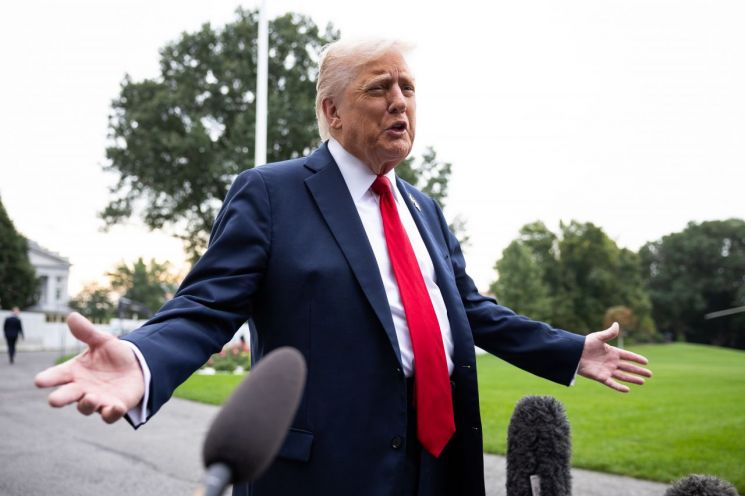
On January 7 (local time), President Donald Trump of the United States, who has declared an "America First" policy, signed a presidential memorandum to withdraw the United States from 31 United Nations (UN) affiliated organizations and 35 non-UN organizations. President Trump, who has consistently prioritized national interests over multilateral norms, appears to be taking definitive steps to withdraw from international agendas he deems disadvantageous, such as those related to climate and gender.
The White House announced via social networking services (SNS) and a fact sheet that "many of these organizations promote radical climate policies, global governance, and ideological programs that conflict with American sovereignty and economic strength."
The White House further stated that these organizations "operate in ways that are contrary to the national interest, security, economic prosperity, and sovereignty of the United States," and declared, "All government departments and agencies will cease participation in and funding for these organizations." However, the White House did not specify the names of the organizations, agencies, or committees from which the U.S. will withdraw, nor did it mention the scale of funding cuts.
The statement added, "They often criticize U.S. policies, pursue agendas that conflict with our values, or claim to address important issues but fail to deliver tangible results, thereby wasting taxpayers' money. By withdrawing from these organizations, President Trump will save taxpayers' money and refocus those resources on America-first priorities."
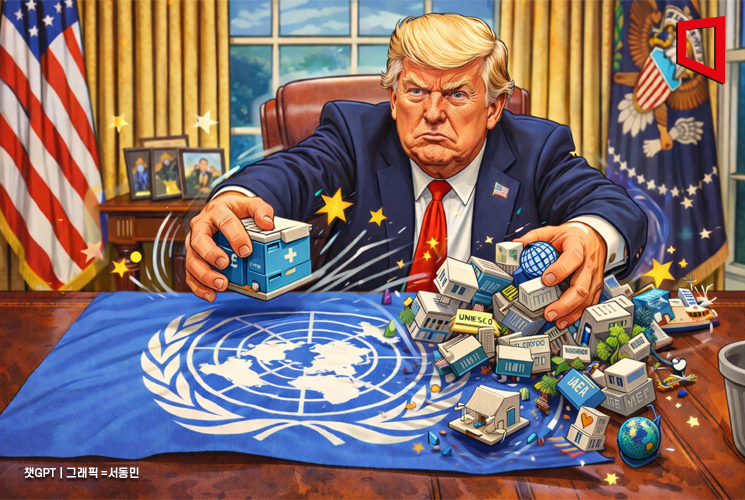
This move appears to reflect the stance of President Trump's second administration, which, since its inauguration in January last year, has prioritized American citizens and national interests above all else. The Trump administration previously decided to withdraw from the UN Human Rights Council, the United Nations Relief and Works Agency for Palestine Refugees (UNRWA), and the United Nations Educational, Scientific and Cultural Organization (UNESCO), and has also announced intentions to withdraw from the Paris Climate Agreement and the World Health Organization (WHO).
President Trump has also shown a clear tendency to prioritize the United States over multilateral norms in economic and trade matters. Recently, the U.S. Department of the Treasury announced that 150 countries had agreed not to apply the minimum corporate tax system established by the Organization for Economic Cooperation and Development (OECD) to American companies. Although this system was introduced to prevent multinational corporations from seeking tax havens with low rates, the United States, citing "tax sovereignty," has effectively exempted its major tech companies from these rules.
However, it is considered unusual for the U.S. government to announce plans to withdraw from dozens of organizations and agencies simultaneously. The conservative media outlet Newsmax noted, "This measure is the most extensive rollback of multilateral cooperation since the launch of the Trump administration's second term."
There are also concerns that global efforts to address the climate crisis will regress. Although the White House did not release a specific list, it is expected that the United Nations Framework Convention on Climate Change (UNFCCC) will be among the affected organizations. The UNFCCC was established in 1992 by 198 countries to address international climate issues and serves as the foundation for the Paris Agreement, which aims to combat global warming. President Trump, who has called climate change a "hoax," signed an executive order to withdraw from the Paris Agreement immediately after taking office on January 20 last year.
The New York Times reported, "This decision is a strong signal that the United States is retreating from global diplomacy and leadership, and it has been criticized as a move that directly confronts billions of people, including Americans, who are suffering from the severe consequences of global warming."
Bloomberg reported that economic repercussions for international organizations, including UN agencies, are inevitable. Last week, the United Nations announced that it would reduce its regular budget for 2026 by about 7% compared to the previous year due to a financial crisis caused by the United States failing to pay its contributions. Large-scale restructuring is also expected, including reducing administrative staff by more than 20%.
Brett Schaefer, Senior Fellow at the American Enterprise Institute (AEI), a conservative U.S. think tank, explained, "The United States is redefining its approach to financial support and cooperation with international organizations, starting with the United Nations. This measure is likely in line with the U.S. government's international policy stance on issues such as climate, gender, and other priorities."
© The Asia Business Daily(www.asiae.co.kr). All rights reserved.


















