Special Prosecutor’s Team Weighs Death Penalty and Life Imprisonment
Legal Community Says “Seeking Death Penalty Would Be a Heavy Burden”
With just one day remaining before the verdict in the first trial of former President Yoon Suk-yeol, who stands accused as the ringleader of insurrection in the 12·3 Martial Law Incident, attention is focused on whether Special Prosecutor Cho Eunseok's team will seek the maximum penalty of death.
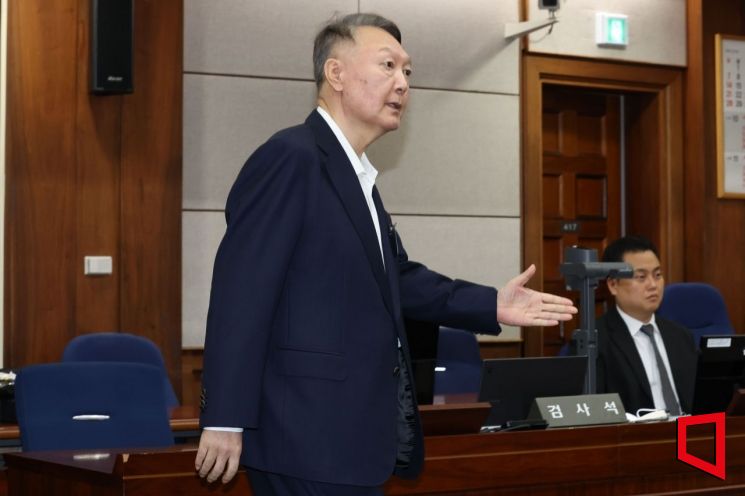 Former President Yoon Suk-yeol is attending a trial on charges of obstruction of official duties held at the Seoul Central District Court in Seocho-dong, Seoul on the 26th.
 According to legal sources on January 8, the special prosecutor's team will hold a meeting at 3 p.m. today to determine the sentencing recommendation for former President Yoon. It has been confirmed that the team is leaning toward either the death penalty or life imprisonment, as they see no grounds for mitigation.
Former President Yoon is accused of instigating a riot with the aim of undermining the constitutional order by declaring martial law, attempting to arrest and detain key figures including President Lee Jaemyung (then leader of the Democratic Party), and blocking the National Assembly to prevent a resolution to lift martial law.
The statutory penalties for the charge of being the ringleader of insurrection are limited to three options: death, life imprisonment, or life penal servitude. Previously, prosecutors sought the death penalty for former President Chun Doo-hwan, who was indicted on similar charges. The first trial court sentenced him to death, but the appellate court reduced the sentence to life imprisonment, which was ultimately confirmed by the Supreme Court.
However, legal experts believe it will not be easy for the special prosecutor's team to pursue the death penalty. A lawyer who formerly served as a presiding judge commented, "Setting aside the issue of whether the martial law was unconstitutional or illegal, it is difficult to recognize the case as insurrection to the same extent as the Chun Doo-hwan case. Seeking the death penalty would be a considerable burden for the special prosecutor's team as well."
The 25th Criminal Division of the Seoul Central District Court (Presiding Judge Ji Guyoun) is scheduled to conclude the trial for former President Yoon on January 9. During the final hearing, the special prosecutor's sentencing recommendation, the defense's closing arguments, and the defendant's final statement will be presented, after which the proceedings will be closed.
The verdict in the first trial is expected to be delivered by mid-February at the latest. Even in insurrection cases, if there are circumstances that can be considered in favor of the defendant, the judge may reduce the sentence. The death penalty can be commuted to life imprisonment or imprisonment/penal servitude for 20 to 50 years, while life imprisonment or life penal servitude can be reduced to imprisonment/penal servitude for 10 to 50 years.
A lawyer who is a former judge stated, "Denying all charges throughout the trial and refusing to appear in court for four months after being rearrested will work against former President Yoon. On the other hand, the short duration of the incident and the absence of casualties may serve as mitigating factors."
© The Asia Business Daily(www.asiae.co.kr). All rights reserved.

















