Pregnancy via IVF After Losing Only Son
Online Debate Over Mother's Health and Child's Future
IVF Procedures Principally Restricted to Legally Married Couples
Controversy has erupted in China over late-age childbirth after it was revealed that a woman in her 60s, who lost her only son, became pregnant through in vitro fertilization (IVF). On January 7 (local time), the Hong Kong-based South China Morning Post (SCMP) reported that Ms. A, a 62-year-old resident of Songyuan in Jilin Province, lost her only son, whom she had raised alone, in January of last year, and subsequently succeeded in becoming pregnant via IVF in the second half of the same year. Ms. A is currently six months pregnant. The age of her son and the cause of his death have not been disclosed.
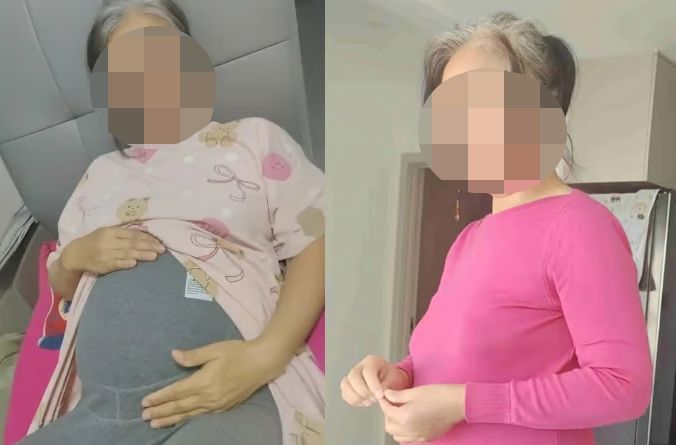 A woman in her 60s in China who lost her only son has sparked controversy after it was revealed that she became pregnant through in vitro fertilization (IVF). Douyin
Ms. A's younger sister has been sharing details of the pregnancy journey on social networking services (SNS). In a video posted online, Ms. A said, "I can feel the baby kicking," and mentioned that the birth might occur earlier than the expected due date. In China, where a traditional preference for sons persists, it is illegal to disclose the sex of a fetus before birth. As a result, Ms. A does not know the baby's gender. However, she shared on SNS that "people around me say that if you crave sweet foods, it is more likely to be a boy."
The story has sparked a wide range of reactions online. Some commenters expressed understanding, saying, "She must have needed emotional support," and "It's a choice that can be understood after experiencing loss." Others, however, criticized the decision, asking, "Can a mother of such advanced age raise a child?" and calling it "a choice that does not consider the child's future."
The medical community has pointed out the risks associated with pregnancy at an advanced age. Generally, the risk of complications during pregnancy and childbirth increases as women get older, and pregnancies after the age of 40 can pose significant burdens for both the mother and the fetus. Dr. Chen Min, an obstetrician at Harbin First Hospital in Heilongjiang Province, said in a local media interview, "Pregnancy at such an advanced age carries high risks of complications such as gestational hypertension, diabetes, and premature birth. In most cases, a cesarean section is unavoidable, and the surgery itself is considered high risk." Institutional issues have also fueled the controversy. In China, assisted reproductive technologies are subject to certain regulations, and in principle, only married couples are eligible for IVF procedures. This has led to ongoing debate over whether the procedure Ms. A underwent, given her unmarried status, was conducted in accordance with the law.
© The Asia Business Daily(www.asiae.co.kr). All rights reserved.

















