Preventing Processing Gaps During Major Overhaul
Maintaining the Principle of Complete Incineration at Gangnam Resource Recovery Facility
On January 8, Gangnam District in Seoul (District Mayor Cho Sungmyung) announced that it has signed contracts with five private incineration plants to prepare for a potential processing gap during the major overhaul of the Gangnam Resource Recovery Facility's incinerator scheduled for May this year.
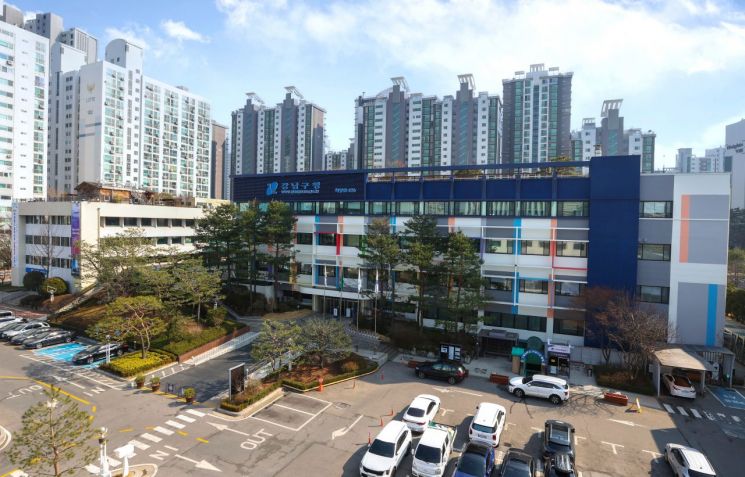
The district currently incinerates all volume-based household waste generated within its jurisdiction at the Gangnam Resource Recovery Facility. Last year, it processed 67,642 tons, and this year it plans to process 71,268 tons. The Gangnam Resource Recovery Facility not only handles waste from Gangnam District but also processes household waste from seven other districts: Seongdong, Gwangjin, Dongjak, Gwanak, Seocho, Songpa, and Gangdong.
The Gangnam Resource Recovery Facility conducts regular major overhauls to ensure the safe operation and maintain the performance of its incinerators. The upcoming overhaul is scheduled from May 8 to June 15. In December last year, the government allowed landfill disposal as an exception during facility shutdowns; however, whether and to what extent waste can actually be accepted for landfill will be determined based on the operational conditions and related procedures of the metropolitan landfill site.
To secure alternative disposal methods during the overhaul period, the district has signed contracts with five private incineration plants in advance. These contracts are not intended for normal waste transfers but are emergency contingency measures to prevent any processing gaps during the facility's downtime. In accordance with the Ministry of the Interior and Safety's 'Local Government Bidding and Contract Execution Standards,' the contracts were awarded through a nationwide open competitive bidding process, making it difficult to arbitrarily designate specific processing regions.
Meanwhile, the district has expanded its waste reduction policies with the goal of increasing the recycling collection rate by 10%, which would reduce general waste by 7%. It distributed 1.95 million dedicated waste bags for plastic film to 60,485 small commercial establishments with high mixed plastic film waste output and, as the first district in Seoul, launched a plastic film recycling project in partnership with Hyundai Department Store. The collected plastic film was thermally decomposed and made into resource-circulating bags, which were then redistributed to residents, receiving a positive response. As a result, the amount of recycled plastic film increased by about 23.4%, from 2,661 tons in 2024 to 3,284 tons in 2025.
This year, the district will officially operate the 'Recycling Promotion Task Force,' which includes civil servants, experts, residents, and related organizations. Under the direction of the Deputy District Mayor, a dedicated task force composed of the Resource Circulation Division, 10 cleaning service companies, facility management departments, and 22 neighborhood community centers will be deployed to strengthen waste separation and on-site response.
Cho Sungmyung, Mayor of Gangnam District, stated, "We are processing household waste safely at local facilities in accordance with established principles," adding, "We will continue to pursue sustainable policies to reduce household waste and make recycling and waste separation a part of daily life together with our residents."
© The Asia Business Daily(www.asiae.co.kr). All rights reserved.

















