Tariffs Eliminated on 45 US Agricultural Products, Including Beef and Dairy
US Beef Now Tariff-Free After 14 Years of Gradual Reductions
Imported Beef Prices Under Scrutiny Amid Exchange Rate Fluctuations
US Mandarins and Cheese Also Benefit from
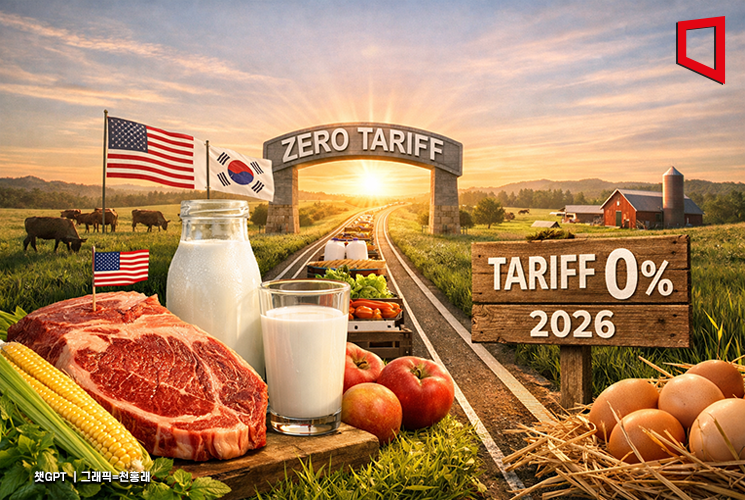
Starting this month, tariffs on 45 types of agricultural and livestock products imported from the United States, including beef, milk, and mandarins, will be eliminated. This comes about 14 years after the phased reduction of tariffs began following the implementation of the Korea-US Free Trade Agreement (FTA) in 2012.

According to the Ministry of Agriculture, Food and Rural Affairs on January 7, tariffs on 45 agricultural and livestock products imported from the United States have been adjusted to 0% as of January 1, under the Korea-US FTA. In particular, US beef, which was subject to tariffs of 1.2% to 4.8% last year, is now tariff-free starting this year. Before the FTA, the tariff rate on US beef was as high as 37.3%, but it has been gradually reduced by 2.6 percentage points each year since the agreement was signed.
The import volume of US beef reached an all-time high of 257,000 tons in 2022, and has remained above 230,000 tons annually, accounting for about half of the imported beef market. From January to November last year, 218,383 tons of US beef were imported, representing 45.2% of all imported beef.
Attention is now focused on whether this tariff adjustment will help stabilize the sharply rising prices of imported beef. According to the National Data Office, the inflation rate for imported beef soared from 2.2% in September last year to 5.3% in October, 6.8% in November, and 8% in December.
The sharp rise in imported beef prices has been largely attributed to the high exchange rate. In fact, in November last year, the import price of beef in US dollars rose 10.3% year-on-year, but when adjusted for exchange rates, the increase in Korean won terms reached 15.4%. However, even with the elimination of tariffs, the increase in import costs has not yet been fully reflected in consumer prices, so the upward trend in prices may continue.
The number of US fruit and dairy products subject to zero tariffs has also increased. US mandarins, which were subject to a 9.5% tariff last year, are now tariff-free starting this year. US mandarins, a hybrid between oranges and tangerines, are mainly sold in Korea from January to June, and their distribution during this period is expected to impact the prices of Jeju citrus fruits, which are in season at the same time.
Tariffs on US dairy products such as cheese were gradually lowered to 4.8% in 2024 and 2.4% in 2025, and have now been completely eliminated starting this year. US cheese accounted for 46% of imported cheese from January to November last year.
In addition, tariffs on a total of 45 items, including fresh eggs, walnuts, peanuts, garlic, onions, and sesame seeds, have been eliminated starting this year.
© The Asia Business Daily(www.asiae.co.kr). All rights reserved.


















