Operational Efficiency Enhanced through Digital Innovation in Defense
Improved Convenience and Security... Unification of Defense Facility Operations
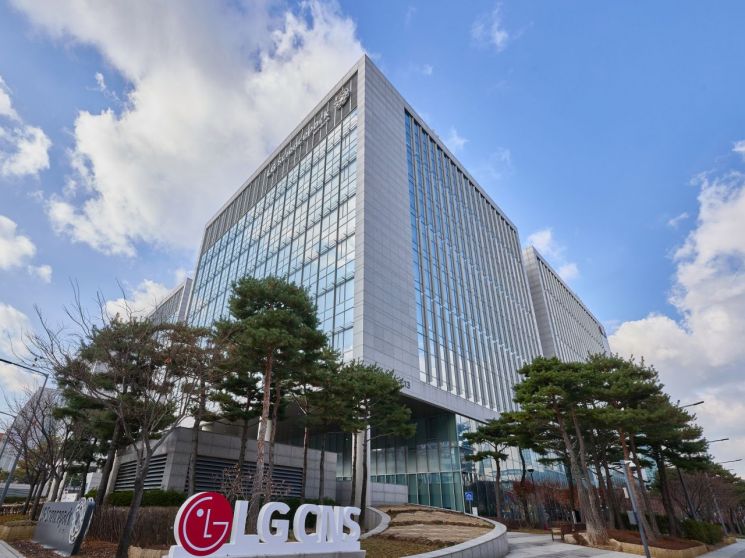
LG CNS is expanding digital innovation into the defense sector by consecutively winning two defense IT projects. On January 7, LG CNS announced that it had signed contracts for the "Similar Communication Network Integration Project" with the Republic of Korea Army Command Communication Headquarters and the "Next-Generation Defense Facility Integrated Information System Construction Project" with the Defense Computing Information Agency.
The Similar Communication Network Integration Project aims to unify the individually operated network systems of the Army, Navy, Air Force, and Joint Chiefs of Staff into a single integrated network. LG CNS is scheduled to carry out this project over a period of 15 months.
The South Korean military is actively pursuing the establishment of a "Korean-Style Command and Control System" to secure integrated operational capabilities across all military domains, including space, maritime, ground, and cyber. Network integration is the first step and a core project that lays the foundation for the next-generation command and control system.
In this project, LG CNS will standardize the network environments of each unit and integrate network equipment that has been redundantly installed and operated. Previously, each military branch’s information-sharing systems were interconnected on a one-to-one basis, resulting in a complex structure for information exchange. Through network integration, LG CNS will streamline the flow of information, enhancing operational efficiency. Additionally, the company plans to apply Software-Defined Networking (SDN) technology, enabling centralized control and management of routers distributed nationwide, thereby improving management convenience.
Security will also be strengthened to ensure safe network operation. LG CNS will upgrade information protection systems such as DDoS response and intrusion prevention systems, as well as firewalls, to high-performance equipment. An artificial intelligence (AI)-based integrated security monitoring solution will be implemented to detect and respond to abnormal activities in real time.
The Next-Generation Defense Facility Integrated Information System Construction Project by the Defense Computing Information Agency is a comprehensive overhaul of the current system, replacing it with a new system and infrastructure. The goal is to improve work efficiency and standardize data, driving integrated innovation across the entire lifecycle of defense facility operations, including planning, design, construction, operation, and maintenance.
LG CNS will unify defense facility operations by linking 12 individual work systems, such as Onnara 2.0 and the Defense Financial Information System, as well as eight external systems, including the Ministry of the Interior and Safety’s Public MyData and the Ministry of Environment’s Olbaro System, to the integrated information system for defense facilities.
LG CNS will also build a spatial information-based integrated information system for defense facilities, ensuring stable utilization of spatial data required for defense facility operations. The Defense Computing Information Agency will be able to view all necessary information for defense facility operations-such as facility planning, budget allocation, construction management, and national property management-on a single screen and quickly carry out related work.
Bae Min, Executive Vice President and Head of Financial and Public Business at LG CNS, stated, "We will bring together our defense IT capabilities to successfully complete these two projects and lead digital innovation in the defense sector."
© The Asia Business Daily(www.asiae.co.kr). All rights reserved.
![Clutching a Stolen Dior Bag, Saying "I Hate Being Poor but Real"... The Grotesque Con of a "Human Knockoff" [Slate]](https://cwcontent.asiae.co.kr/asiaresize/183/2026021902243444107_1771435474.jpg)











