We live in an era where everything changes rapidly and disappears without a trace. Shops that opened not long ago vanish overnight, and familiar signs are replaced as a matter of course. Small, independent stores often struggle as they are overshadowed by large franchises. Yet, there are places that have survived for decades, continuing their family business against the odds. These are the so-called “Nopo” (old, long-standing) stores. Here, we introduce some of these enduring establishments, where you can find comfort in a warm bowl of food during the cold winter, and where the depth of time is reflected in every dish.
■ Suwon Honam Sundae: The Leading Store in Jidong Sundae Gopchang Town
Near Paldalmun, where the history of Suwon flows, inside Jidong Market, you’ll find Jidong Sundae Gopchang Town. As soon as you step inside, the entire market is filled with open stalls selling sundae (Korean blood sausage) and gopchang (beef or pork intestines). Among them, “Honam Sundae” stands as a fixture of the market. Having started business here in the mid-1980s, it has been running for over 40 years. Initially, they sold only sundae, but later added sundae soup, which was met with enthusiastic response from customers. Over time, the menu naturally expanded, and now, stir-fried sundae and gopchang is the most popular dish.
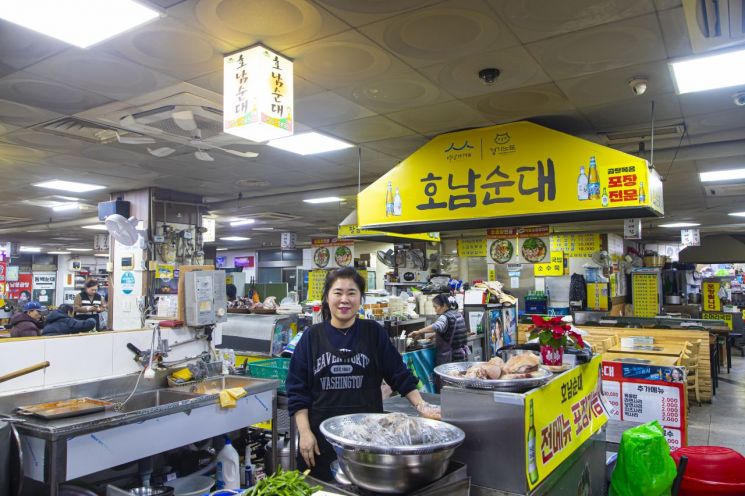
Honam Sundae opens as early as 4 a.m., truly ushering in the morning for Suwon. Their sundae soup, simmered in beef bone broth for 24 hours, is rich and free of any unpleasant odors, as only pork bones are used-no other bones are added. It’s a simple, unpretentious dish, but its unwavering popularity over the years proves its worth. This is the signature dish of Honam Sundae. The stir-fried sundae and gopchang is also not to be missed. It features sundae and gopchang as the base, with generous amounts of chives, perilla leaves, green onions, cabbage, and chewy glass noodles. It’s perfect as a meal or as a side dish with drinks. Amidst the sights and sounds of Jidong Market, Honam Sundae continues to serve its food in the same way as always. There is a clear reason why people keep coming back, even as time passes.
Address: Unit 5, Building A, Sundae Town, Jidong Market, 19 Paldalmun-ro, Paldal-gu, Suwon-si, Gyeonggi-do
Phone: 031-255-0498
Hours: 04:00~22:00
Prices: Stir-fried Sundae and Gopchang 15,000 KRW, Sundae Soup 10,000 KRW, Ox Head Soup 12,000 KRW
■ Paju Deokseongwon: Guarding the Same Spot for 70 Years
About 300 meters from Geumchon Station on the Gyeongui-Jungang Line is Geumchon Unification Market, Paju’s representative traditional market. Since the opening of Geumchon Station on the Gyeongui Line in 1906, the market itself has a history spanning over 100 years. On the northern side of the market stands a Chinese restaurant that has endured for nearly as long. “Deokseongwon,” meaning “a place that serves food with sincerity,” first opened its doors in 1954-over 70 years ago.
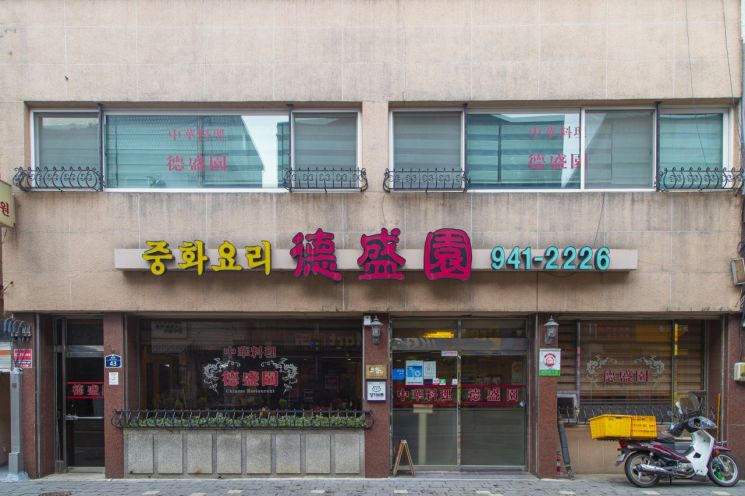
Traces of time are clearly visible inside the restaurant. Several black-and-white photos hang on the walls, showing Deokseongwon as it looked in the 1960s. Longtime regulars reminisce about the old days as they look at these photos. Among the faded images is a child sitting on the saddle of a cargo bicycle or standing next to his mother in front of Deokseongwon. These are childhood photos of the current owner, Lee Deokgang. He is the third-generation owner, and now his son manages the kitchen. Deokseongwon is now in its fourth generation. The reason they have been able to stay in business for so long is simple: as the name suggests, they have always put sincerity into every dish. They never use frozen seafood and insist on only the freshest vegetables. The food may not be flashy, but the years of experience at the stove are evident in every bite. Their attitude toward taste has never changed, even as time has passed.
Address: 43 Myeongdong-gil, Paju-si, Gyeonggi-do
Phone: 031-941-2226
Hours: 11:00~21:00 (Mon-Fri break time 15:00~17:00)
Prices: Jajangmyeon 8,000 KRW, Jjamppong 9,000 KRW, Sichuan Jajangmyeon 13,000 KRW, Seafood Jjamppong 14,000 KRW
Website: https://blog.naver.com/duksungwon_official
■ Ansan Ijo Kalguksu: Colorful, Easy-to-Digest Three-Colored Noodles
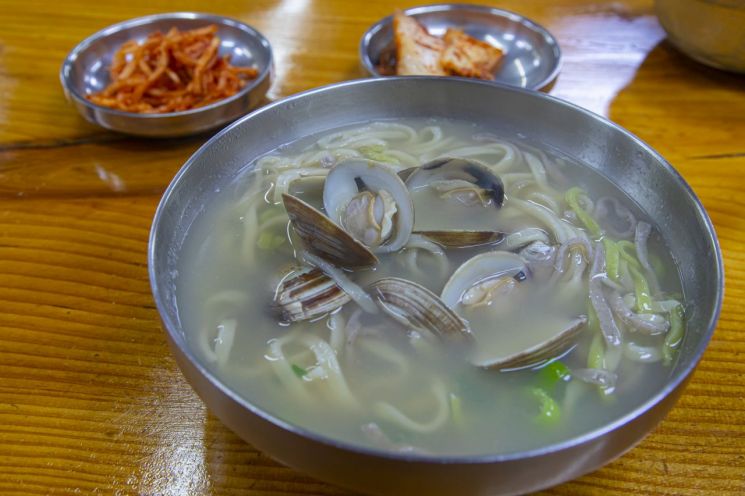
Ijo Kalguksu is a must-mention when talking about famous eateries in Ansan. For 35 years, it has remained in the same spot, feeding the local community. The noodles here are particularly eye-catching-they come in three colors. The three-colored noodles are made by mixing black rice and glutinous brown rice, soybean flour, and chives into the dough, making them not only visually appealing but also easy to digest. The broth, made from seafood, is light yet savory. The key ingredient, clams, are sourced from Incheon Yeonan Pier at least three times a week to ensure freshness.
When you order kalguksu, a bowl of barley rice is served first. Mixed with a little gochujang and radish salad, it is perfect for stimulating the appetite. Thanks to this, the table comes alive even before the kalguksu arrives. Ijo Kalguksu also has other popular dishes: red bean kalguksu and red bean porridge. From selecting the best red beans to achieving the perfect consistency, these labor-intensive dishes are just as popular as the kalguksu itself. Another highlight is the kimchi, which is so beloved that it is sold separately. The traditional kimchi, passed down through three generations of mother and daughter, is made with honest ingredients and skilled hands, embodying the spirit of Ijo Kalguksu.
The process of choosing the best red beans and achieving the right consistency requires a lot of effort, but the taste is well worth it. These dishes sell just as well as the kalguksu. And when talking about the food here, you cannot leave out the kimchi, which is so popular that it is sold separately. The traditional kimchi, passed down through three generations of mother and daughter, and made with honest ingredients and skilled hands, is an integral part of Ijo Kalguksu.
Address: 124 Seonbugwangjang 1-ro, Danwon-gu, Ansan-si, Gyeonggi-do
Phone: 031-401-5168
Hours: 09:30~21:30
Prices: Seafood Kalguksu 9,000 KRW, Spicy Kalguksu 10,000 KRW, Clam Kalguksu 10,000 KRW, Red Bean Kalguksu 10,000 KRW
■ Yangpyeong Sagak Haneul: Enjoying Sukiyaki in a Tranquil Hanok
Driving along the lower reaches of the Bukhan River, if you turn toward Pyotdaebong from Munho-ri, a narrow village road unfolds. After climbing about 500 meters up a hill, you’ll find a hanok (traditional Korean house) that looks like a movie set, exuding a tranquil atmosphere. This is “Sagak Haneul,” a restaurant specializing in Japanese sukiyaki. With no signboard, it’s easy to miss unless you know about it in advance, adding to its intentionally hidden feel. Surprisingly, the hanok was built by a Japanese architect. The Japanese husband, captivated by the charm of hanok, built the house, while his Korean wife has long studied tea ceremony and kaiseki, a traditional Japanese course meal. Blending their tastes, they created Sagak Haneul in 1998.
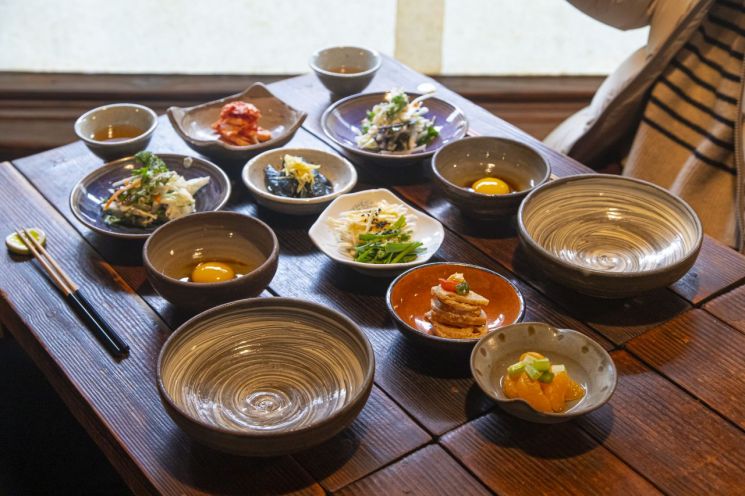
Upon entering, you are greeted by a neat and restrained atmosphere, which puts both body and mind at ease. The only dish served here is sukiyaki. Vegetables such as cabbage, mushrooms, green onions, and crown daisy are stir-fried on an iron plate, then broth is added and brought to a boil before thinly sliced beef is added. The cooked ingredients are dipped in raw egg before eating. The meal is finished with udon noodles cooked in the remaining broth.
In a separate annex, you can also experience a tea ceremony with matcha. The tatami room has no artificial lighting, relying solely on natural light through paper windows and candlelight. It’s an experience where you can enjoy a moment of reflection while drinking tea. Both the meal and the matcha experience are available by reservation only, making the time spent here even quieter and slower.
Address: 53 Gilgok 2-gil, Seojong-myeon, Yangpyeong-gun, Gyeonggi-do
Phone: 031-774-3670 (reservation required by phone)
Hours: Wed-Thu 12:00~15:00, Sat-Sun 12:00~20:00 (Sat-Sun break time 15:00~17:00, closed Mon-Tue)
Prices: Sukiyaki (lunch) 48,000 KRW, Sukiyaki (dinner) 60,000 KRW, Tea Room Matcha Experience 40,000 KRW
Website: https://www.instagram.com/sagakhanul
■ Icheon Jangheung Hoegwan: A Family’s Life Steeped in Every Dish
In Icheon, “Jangheung Hoegwan” has been operating in the same spot since 1982. Sometimes, due to the name “Jangheung,” people mistakenly assume the founder’s hometown is Jangheung in South Jeolla Province, but in fact, it is Muan, also in South Jeolla. The founder, the eldest of eight siblings, started as a street vendor in front of what is now Jangheung Hoegwan after a failed business venture. When he heard the restaurant was up for sale, he decided to take it over, borrowing money to do so. Because of his tight finances, he couldn’t afford a new sign, so he kept the previous restaurant’s name, which remains to this day.
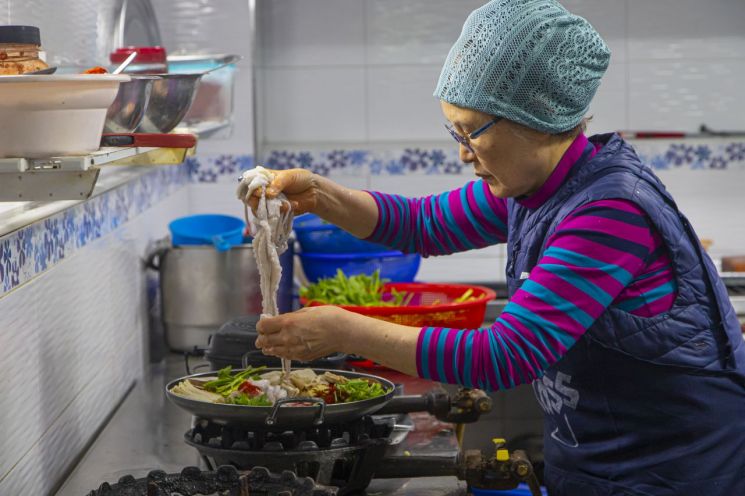
Jangheung Hoegwan specializes in hot pot dishes. The signature dish is Nakgop Jeongol, a hot pot featuring octopus and beef intestines, offering a deep, fresh flavor from both seafood and meat. Another popular dish is Chanakgop Jeongol, which was developed by the founder’s son, the second-generation owner. After closing one night, he and his friends made Nakgop Jeongol but ran out of ingredients and substituted brisket, discovering that it tasted even better. The addition of savory brisket to the original octopus and intestines created an even richer flavor, and now Chanakgop Jeongol is the more popular choice. From a name born of necessity to a menu developed by chance, the hot pots at Jangheung Hoegwan simmer with the choices of one family’s past.
Address: 8-1 Jungnicheon-ro, Icheon-si, Gyeonggi-do
Phone: 0507-1372-3710
Hours: 10:30~21:30
Prices: Chanakgop Jeongol (small) 55,000 KRW, Nakgop Jeongol (small) 45,000 KRW, Saengtae Jjigae 18,000 KRW
Website: https://blog.naver.com/jangheunghoegwan
■ Chef Boulanger in Gimpo: Starting the Day with the Aroma of Fresh Bread
“Chef Boulanger” opens its doors promptly at 8 a.m. every morning. Freshly baked bread begins to emerge from the oven, and dough is kneaded diligently in one corner. The aroma of bread fills the air, awakening the day. The owner, Lee Byungjae, hails from Gochang in North Jeolla Province and learned baking at an early age. He honed his skills and experience at renowned bakeries such as Iseongdang in Gunsan and Koayangkwa in Masan.
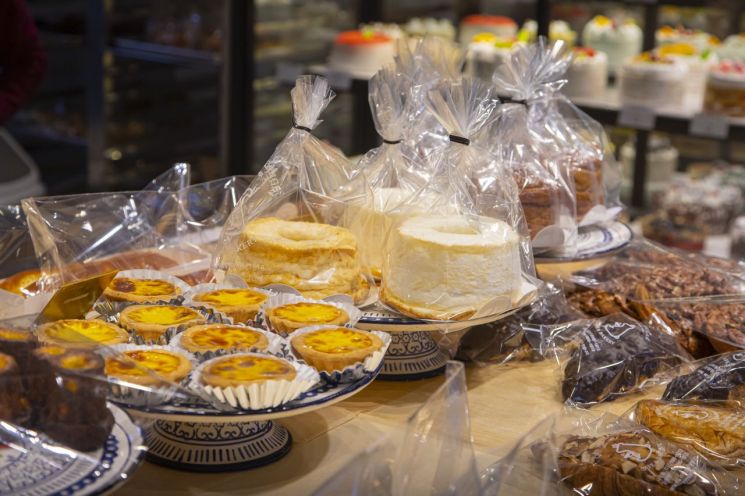
In 1989, he opened his first bakery in Yangjae-dong, Seoul, and in 2002, he moved to his current location in Sau-dong, Gimpo, establishing Chef Boulanger. Today, the bakery offers over 100 varieties of bread. Among the most beloved are “Rice Red Bean Bread” made with homemade sweet red bean paste, “Alligator” packed with thinly sliced pecans, and “Carrot Cream Cheese Pound” filled with rich cream cheese between layers of carrot pound cake. These breads are so popular that they sell out as soon as they hit the shelves. As a certified master baker, Lee’s creations are guaranteed to be delicious. Now, his two sons have joined the business, kneading dough alongside him. The taste of time is baked into every loaf at Chef Boulanger, with the legacy of the past and the promise of the future in every bite.
Address: 1st Floor, Sau Plaza, 82 Saujung-ro, Gimpo-si, Gyeonggi-do
Phone: 031-998-1813
Hours: 08:00~23:00 (weekend hours may vary)
Prices: Rice Red Bean Bread 2,500 KRW, Alligator 5,700 KRW, Carrot Cream Cheese Pound 8,700 KRW
© The Asia Business Daily(www.asiae.co.kr). All rights reserved.



















