Revenue Up 27.31%
Boseong County, South Jeolla Province, announced that its local tea culture facilities recorded a total of 523,359 visitors and revenue of 2.925 billion won in 2025, showing a clear increase in both visitors and revenue compared to the previous year.
Compared to 2024, the number of visitors increased by 45,305 (9.48%), and revenue rose by 361 million won (27.31%). This growth is attributed to the rising public interest in Boseong’s tea culture and the recovery of tourism demand, which have led to tangible results.
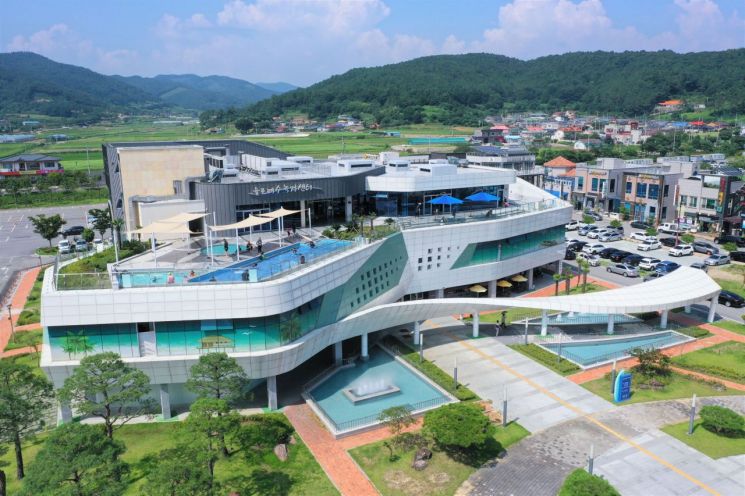
■ 'Botjae' Sees Growth in Both Visitors and Revenue Amid Matcha Trend
Botjae, the main hub for tea culture tourism, saw 131,266 visitors and revenue of 703 million won in 2025. This represents an 11.81% increase in visitors and a 14.15% rise in revenue compared to the previous year, with the spread of the matcha trend having a direct impact.
Recently, growing interest among Millennials & Gen Z in matcha beverages, desserts, and tea-based programs has brought renewed attention to Boseong green tea’s origin image, naturally boosting experience-based and product consumption linked to this trend.
Additionally, Botjae serves as a tea culture tourism hub that connects visitors to tea fields, the Korea Tea Museum, Yulpo Pine Forest Beach, and local commercial districts, thereby amplifying the economic ripple effect throughout the region.
■ Korea Tea Museum Sees Increased Visitor Demand
The Korea Tea Museum welcomed 135,384 visitors in 2025, up 11.63% from the previous year, though revenue decreased by 1.65% to 87 million won.
Interest in tea culture and history has steadily increased, leading to more visits for viewing and educational purposes. However, because the museum’s operations are mainly exhibition-focused and paid experience programs are limited, this has not translated into significant revenue growth.
Nevertheless, the Korea Tea Museum remains a highly symbolic public cultural facility that conveys the history and value of Boseong’s tea culture. Qualitative growth is anticipated through the expansion of hands-on exhibitions and tourism-linked programs in the future.
■ Yulpo Seaweed Green Tea Center Drives Growth with Stable Revenue Base
The Yulpo Seaweed Green Tea Center recorded 256,709 visitors and revenue of 2.135 billion won in 2025, up 7.24% and 14.81% respectively from the previous year.
While the growth rate in visitor numbers was relatively modest, revenue increased significantly, demonstrating high efficiency in revenue generation. This is attributed to the expansion of paid programs such as the seaweed green tea baths, as well as rising demand for stay-type and leisure tourism.
The Yulpo Seaweed Green Tea Center boasts the most stable revenue structure among Boseong’s tea culture facilities, playing a key role in extending tourist stays and boosting local consumption.
Boseong’s tea culture facilities not only revitalize local businesses such as accommodations, restaurants, and specialty product sales through increased tourist inflow, but also create a virtuous cycle between tea farmers and the tourism industry by expanding consumption of green tea raw materials.
Furthermore, experience, leisure, and educational content centered on tea strengthens Boseong’s unique tourism competitiveness, while also having a positive impact on local job creation and the establishment of a sustainable tourism foundation.
An official from the county stated, "Tea culture facilities are important tourism infrastructure that both promote the value of Boseong green tea and drive the local economy," adding, "We will continue to develop tea culture content, including matcha, to further enhance Boseong’s competitiveness as a year-round tourism city."
© The Asia Business Daily(www.asiae.co.kr). All rights reserved.
![Clutching a Stolen Dior Bag, Saying "I Hate Being Poor but Real"... The Grotesque Con of a "Human Knockoff" [Slate]](https://cwcontent.asiae.co.kr/asiaresize/183/2026021902243444107_1771435474.jpg)
















