South Korea Enters Super-Aged Society in 2024
Population Aged 65 and Over Increases by 5.69% Year-on-Year
Single-Person Households Most Common Among Those Aged 70 and Over
The population aged 65 and over accounted for 21.21% of the total resident registration population.
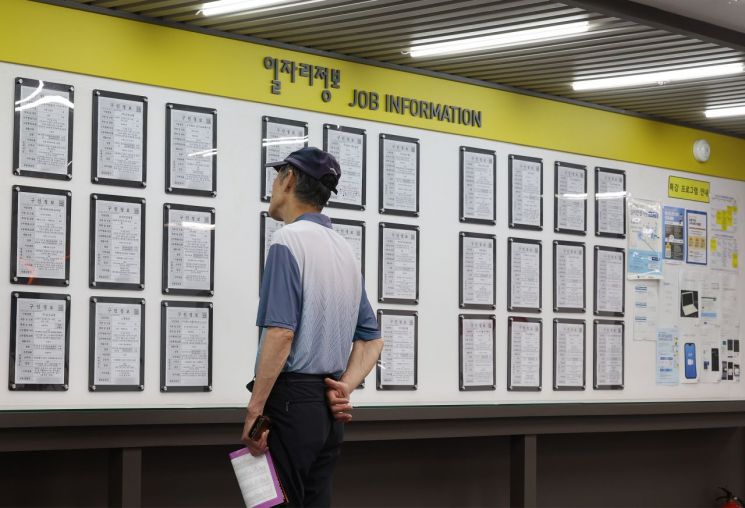
According to the Ministry of the Interior and Safety's "2025 Resident Registration Population Statistics Analysis" released on January 4, the number of people aged 65 and over last year was 10,840,822, an increase of 584,040 (5.69%) compared to the previous year (10,256,782).
Out of the total resident registration population of 51,117,378, the proportion of the elderly population was 21.21%. South Korea entered a super-aged society in 2024, as the proportion of those aged 65 and over surpassed 20%.
The United Nations (UN) classifies a society as "aging" if the proportion of those aged 65 and over exceeds 7%, as "aged" if it exceeds 14%, and as "super-aged" if it exceeds 20%.
By gender, the proportion of the elderly population was 23.39% for women, 4.39 percentage points higher than for men (19.00%). By region, the capital area accounted for 18.82% of the total, while non-capital regions accounted for 23.69%.
There were 11 provinces and metropolitan cities where the proportion of people aged 65 and over exceeded 20%: Jeonnam (28.46%), Gyeongbuk (27.46%), Gangwon (26.81%), Jeonbuk (26.61%), Busan (25.26%), Chungnam (23.43%), Gyeongnam (23.24%), Chungbuk (23.05%), Daegu (22.07%), Seoul (20.43%), and Jeju (20.09%). For the first time this year, both Seoul and Jeju saw their elderly population ratio surpass 20%.
Among the 226 cities, counties, and districts, the highest proportions of elderly residents were found in Uiseong County, Gyeongbuk (49.20%), Gunwi County, Daegu (48.96%), Hapcheon County, Gyeongnam (47.39%), Goheung County, Jeonnam (47.25%), and Cheongdo County, Gyeongbuk (46.49%).
A total of 170 out of all cities, counties, and districts had a population aged 65 and over exceeding 20%. In 19 areas, including Ulju County in Ulsan, Gijang County in Busan, and Changwon City in Gyeongnam, the proportion surpassed 20% for the first time this year.
The increase in single-person households also continues. The number of resident registration households in 2025 was 24,300,087, an increase of 181,159 households (0.75%) from the previous year, but the average household size decreased by 0.02 to 2.10 persons.
Among these, the number of single-person households was 10,272,573, up 1.48% from the previous year, accounting for 42.27% of all households, the largest proportion. This was followed by two-person households (25.31%), three-person households (16.77%), and households with four or more members (15.65%).
By age group, those aged 70 and over made up the largest number of single-person households at 2,218,764, accounting for 21.60% of all single-person households. This was followed by those in their 60s (18.90%), 30s (16.92%), 50s (15.92%), 20s (13.94%), 40s (12.29%), and under 20 (0.44%).
By gender, women were more prevalent in single-person households among those under 20 and those aged 70 and over, while men were more prevalent in single-person households among those in their 20s to 60s.
When single-person households are broken down by gender and age group, among men, those in their 30s accounted for the largest share at 20.60%, followed by those in their 50s (18.82%), 60s (18.64%), 40s (15.47%), 20s (13.74%), 70 and over (12.32%), and under 20 (0.41%).
Among women, those aged 70 and over accounted for the largest share at 31.35%, followed by those in their 60s (19.17%), 20s (14.16%), 30s (13.04%), 50s (12.87%), 40s (8.94%), and under 20 (0.47%).
© The Asia Business Daily(www.asiae.co.kr). All rights reserved.
!["The Woman Who Threw Herself into the Water Clutching a Stolen Dior Bag"...A Grotesque Success Story That Shakes the Korean Psyche [Slate]](https://cwcontent.asiae.co.kr/asiaresize/183/2026021902243444107_1771435474.jpg)
















