Comprehensive Plan for AI Integration Across All Administrative Areas
Enhancing Administrative Efficiency Through Process Automation and Generative AI
Gwangju Metropolitan City has established a comprehensive plan to introduce artificial intelligence (AI) across all administrative areas in line with the AI Basic Act, which will take effect on January 11. The city has launched an administrative innovation initiative to institutionalize standards for AI use in the public sector by automating work processes and utilizing generative AI.
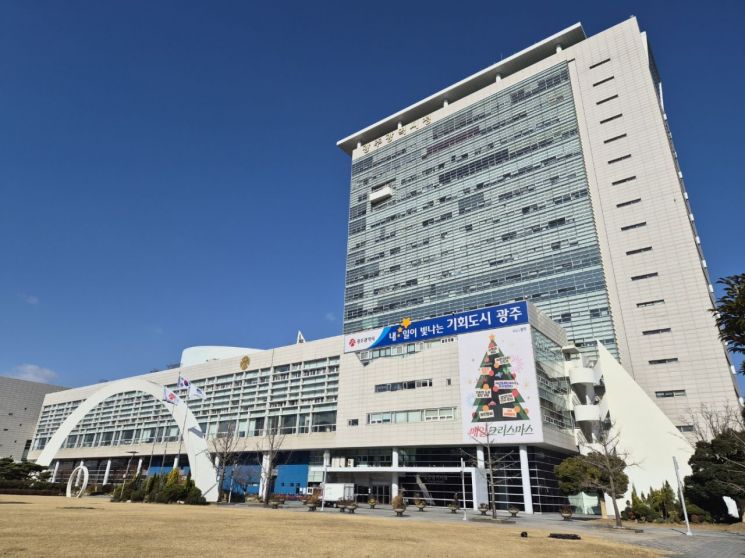
On January 4, Gwangju City announced that it had developed an "AI-Based Administrative Innovation Comprehensive Plan" to proactively respond to the implementation of the AI Basic Act and enhance administrative efficiency and citizen-oriented services.
The AI Basic Act, which will be enforced starting January 11, is a comprehensive government-wide law that sets standards for the use of AI across society, including the public sector, with the aim of ensuring safety, reliability, and accountability. In the field of public administration, securing transparency and accountability in the use of AI has been presented as a core principle.
In line with the intent of the law, Gwangju City has developed a comprehensive plan with key tasks including the enactment of local ordinances, the establishment of a dedicated AI implementation team, and the creation of an AI-friendly work environment for all employees. The focus is on reducing repetitive and simple tasks and redirecting policy capabilities toward administrative services for citizens.
Representative examples include the expansion of Robotic Process Automation (RPA) and the introduction of "AI Yeobimon," a generative AI-based system for calculating travel expenses for official trips outside the city. RPA has been applied to two tasks: aggregating cafeteria meal expenses and checking for duplicate committee appointments. Manual work that previously took over 100 hours per month has been reduced to about 2 hours, resulting in an expected annual reduction of more than 1,200 work hours.
"AI Yeobimon" was independently developed without a budget by utilizing generative AI technology. It has automated the previously manual process of calculating travel expenses for official trips, thereby improving administrative efficiency.
As a mid- to long-term project, Gwangju City plans to build an open-source-based small language model (sLLM) trained on internal administrative data. The goal is to establish an AI platform dedicated to administrative use, with no risk of external data leakage. Since January 2, the city has been operating a "No Title Bulletin Board" where employees can propose ideas for administrative AI services. The Data and Informatization Officer reviews the feasibility of these proposals and will gradually advance the services.
Step-by-step AI competency training for all employees will also be conducted, with the aim of expanding AI utilization in administrative settings from beginner to advanced levels.
Park Hyemi, Data and Informatization Officer, stated, "This plan is designed to put into practice the standards for public sector AI use in administrative settings in line with the implementation of the AI Basic Act," adding, "We will reinvest the time and capabilities saved into administrative services for citizens."
© The Asia Business Daily(www.asiae.co.kr). All rights reserved.

















