KDCA Revises "2026 National Tuberculosis Management Guidelines"
Six-Month Levofloxacin Regimen Recommended... Special Exemption Provisions Applied
Starting this year, individuals who have been diagnosed with latent tuberculosis infection after contact with a patient with multidrug-resistant tuberculosis can receive six months of treatment without any out-of-pocket expenses.
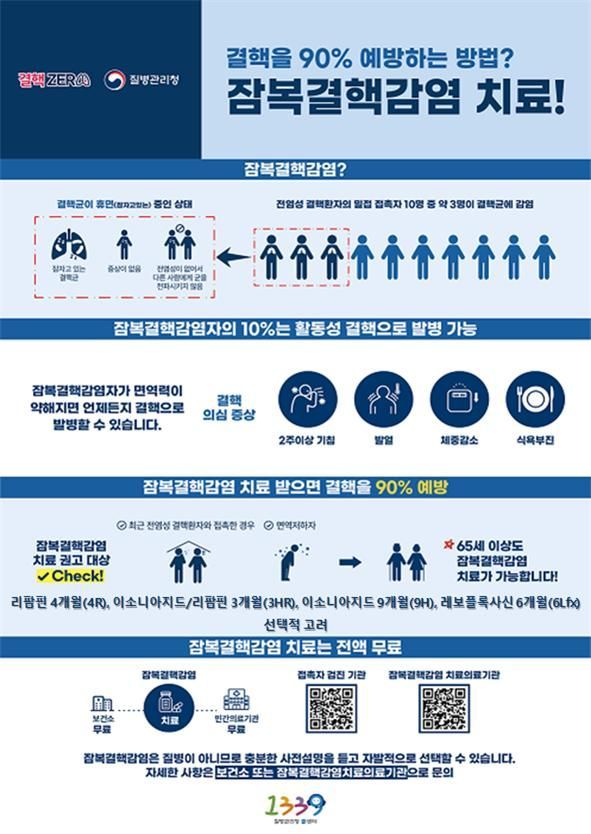
On January 2, the Korea Disease Control and Prevention Agency (KDCA) announced that, in order to prevent the social spread of multidrug-resistant tuberculosis and reduce the financial burden on patients, it will apply health insurance coverage and special exemption provisions to the treatment drug 'Levofloxacin' for latent tuberculosis infection among contacts of multidrug-resistant tuberculosis cases.
Multidrug-resistant tuberculosis refers to tuberculosis caused by bacteria that are resistant to both isoniazid and rifampin, which are key drugs in tuberculosis treatment. It is more difficult to treat and has a higher incidence of side effects compared to drug-susceptible (ordinary) tuberculosis. Latent tuberculosis infection means that a person is infected with tuberculosis bacteria and a small number of live bacteria are present in the body, but there are no clinical symptoms of tuberculosis, the bacteria are not released to the outside, and the person has not developed tuberculosis or become contagious.
Until now, contacts of ordinary tuberculosis patients have been able to receive treatment for latent tuberculosis without any out-of-pocket costs through the special exemption system since 2021. In contrast, contacts of multidrug-resistant tuberculosis patients, who are resistant to standard treatments, have not had an established standard therapy. For the past several years, instead of treatment, only the development of the disease has been monitored with chest X-rays over a two-year period.
However, following the recent strong recommendation by the World Health Organization (WHO) that contacts of multidrug-resistant tuberculosis patients take levofloxacin for six months, the government has revised its guidelines after gathering opinions from domestic experts.
As a result, going forward, if a contact of a multidrug-resistant tuberculosis patient is diagnosed with latent tuberculosis, the government will fully cover the cost of levofloxacin prescribed at medical institutions, as well as all related medical expenses. Patients will be able to receive intensive treatment for six months without any out-of-pocket costs.
According to the KDCA, as of 2023, the incidence rate of tuberculosis among contacts of multidrug-resistant tuberculosis patients was 325.6 per 100,000 people, which is significantly higher than that among contacts of ordinary tuberculosis patients (185.5 per 100,000).
Im Seungkwan, Commissioner of the KDCA, emphasized, "It is especially important to prevent multidrug-resistant tuberculosis at the latent infection stage, before the disease develops," and urged, "If you have been in contact with a multidrug-resistant tuberculosis patient, please actively participate in testing and treatment as guided by public health centers and medical institutions."
© The Asia Business Daily(www.asiae.co.kr). All rights reserved.

















