Concerns Raised Over Potential for Abuse
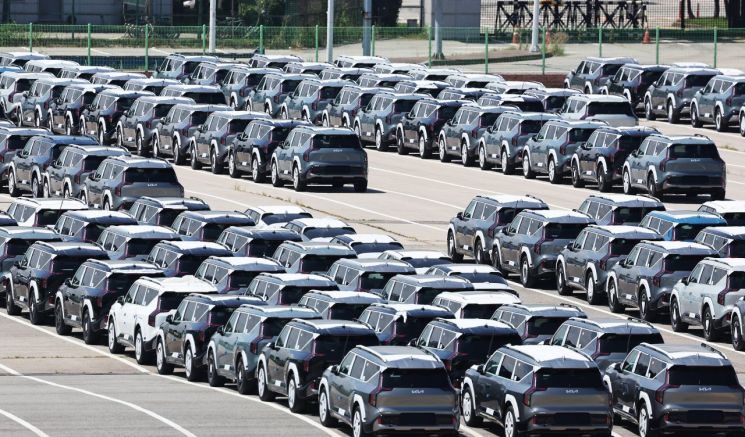
Starting this year, those who scrap or sell their internal combustion engine vehicles, such as gasoline cars, and purchase an electric vehicle will be eligible to receive up to an additional 1 million won in subsidies.
In addition, a new "Zero-Emission Vehicle Safety Insurance" will be introduced, which provides compensation of up to 10 billion won for damages to third parties caused by fires that occur while electric vehicles are parked or charging, beyond the coverage limits of existing insurance policies. From the second half of the year, subsidies will only be provided to electric vehicles from manufacturers that have enrolled in this insurance.
The Ministry of Climate, Energy and Environment announced the revised 2026 electric vehicle purchase subsidy plan on January 1. Electric vehicle purchase subsidies are divided into national subsidies provided by the central government and local subsidies provided by local governments. The revised plan released on this day details which vehicles will receive national subsidies and in what amounts for this year.
For electric passenger vehicles, as in the previous year, if the base price of the car is less than 53 million won, the full subsidy is provided. If the price is between 53 million won and less than 85 million won, 50% of the subsidy is provided. No subsidies are given for high-priced vehicles exceeding 85 million won.
The Ministry has announced that next year, the threshold for full subsidies will be lowered to "less than 50 million won," and the threshold for half subsidies will be "50 million won or more and less than 80 million won."
Electric vehicle subsidies are basically calculated by considering factors such as the driving range per charge, the energy density and recycling value of the battery, whether government-designated innovative technologies are adopted, whether the manufacturer meets low-emission vehicle supply targets and installs rapid chargers, and whether the manufacturer has insurance coverage. Additional incentives are provided depending on whether the buyer is from a multi-child family or if a young person is making their first-ever purchase.
Excluding incentives, the maximum national subsidy for electric passenger vehicles this year is 5.8 million won for mid- and large-sized vehicles, and 5.3 million won for small vehicles. So far, Hyundai Motor's Ioniq models have received the highest amount. The government has been reducing the unit subsidy for electric vehicles every year, but this year it remains the same as last year.
This decision reflects the fact that the electric vehicle market has just emerged from the "chasm" (a temporary stagnation in demand) that lasted from 2023 to 2024. Seo Youngtae, Director of Green Transition Policy at the Ministry, stated in a briefing the previous day, "Subsidies are necessary until electric vehicles become mainstream in the automobile market," but added, "However, it will be difficult for subsidies to increase from the current level." Seo also mentioned that if 40% of newly sold vehicles are zero-emission vehicles, including electric vehicles, it can be considered that they have become mainstream. The government's target is for "zero-emission vehicles to account for 40% of new car sales" by 2030.
This year, a "transition support payment" has been newly introduced for electric passenger vehicles. This is an additional payment provided when an internal combustion engine vehicle that has been in use for more than three years is scrapped or sold and replaced with an electric vehicle. If the original subsidy exceeds 5 million won, the transition support payment is 1 million won; if it is less, the payment is proportional to the amount.
However, there are concerns that this could be abused. The transition support payment is not provided for transactions between direct family members, including between spouses or between parents and children, but it can be received for transactions involving other family relationships such as between uncles/aunts and nephews/nieces. For example, an uncle could transfer an internal combustion engine vehicle to a nephew, purchase an electric vehicle, and receive an additional 1 million won in subsidies.
Starting from the second half of this year, the insurance that manufacturers must enroll in will change to the "Zero-Emission Vehicle Safety Insurance." This insurance, which will be launched in March, covers up to 10 billion won for damages to third parties in cases where a fire occurs while an electric vehicle is parked or charging, exceeding the compensation limits of automobile or other insurance policies.
Regarding battery density, one of the factors in determining electric passenger vehicle subsidies, the range of subsidy differentiation according to density intervals has been expanded this year. Last year, if the battery density exceeded 500 Wh per liter, 100% of the performance and battery safety subsidies were provided based on driving range per charge. This year, the threshold has been raised to over 525 Wh per liter.
For the electric passenger vehicle innovative technology subsidy, the subsidy for equipping the vehicle with the V2L (Vehicle-to-Load) function, which allows the electric vehicle's battery power to be used externally, has been reduced from 200,000 won to 100,000 won this year. Instead, if the vehicle is equipped with the "Plug and Charge (PnC)" function, which enables user authentication and payment processing at once simply by plugging in the charging connector, a subsidy of 100,000 won will be provided.
To support PnC and similar features, the government is distributing "smart-controlled slow chargers." Another key function of smart chargers is to control overcharging by monitoring the battery's State of Charge (SoC). For this, electric vehicle software updates are required. According to the Ministry, Tesla has completed the update, while Hyundai and Kia are in the process. European manufacturers plan to complete the update in the first half of this year. If the function to provide real-time SoC is not installed by June, subsidies will be suspended.
The Ministry announced that in 2027, a subsidy of 100,000 won will be provided for vehicles equipped with the "bi-directional charging and discharging" (V2G) function, which allows the electric vehicle to function as an energy storage system (ESS). In addition, the threshold for the "fast charging" function, which provides a subsidy of 300,000 won, will be raised by 50 kW starting in 2027.
© The Asia Business Daily(www.asiae.co.kr). All rights reserved.

















