Provisions Criminalizing Extramarital Sex and Insulting the State Included
International Concerns Raised... Experts Warn of Threats to Freedom
With the new Indonesian criminal code, which criminalizes extramarital sex and cohabitation before marriage and includes acts of insulting the president and the state as punishable offenses, coming into effect at the start of the new year, both domestic and international attention is focused on the country.
On January 1 (local time), foreign media reported that Supratman Andi Agtas, Indonesia’s Minister of Law and Human Rights, announced the previous day that “the revised criminal code enacted in 2022 will officially take effect from January 2.”
According to the revised criminal code, those caught engaging in extramarital sex can face up to one year in prison, while cohabitation before marriage can result in up to six months in prison. However, these provisions are classified as offenses that require a formal complaint from the spouse, parents, or children of the accused for an investigation to proceed.
The amendment also includes provisions for political and ideological offenses. Insulting the sitting president or state institutions can result in up to three years in prison, and spreading ideas contrary to communism or Indonesia’s national ideology can lead to up to four years in prison.
As the revised criminal code is seen as moving closer to Islamic law (Sharia), the international community, including the United Nations and U.S. Secretary of State Antony Blinken, has expressed concerns that it could infringe on freedom of expression and the right to privacy. In response, Minister Supratman emphasized, “The criminal code has been timely revised to reflect Indonesia’s current laws and cultural norms,” adding, “This is our own legal system, different from those of other countries.”
However, he acknowledged concerns that the new law could be abused by authorities, stating, “What matters is the control of the people. Nothing new can be perfect from the start.” He also noted that safeguards have been put in place to prevent abuse of power, as the new criminal procedure law will be implemented in parallel.
With the new criminal code set to take effect, concerns have also been raised that foreign tourists could be punished for extramarital sex or cohabitation before marriage. However, Hariyadi Sukamdani, chairman of the Indonesian Tourism Association, stated, “Concerns in the tourism industry have somewhat eased since these provisions are classified as offenses requiring a formal complaint.”
Nevertheless, controversy continues over the provisions regarding punishment for insulting the president or the state. Local legal expert Asfinawati told foreign media, “Such provisions raise serious concerns about freedom of expression,” criticizing them as “new colonial-era laws we have created ourselves.” She also pointed out that the scope of the law is excessively broad, making arbitrary application during enforcement a real possibility.
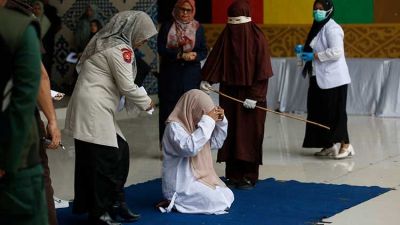
Meanwhile, in Indonesia, which has long been considered a relatively secular Muslim country, Islamist forces have been expanding their influence in recent years. In Aceh, the only province in Indonesia where Sharia is enforced, there was an incident last year in which a man and a woman caught engaging in extramarital sex each received 100 public lashes.
© The Asia Business Daily(www.asiae.co.kr). All rights reserved.

















