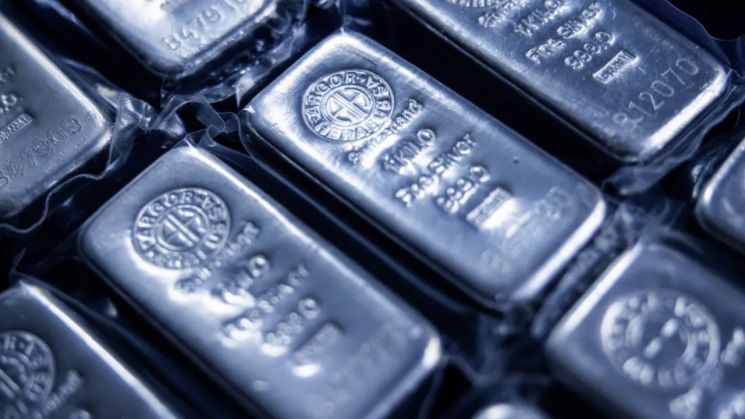
China's newly introduced silver export control measures took effect on January 1.
Experts predict that, as China-one of the world's largest silver producers-applies export controls on silver as stringent as those for rare earth elements, price volatility will increase in the short term due to concerns about supply shortages.
According to major foreign media outlets such as the South China Morning Post (SCMP) in Hong Kong, China's Ministry of Commerce announced the "2026 List of Goods Subject to Export License Management," which now includes silver.
Previously, in October of last year, the Ministry of Commerce announced its plan to restrict silver exports, along with tungsten and antimony, which had already been under export control. Then, on December 30, the ministry confirmed and published a list of 44 companies authorized to export silver for the two-year period from 2026 to 2027 under the new measures.
The newly implemented export controls replace the quota system that had been in place since 2000. According to SCMP, companies granted export licenses were required to meet strict criteria, such as proving they had exported silver each year from 2022 to 2024.
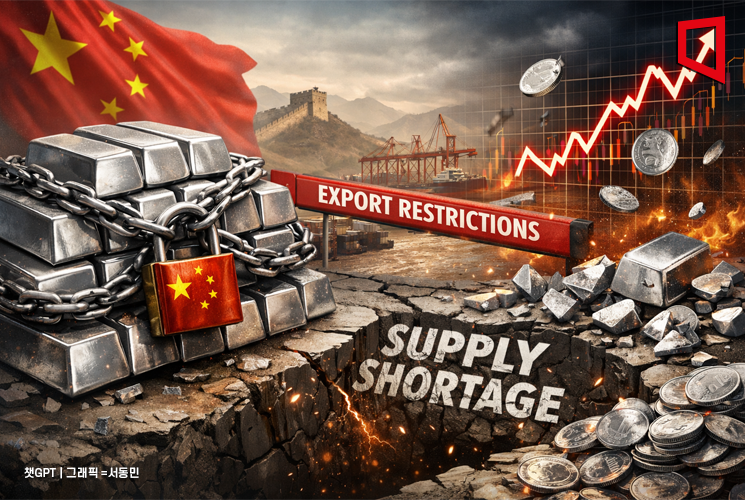
Chinese authorities cited "resource and environmental protection" as the reasons for the silver export controls, but did not provide detailed explanations regarding the methods or scope of the measures.
However, Securities Times, an affiliate of the Chinese Communist Party's official newspaper People's Daily, reported on December 30, citing an anonymous industry source, that "the new silver export control policy means that silver has been officially included in the national strategic resources list, elevating its status from a 'general commodity' to a 'strategic material.' Silver export management is now on par with that of rare earth elements."
China is one of the world's largest silver producers, equipped with powerful refining and processing capabilities, and its reserves are also among the largest globally. From January to November last year, China's silver exports totaled 4,600 tons, while imports during the same period were 220 tons.
Silver is a precious metal that is also widely used as an industrial material in electronic circuits, batteries, solar panels, and medical devices. In November last year, the United States added silver to its list of "critical minerals" deemed essential for the country's economy and national security, alongside copper and uranium.
Foreign companies operating in related industries anticipated negative impacts from China's new silver export controls. According to CNBC, in a survey conducted by the European Union Chamber of Commerce in China among its member companies in November last year, the majority of respondents said they had already been affected or expected to be affected by China's export restrictions.
Elon Musk, CEO of Tesla, also stated on X (formerly Twitter) on December 27, "This is not good. Silver is needed in many industrial processes."
With silver prices soaring more than 150% this year, SCMP reported that the implementation of China's export control measures has heightened concerns about supply shortages in the market.
As a result, experts forecast that silver price volatility will remain high for the time being. The spot price of silver surpassed $80 per ounce for the first time last month before retreating slightly to trade in the $70 range.
© The Asia Business Daily(www.asiae.co.kr). All rights reserved.
![Clutching a Stolen Dior Bag, Saying "I Hate Being Poor but Real"... The Grotesque Con of a "Human Knockoff" [Slate]](https://cwcontent.asiae.co.kr/asiaresize/183/2026021902243444107_1771435474.jpg)

















