Intensive Tax Support for Population-Declining Areas
Differentiated Exemption System by Region Introduced
Property Tax Reduction for Land After Demolition of Vacant Homes
Starting this year, the scope of acquisition tax exemptions for purchasing a home for the first time in life or for childbirth and child-rearing purposes will be expanded. In areas experiencing population decline, the exemption limit for first-time homebuyers will increase from 2 million won to 3 million won, and the 100% exemption for families with newborns will be extended.
The Ministry of the Interior and Safety announced that amendments to the Local Tax Act and the Restriction of Special Local Taxation Act containing these measures will take effect from January 1. These amendments were passed at the National Assembly plenary session on December 30.
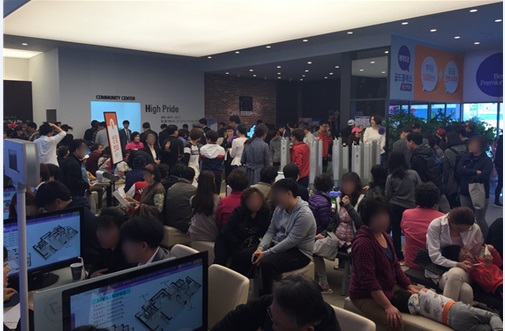 The Ministry of the Interior and Safety announced that starting this year, it will implement amendments to the Local Tax Act and the Local Tax Special Cases Act from the 1st, expanding the reduction of acquisition tax payable when purchasing a home for the first time in a lifetime or for childbirth and childcare. The photo shows the interior of a local model house. Photo by The Asia Business Daily
First, a tax reduction support system for balanced regional development will be fully implemented. For tax reductions related to industrial, logistics, and tourism complexes that are closely linked to the local economy, higher exemption rates will be applied in the order of the Seoul metropolitan area, non-metropolitan areas, and population-declining regions. In addition, the number of eligible industries for real estate acquisition and property tax exemptions (for five years, followed by a 50% property tax reduction for three years) when establishing a new business or workplace in population-declining areas will be expanded from the current 32 to 40, including new and renewable energy, medical services, and campsite operations.
Tax incentives will also be strengthened to encourage investment and employment in population-declining areas. A notable example is the corporate local income tax credit granted to companies that hire local residents in these areas. A new acquisition tax exemption will also be introduced for homes and dormitories acquired by companies in population-declining areas for the purpose of leasing or providing them free of charge to employees.
Measures have also been introduced to revitalize local real estate markets. To address unsold apartments after completion in local areas, a new acquisition tax exemption (up to 50%) will be provided to individuals who acquire apartments (with an exclusive area of 85 square meters or less and a purchase price of 600 million won or less), and such acquisitions will be excluded from the heavy acquisition tax imposed on owners of multiple homes.
Tax support will also be expanded for acquiring homes in population-declining areas and similar regions. For single-homeowners (including those without a home) who acquire an additional home in one of the 80 non-metropolitan areas experiencing population decline (excluding districts within metropolitan cities), the value threshold for homes eligible for special exemptions will be raised, and the scope of eligible regions will be expanded to include areas of concern for population decline outside the metropolitan area.
Tax incentives will be expanded to promote the maintenance and utilization of vacant homes. A new 50% property tax reduction (for five years) will be introduced for land after the demolition of vacant homes, and acquisition tax exemptions will be promoted for the construction of new homes or buildings on such land after demolition.
In particular, the scope of acquisition tax exemptions for purchasing a home for the first time in life or for childbirth and child-rearing purposes has been adjusted. These measures are intended to manage both balanced development and the prevention of regional extinction. First, to support housing stability for newlyweds and young people, the 100% acquisition tax exemption for first-time homebuyers will be extended. In addition, for first-time home purchases in population-declining areas, the exemption limit will be increased from 2 million won to 3 million won. Furthermore, to boost the birth rate and ease the childcare burden for families with newborns while enhancing housing stability, the 100% acquisition tax exemption (up to 5 million won) for home purchases for childbirth and child-rearing purposes will also be extended.
The Ministry of the Interior and Safety plans to conduct regional job training sessions so that local government tax officials can accurately understand and lawfully implement the newly revised local tax laws. Minister Yoon Hojoong stated, "This local tax reform focuses on balanced national development, supporting the stability of people's livelihoods, and improving a rational tax system," adding, "We will actively support and cooperate with local governments so that taxpayers can fully understand and benefit from the changes brought by this reform."
© The Asia Business Daily(www.asiae.co.kr). All rights reserved.
















