Exynos Auto Supplied to BMW's Next-Generation Electric Vehicles
Breaking Away from Memory-Centric Structure
Samsung Adds Non-Memory Competitiveness Amid Memory Boom
Samsung Electronics has supplied premium automotive processors to BMW in Germany. Following successful contracts with Audi, Volkswagen, and Tesla, the company has now secured BMW as a client, marking a significant step in expanding its semiconductor revenue structure from a memory-centric model to include design and foundry (semiconductor contract manufacturing) operations.
According to the semiconductor industry on December 30, Samsung Electronics' Device Solutions (DS) division supplied the Exynos Auto V720 processor for automotive infotainment systems to BMW's new electric vehicle, the New iX3. The New iX3 is the first model to feature BMW's next-generation electrification platform, Neue Klasse. Analysts say this solidifies Samsung's position as a key semiconductor supplier in the software-defined vehicle (SDV) sector during the industry's transition to future mobility.
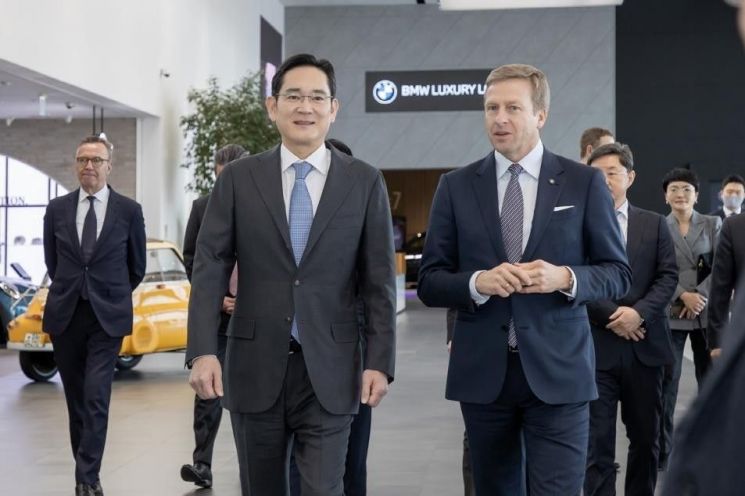 In 2022, Oliver Zipse, CEO of BMW, met with Lee Jae-yong, Chairman of Samsung Electronics, during his visit to Korea. Samsung Electronics
The Exynos Auto series is designed by the System LSI division and manufactured by the Foundry division. These processors provide drivers with real-time driving information and enable high-definition multimedia playback. Samsung previously supplied Exynos Auto chips to Audi (in 2019) and Volkswagen (in 2021). Now, with the addition of BMW, Samsung has successfully expanded its portfolio among German automakers, which are known for their high entry barriers.
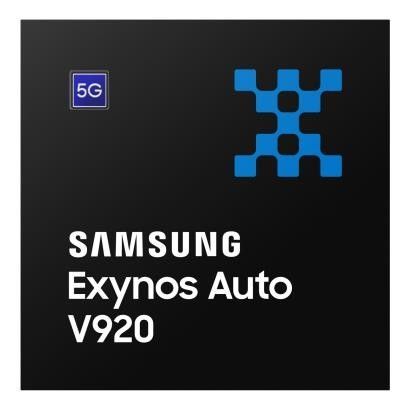
Samsung Electronics is also set to supply Exynos Auto chips for BMW's next-generation electric and internal combustion engine models. The next-generation 7 Series is expected to feature the 5nm (1nm = one-billionth of a meter) Exynos Auto V920. An industry official stated, "Exynos Auto has passed rigorous quality verification and is rated as top-tier in audio and video processing capabilities," adding, "This achievement enhances Samsung's competitiveness in the automotive semiconductor market."
The automotive industry is paying close attention to this contract, as BMW has adopted Samsung's automotive semiconductors for the first mass-production model of its core future strategy project, Neue Klasse. The BMW iX3 will be the first to feature the 'Panoramic iDrive,' which utilizes the vehicle's front windshield. High-performance automotive semiconductors are required to support real-time 3D head-up display (HUD) computations, voice recognition, and eye-tracking functions.
This collaboration is also aligned with the German automotive industry's efforts to diversify its semiconductor supply chain. With the risks of semiconductor procurement increasingly concentrated in certain countries and companies, BMW has chosen to involve Samsung in the Neue Klasse project. By expanding its supply scope from batteries, displays, and audio to automotive semiconductors, Samsung is strengthening its position as a supplier of core electric vehicle components in the German automotive market.
The supply of chips to BMW is also significant in that it helps address the memory-centric structure that has been considered a weakness in Korea's semiconductor ecosystem. Samsung Electronics and SK Hynix together account for over 60% of the global memory market. Recently, the surge in demand for artificial intelligence (AI) from major tech companies has led to record-high prices for high-bandwidth memory (HBM) and general DRAM, resulting in an unprecedented boom.
However, the vulnerability in non-memory and foundry sectors has been a challenge, reducing the elasticity of semiconductor exports. Unlike Korea, where semiconductor exports are mostly memory-based, Taiwan's system semiconductor and foundry sectors account for over 70% of its exports. This structural difference is cited as a reason why Taiwan has surpassed Korea in semiconductor export competitiveness.
Samsung Electronics is investing funds secured from its memory division to enhance the competitiveness of its System LSI and Foundry divisions. While this may be a financial burden in the short term, the company believes that failing to secure competitiveness in the non-memory sector-where demand is expected to grow with the spread of AI-would only reinforce the memory-heavy structure.
As a result, Samsung has secured a major foundry contract worth approximately 23 trillion won from Tesla and plans to equip the upcoming Galaxy S26, set for release early next year, with the latest Exynos 2600, which uses a 2nm process. The company's performance is also showing clear improvement. The DS division recorded an operating profit of 7 trillion won in the third quarter of this year, and forecasts suggest that fourth-quarter profits could approach 20 trillion won.
© The Asia Business Daily(www.asiae.co.kr). All rights reserved.
![Clutching a Stolen Dior Bag, Saying "I Hate Being Poor but Real"... The Grotesque Con of a "Human Knockoff" [Slate]](https://cwcontent.asiae.co.kr/asiaresize/183/2026021902243444107_1771435474.jpg)

















