Favorable Winds for Semiconductors Driven by AI Investments
Surge in Semiconductor Equipment Exports to Taiwan
Unit Price Rises on Strong Demand for High-Value-Added Memory
As investments in artificial intelligence (AI) servers and data centers have expanded, exports of ultra-high-performance memory, semiconductor equipment, and key components have all increased simultaneously, resulting in South Korea's exports surpassing the 700 billion dollar mark for the first time ever this year. This is attributed to the shift in semiconductor demand from personal computers and smartphones to AI servers, as well as the full-scale production of AI semiconductors centered around Taiwanese foundries, which has led to higher memory prices and a concurrent increase in equipment and component exports.
According to the Korea International Trade Association's report, "2025 Import and Export Assessment and 2026 Outlook," released on December 30, this year's export growth is analyzed as a result of changes in semiconductor demand structure driven by the proliferation of AI servers and a concentration of exports to production hubs in Asia. From January to October this year, semiconductor exports to Malaysia, where AI semiconductor production and assembly are concentrated, increased by 99.3% year-on-year, while exports to Taiwan rose by 81.1% and to Vietnam by 35.1%. During the same period, exports of semiconductor equipment to Taiwan also grew by 48.5%, and exports of mechanical components increased by 26.5%.
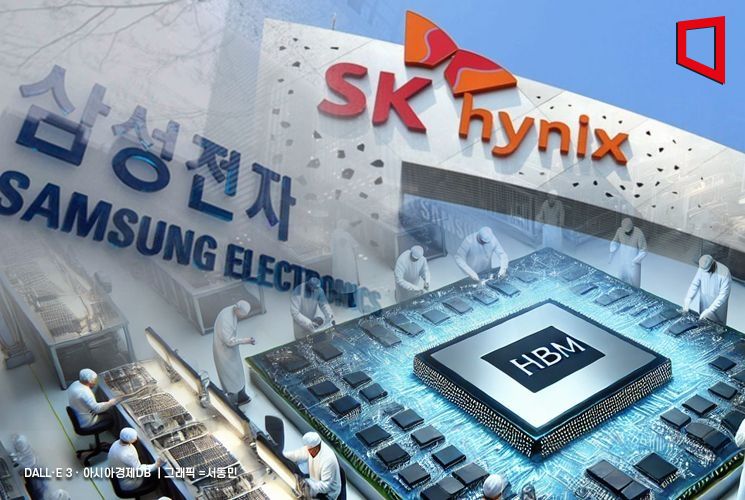
Semiconductor exports surged as unit prices rose due to increased AI-driven demand and supply shortages. The upward trend in fixed prices for DRAM and NAND flash continued, and demand for high-value-added memory such as DDR5 and high-bandwidth memory (HBM) was boosted by expanded investments in AI servers and data centers, further driving exports. In fact, the average price of 8Gb DRAM rose from 1.35 dollars in December last year to 7 dollars in October this year, while the price of 128Gb NAND increased from 2.08 dollars to 4.35 dollars over the same period.
In particular, as semiconductor demand shifted from PCs and smartphones to AI servers, demand for ultra-high-performance memory increased. From 2023 to 2025, global semiconductor sales by end-industry in the server sector grew from 78 billion dollars to 156 billion dollars. As a result, the year-on-year growth rate of semiconductor exports jumped from -23.7% in 2023 to 17.8% this year. In contrast, smartphone sales increased slightly from 104 billion dollars to 149 billion dollars, and PC sales from 89 billion dollars to 92 billion dollars.
By region, although semiconductor exports to China declined due to its rising self-sufficiency, exports to major Asian countries such as Malaysia, Taiwan, and Vietnam expanded. In the semiconductor sector, Malaysia's year-on-year export growth rate from January to October this year was 99.3%, Taiwan's was 81.1%, and Vietnam's was 35.1%.
Especially in Taiwan, demand for AI semiconductors to process and assemble graphic processing units (GPUs) locally surged, resulting in a significant increase in South Korea's semiconductor and semiconductor equipment exports to Taiwan. The increase in Taiwan's semiconductor demand is attributed to expanded foundry production centered around TSMC. TSMC is contract-manufacturing AI GPUs for global fabless companies such as Nvidia and AMD, leading to increased demand for HBM, advanced processing equipment, and key mechanical components.
Indeed, semiconductor exports to Taiwan by product category grew by 81.1% year-on-year, semiconductor equipment by 48.5%, and mechanical components by 26.5%. This is attributed to the large-scale supply of HBM from Samsung Electronics and SK Hynix to TSMC's AI semiconductor production lines, as well as the export of processing equipment such as lithography, etching, and deposition equipment and precision mechanical components to local factories in Taiwan. The industry expects that as long as investments in AI data centers continue, the trend of increasing exports of semiconductors, equipment, and components centered around Taiwanese foundries will persist for the time being.
Thanks to the semiconductor boom, exports by domestic equipment companies have also increased significantly. Hanmi Semiconductor, which sells equipment for HBM manufacturing, saw its operating profit in the second quarter reach 86.3 billion won, up 55.7% year-on-year. Wonik IPS, a comprehensive semiconductor equipment company, also saw its third-quarter operating profit increase by about 90% to 27.5 billion won.
The Korea International Trade Association evaluated that this year's exports were marked not only by a simple increase in value but also by qualitative growth centered on high value-added products. The association stated, "Accumulated technological capability and production capacity have aligned with the shift in AI demand, turning what could have been a short-term boom into a structural competitive advantage," and added, "It appears to have established itself as a mid- to long-term growth engine."
Kim Jeong-Hoe, Vice Chairman of the Korea Semiconductor Industry Association, stated, "The unit price of HBM is higher than that of DRAM, which appears to be a major factor in this year's export growth," and added, "Since demand currently exceeds supply, the upward trend is expected to continue as long as the AI boom persists."
© The Asia Business Daily(www.asiae.co.kr). All rights reserved.
![Clutching a Stolen Dior Bag, Saying "I Hate Being Poor but Real"... The Grotesque Con of a "Human Knockoff" [Slate]](https://cwcontent.asiae.co.kr/asiaresize/183/2026021902243444107_1771435474.jpg)
















