After 180 Days of Investigation
66 Indicted, 20 Detained
Despite a Massive Special Prosecutor Team,
Many Key Allegations Remain Unresolved
Jewelry and Luxury Bag Bribery:
No Determination on Kim or Yoon's Awareness
12 of 16 Cases Transferred to the National Investigation Headquarters
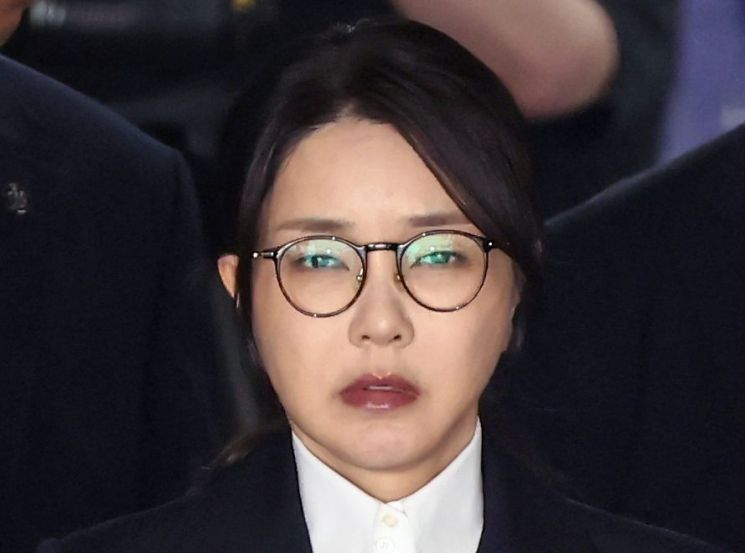
The special prosecutor's team led by Min Joongki, which has been investigating allegations related to Kim Keonhee, announced its final investigation results on the 29th, concluding 180 days of investigation. The special prosecutor's team stated, "Kim Keonhee used her status as the spouse of the president to easily receive expensive gifts and was extensively involved in various appointments and nominations to a degree that can be described as modern-day influence peddling," adding, "As a result, we have confirmed that the public system of the Republic of Korea has been severely undermined." The special prosecutor's team assessed this investigation as one that "exposed the reality of power-driven corruption," but there were criticisms that many cases were handed over to the National Investigation Headquarters and that investigations targeting political circles were left unresolved.
Achievement: Even the 'Sanctuary' of Kim Keonhee Led to Arrest
The special prosecutor's team indicted Kim Keonhee on charges of manipulating the stock price of Deutsche Motors, receiving free public opinion polling services, and accepting luxury goods, and additionally referred her to trial for bribery involving the Unification Church and the receipt of a Dior bag and other valuables. During the investigation, key figures in politics, business, and religion-including former President Yoon Sukyeol, Kim's spouse-were successively listed as defendants.
After its launch on July 2, the special prosecutor's team formed a massive organization comprising six assistant special prosecutors, 152 personnel seconded from the prosecution, police, Corruption Investigation Office for High-ranking Officials, and National Tax Service, 59 special investigators, and 27 administrative support staff, totaling 255 people. As a result, the team requested 29 arrest warrants, of which 20 were granted. The total number of people indicted reached 66, with 20 of them being indicted while in custody. In terms of numbers alone, this represents one of the most comprehensive investigations among all special prosecutors to date. Specific outcomes include indicting 18 people in the Sambu Construction and Deutsche Motors stock manipulation cases, 12 in luxury goods bribery cases involving expensive bags and necklaces, three in cases related to interference in the relocation of the presidential office and residence, 15 in allegations of state affairs and personnel intervention, and 17 in cases of obstruction of investigation such as the so-called "Butler Gate."
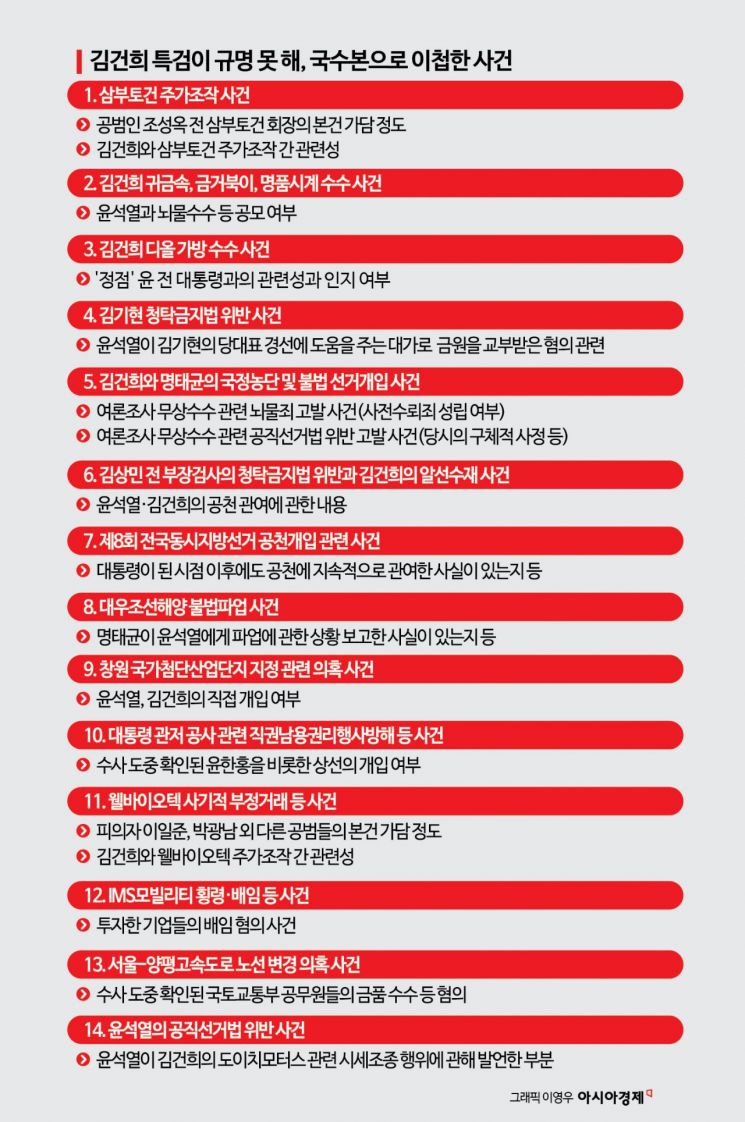
12 Cases Transferred to the National Investigation Headquarters, Many Remain Unresolved
However, when considering the publicly released investigation results, contrary to the special prosecutor's own assessment, a significant number of key allegations were transferred to the National Investigation Headquarters. Of the 16 cases subject to investigation under the Special Prosecutor Act, 12 were either wholly or partially handed over to the National Investigation Headquarters. This is why the legal community has commented that "only a list of cases transferred to the National Investigation Headquarters remains, with conclusions deferred."
The most symbolic example is the Sambu Construction stock manipulation allegation. The special prosecutor investigated suspicions that Kim Yesung, the 'butler' of Kim Keonhee's family, solicited "insurance-type investments" from companies, but failed to clarify any connection to Kim Keonhee. The same is true for the allegations of receiving jewelry, gold turtle figurines, luxury watches, and the Dior bag, which were considered the greatest achievements of the special prosecutor's investigation. The essence of these cases is not simply whether valuables were received, but whether there was a conspiratorial relationship of bribery with the president. However, regarding whether former President Yoon Sukyeol was aware of or involved in these matters, the special prosecutor did not reach a conclusion, citing the need for further investigation. Despite using strong language such as "influence peddling," the special prosecutor did not make a legal determination regarding the involvement of former President Yoon, who is at the core of the issue.
The investigation into the Unification Church also dealt a significant blow to the fairness of the special prosecutor's work. In the early stages, the special prosecutor arrested Unification Church figures such as President Han Hakja and former World Headquarters Director Yoon Youngho, signaling the start of an investigation into collusion between politics and religion. However, when suspicions arose that the Unification Church had provided political funds not only to the People Power Party but also to figures such as former Busan Mayor Jeon Jaesu of the Democratic Party, the investigation did not proceed in earnest. Ultimately, this matter led to the launch of a separate "Unification Church Special Prosecutor."
Many cases directly targeting political circles also failed to reach a conclusion. Allegations of illegal election interference involving Myung Taekyun's provision of free public opinion polling, as well as suspicions of intervention in local elections and nominations, were handed over to the National Investigation Headquarters for determination of whether influence was exerted even after the president's inauguration. During the investigation, the special prosecutor initially judged that some crimes identified were "not subject to the special prosecutor's investigation," but after controversy grew, belatedly decided to transfer them. This process was accompanied by criticism regarding the consistency and determination of the investigation standards.
Going forward, the special prosecutor's team will transfer unresolved cases to the National Investigation Headquarters and shift to a system focused on maintaining indictments in court. The number of seconded personnel will be gradually reduced, and the number of assistant special prosecutors will also be decreased according to the progress of the trials.
© The Asia Business Daily(www.asiae.co.kr). All rights reserved.













