Reduced Rates of Knee Surgery and Painkiller Use
A study has found that knee osteoarthritis patients who receive traditional Korean medicine treatment in the early stages are less likely to undergo knee surgery or use painkillers in the future.
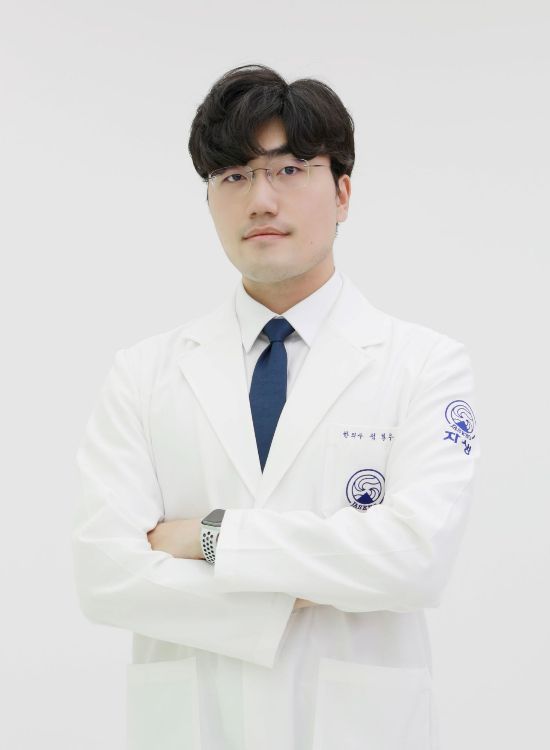 Seok Hwangwoo, Oriental Medicine Doctor at Jaseng Spine and Joint Research Institute, Jaseng Hospital of Korean Medicine
The Jaseng Spine and Joint Research Institute at Jaseng Hospital of Korean Medicine announced on the 29th that it has published research findings on the effects of traditional Korean medicine treatment on knee surgery and opioid analgesic use in knee osteoarthritis patients in the SCI(E)-level international journal, Journal of Clinical Medicine (IF=2.9).
The research team led by Seok Hwangwoo, Oriental Medicine Doctor at the Jaseng Spine and Joint Research Institute, analyzed patients who received medical services for knee osteoarthritis in 2016 using the nationwide insurance claims data from the Health Insurance Review and Assessment Service. Patients with a prior history of knee surgery for osteoarthritis were excluded from the study.
The team classified patients who visited traditional Korean medicine institutions two or more times for the same condition within six weeks of diagnosis as the traditional medicine group, and those who did not as the non-traditional medicine group. They conducted 1:1 propensity score matching (a method that compares patients with similar likelihoods of receiving treatment) considering factors such as age, gender, income level, comorbidities, and number of outpatient visits. A total of 494,336 patients were included in the final analysis, with 247,168 in each group.
The research team conducted a one-year follow-up from the time of diagnosis and found that the risk of knee surgery was 31% lower in the traditional medicine group compared to the non-traditional medicine group. The risk of opioid analgesic use was also 34% lower, and the risk of experiencing either knee surgery or opioid analgesic use was reduced by 34% as well.
During the one-year follow-up period, knee surgery occurred in 2.2% of the non-traditional medicine group but only 1.5% of the traditional medicine group. Opioid analgesic use was observed in 21.4% of the non-traditional medicine group and 14.6% of the traditional medicine group.
Seok Hwangwoo stated, "This study is the first to present large-scale nationwide data showing that traditional Korean medicine treatment can significantly reduce the rates of knee surgery and opioid analgesic use in knee osteoarthritis patients," adding, "We hope this research will serve as a basis for reassessing the role of integrative Korean medicine treatment in managing painkiller use and determining the appropriateness of surgery."
© The Asia Business Daily(www.asiae.co.kr). All rights reserved.

















