AI Predicts Insomnia Risk and Guides Optimal Medication Timing
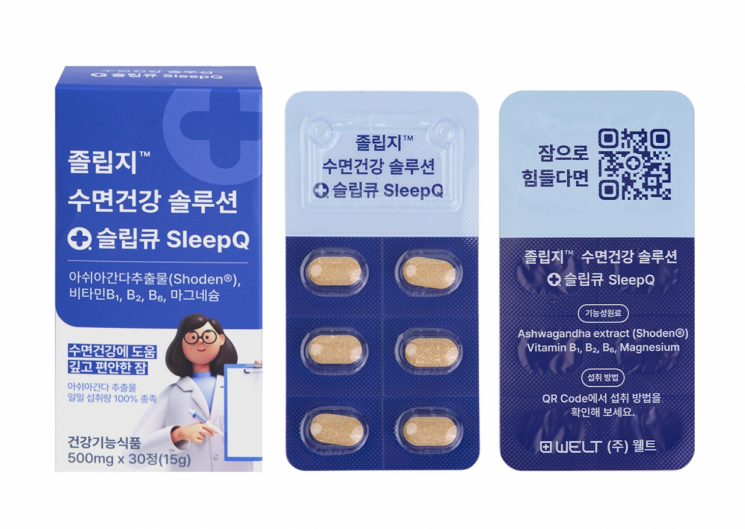
WELT announced on the 29th that it received the Innovation Award in its category at CES 2026 for its "AI Converged Pharmaceutical," which combines AI-powered digital therapeutics technology with its sleep aid "ZolipZ."
The AI Converged Pharmaceutical is a therapeutic concept that enhances the precision of medication timing and usage for each patient by integrating AI-based digital therapeutics technology with pharmaceuticals, without altering their chemical composition or formulation. By adding AI to existing drugs, it designs the optimal context for the medication to be most effective, making it a type of "AI-improved drug" created through artificial intelligence.
At this year's CES, WELT unveiled its AI-converged sleep therapy model, which combines its sleep AI agent "AgentZ" with ZolipZ, a sleep aid used to alleviate insomnia symptoms. When users scan the QR code attached to the ZolipZ package, they are connected to the "SleepZ" app, where AI comprehensively analyzes real-world data such as sleep logs, biometric signals collected from wearable devices, activity levels, lifestyle patterns, and circadian rhythms.
Through this process, the AI predicts the likelihood of insomnia in advance and provides personalized guidance on when to take ZolipZ and the most effective timing for medication. WELT aims to reduce unnecessary intake and minimize risks of next-day drowsiness, tolerance, and dependence by encouraging users to take the sleep aid only when needed and at the moment when its efficacy is maximized.
Kang Sungji, CEO of WELT, explained, "AI Converged Pharmaceuticals are patient-centered technologies that help ensure medications are used appropriately for symptoms. They demonstrate the potential to enhance the safety and efficacy of treatment through AI, even without changing the drug's ingredients."
The SleepZ app is currently available only on smartphones running the iOS operating system and utilizes Apple HealthKit to reliably collect and analyze the biometric and behavioral data required for sleep prediction.
WELT believes that, through the ZolipZ case, medication therapy can shift from a simple "intake"-centered approach to one focused on "medication timing." For pharmaceutical companies, it is expected that combining AI digital therapeutics with existing products will enable differentiated user experiences and provide real-world evidence.
Looking ahead, WELT plans to expand the concept of AI Converged Pharmaceuticals beyond sleep therapy to various "as-needed (PRN)" drug categories where medication timing significantly impacts treatment outcomes. Major areas of application include anxiety and panic treatment, migraine and pain management, women's health, asthma and chronic obstructive pulmonary disease (COPD), allergies and gastrointestinal disorders, as well as smoking cessation and craving control therapies.
© The Asia Business Daily(www.asiae.co.kr). All rights reserved.
![From Bar Hostess to Organ Seller to High Society... The Grotesque Con of a "Human Counterfeit" [Slate]](https://cwcontent.asiae.co.kr/asiaresize/183/2026021902243444107_1771435474.jpg)
















