Four Regulatory Reforms Announced: Ordinance Revisions and Administrative Improvements
The Dawn of the "Robot Era" in Hangang Park... Operation Zones to Be Adjusted
Online Applications for Special Housing Supply for People with Disabilities
Impro
From as early as the first half of next year, autonomous robots will be seen in Seoul's Hangang Park. The Seoul Metropolitan Government plans to revise related ordinances to establish a system for efficient park management using autonomous robots. The city expects this move to have a positive impact on the development of the robotics and smart mobility industries.
On the 28th, the Seoul Metropolitan Government announced that it will revise the "Seoul Metropolitan Government Ordinance on the Conservation and Use of Hangang Park" in the first half of next year. The revision will allow autonomous robots to patrol, clean, and provide guidance in Hangang Park by introducing a new provision permitting the operation of autonomous robots within the park.
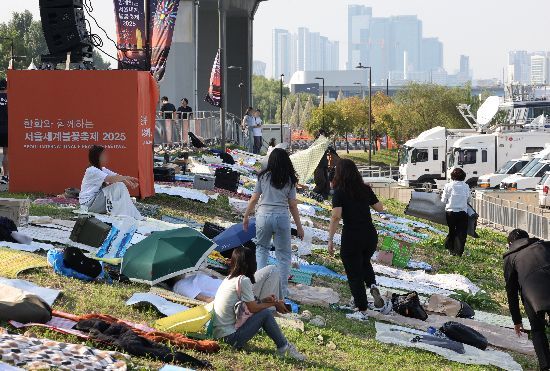 From as early as the first half of next year, autonomous robots will be seen in Seoul's Hangang Park. The city plans to revise related ordinances to establish a system for efficient park management using autonomous robots. Photo by Yonhap News Agency.
This measure follows the city's ongoing efforts to remove regulatory barriers. In December of last year, the city declared 2025 as the inaugural year for eliminating regulations to stabilize the economy and restore daily life for citizens. Since then, it has identified and improved a total of 161 regulations across all sectors, including daily life, construction, the economy, and tourism.
In the first half of next year, the city plans to improve a total of four regulations: ▲ Allowing autonomous robots to operate in Hangang Park (No. 158) ▲ Improving the application process for institutional recommendations for special housing supply for people with disabilities (No. 159) ▲ Enhancing human rights education for staff at facilities for people with disabilities (No. 160) ▲ Improving the process for automatic card payment of water bills (No. 161).
First, the "Seoul Metropolitan Government Ordinance on the Conservation and Use of Hangang Park" will be revised. While outdoor mobile robots are currently allowed in parks, Hangang Park is managed under a separate ordinance to preserve the ecological environment and ensure citizen safety. Therefore, a revision is necessary to permit the operation of autonomous robots. The amendment will include safety standards such as designated areas and times for operation, speed limits, and weight restrictions for robots to prevent collisions with pedestrians and cyclists and to ensure public safety. However, the city will consider allowing commercial robot operations as a long-term task, taking into account citizen safety and park order.
The city is also working to remove barriers for people with disabilities. The current process for applying for institutional recommendations for special housing supply for people with disabilities requires in-person visits to local community centers by the applicant or a proxy. The city will develop an online application system (Regulatory Reform No. 159) to allow online submissions. The system is expected to be developed and tested next year, reducing the burden of in-person visits and making it easier for people with disabilities to apply for special housing supply recommendations.
Additionally, to protect the human rights of people with disabilities residing in day-use and short-term residential facilities, the city will improve the required staff training by allowing it to be completed remotely (Regulatory Reform No. 160). While in-person training will remain the principle due to its importance, the city plans to specify the scope and procedures for recognizing remote training in unavoidable cases, such as for night shift workers.
Furthermore, the process for applying for or canceling automatic card payment of water bills, which was previously only possible via ARS, will be improved in the first half of next year. Residents will be able to visit any of the eight waterworks offices in person to apply (Regulatory Reform No. 161). This is expected to greatly improve payment convenience for digitally vulnerable groups, such as seniors who have difficulty using smartphones or other digital devices.
Lee Changhyun, Director of Regulatory Innovation at the Seoul Metropolitan Government, stated, "The improvement of these four regulations focused on resolving small but significant inconveniences that citizens experience in their daily lives," adding, "We will continue to actively identify and improve unreasonable regulations that do not keep pace with technological changes or meet the expectations of our citizens."
© The Asia Business Daily(www.asiae.co.kr). All rights reserved.

















