Frequent Temperature Changes on Refrigerator Door Increase Salmonella Risk
Store Eggs in Original Carton Deep Inside the Refrigerator
Experts have issued a warning that the long-standing practice of storing eggs in a certain way at home may actually pose a threat to health. Placing eggs on the refrigerator door can cause a rapid temperature change every time the door is opened and closed, increasing the risk of pathogenic microorganisms such as Salmonella proliferating.
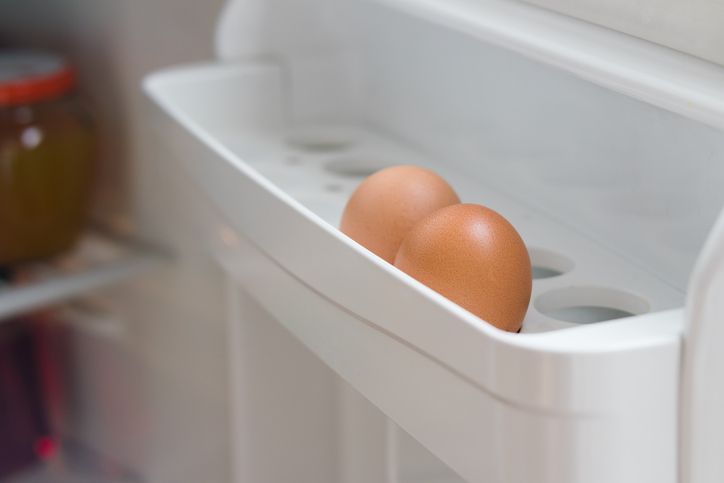 A warning has been issued that placing eggs on the refrigerator door can cause a rapid temperature change every time the door is opened and closed, increasing the risk of pathogenic microorganisms such as Salmonella proliferating. Photo by Getty Images Bank
The Ministry of Food and Drug Safety recommends storing eggs in a refrigerator at 0-10°C, while the U.S. FDA advises keeping them at or below 4°C. During the washing process, the protective film on the eggshell surface is removed, making eggs more vulnerable to microorganisms. For this reason, maintaining a consistently low temperature is essential. In fact, the proliferation of Salmonella is suppressed by more than 99% in environments below 4°C.
Experts explain, "Due to its structure, the refrigerator door is more affected by external air, causing the temperature to fluctuate." They add, "When condensation forms on the surface of the egg, it creates an optimal environment for bacterial growth." In addition, because eggshells are porous and easily absorb odors, storing eggs near the door, where smells from kimchi or side dishes may linger, can diminish their flavor. To ensure both safety and taste, it is best to keep eggs in their original paper carton and place them on a deep shelf inside the refrigerator.
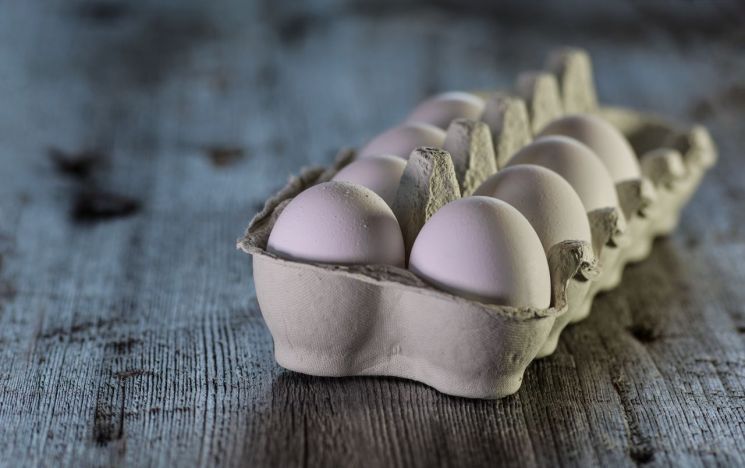 A warning has been issued that placing eggs on the refrigerator door can cause rapid temperature changes whenever the door is opened and closed, increasing the risk of pathogenic microorganisms such as Salmonella multiplying. Pixabay
Experiments by the National Institute of Animal Science at the Rural Development Administration also showed that eggs stored at 4°C in the refrigerator exhibited almost no proliferation of Salmonella for 35 days. In contrast, eggs kept at 10-30°C experienced a temporary decrease in bacteria, but levels soon returned to a high concentration. The consensus is that "during hot seasons, food poisoning bacteria multiply rapidly, so eggs should be refrigerated immediately after purchase and handled hygienically during cooking."
Home appliance experts explain that the reason for the egg tray on the refrigerator door is simply convenience-to make frequently used foods more accessible. However, this is not the optimal storage location. Experts emphasize, "The key to storing eggs is not just to keep them cold, but to choose a spot where the temperature can be maintained consistently."
© The Asia Business Daily(www.asiae.co.kr). All rights reserved.
![Clutching a Stolen Dior Bag, Saying "I Hate Being Poor but Real"... The Grotesque Con of a "Human Knockoff" [Slate]](https://cwcontent.asiae.co.kr/asiaresize/183/2026021902243444107_1771435474.jpg)

















