US Small Business CEO Shares 15% of Sale Proceeds
Average Employee Bonus Reaches 640 Million Won
Bonus Payments Drive Local Spending Increase
A small business in Louisiana, USA, has attracted attention by awarding substantial bonuses to its employees following its acquisition by a large corporation.
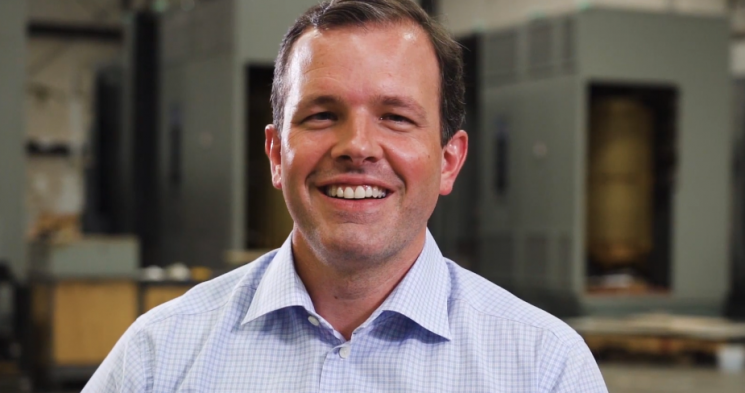
On December 24 (local time), The Wall Street Journal (WSJ) reported that "Fiberbond, a small business in Minden, Louisiana, is being acquired for $1.7 billion (2.4562 trillion won), and a total of $240 million (346.752 billion won) in bonuses is being distributed to its 540 employees."
According to the report, Graham Walker, CEO of Fiberbond, included a condition in the acquisition agreement to allocate 15% of the sale proceeds to employees during the process of selling the company to Eaton, a global power management corporation, earlier this year. As a result, since June, 540 full-time employees have begun receiving a total of $240 million (346.752 billion won) in bonuses.
Average Bonus of 640 Million Won... Local Businesses Revitalized by Bonus Payouts
The average bonus received by employees is approximately $443,000 (640 million won), which will be paid in installments over the next five years, contingent on continued employment. Long-term employees are known to receive larger amounts. For employees aged 65 or older who are nearing retirement, the plan allows them to receive the full amount without any tenure requirement.
Employees have used their bonuses to pay off mortgages, purchase vehicles, cover college tuition, and prepare retirement funds. Some have also spent the money on family vacations. The influx of these funds has invigorated the local economy in Minden, a small city with a population of about 12,000.
Lesia Key, 51, who has worked at Fiberbond for over 30 years, said she was moved to tears after receiving her bonus envelope and seeing the amount. She joined the company in 1995, earning an hourly wage of $5.35 (7,700 won) at the time. After working in various departments, she now leads the facilities management team. Key shared that she was able to pay off her mortgage and fulfill her long-held dream of opening a clothing store in a nearby city thanks to the bonus.
WSJ noted, "While there are cases where employees share in profits during a company sale or IPO, it is rare for regular employees without equity to receive such large cash bonuses," adding, "This is what makes the Fiberbond case so remarkable."
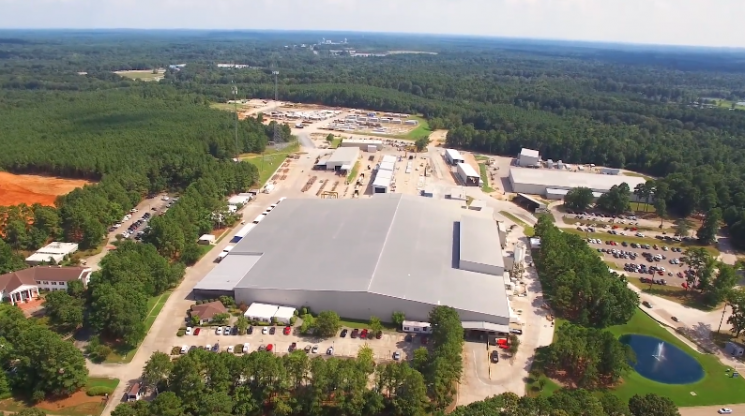
Fiberbond was founded in 1982 by Walker's father, Claude Walker. The company expanded its business, benefiting from the growth of the telecommunications and power infrastructure markets, but faced significant crises due to a factory fire in 1998 and the bursting of the dot-com bubble. The company had to reduce its workforce from 900 to 320 and freeze salaries.
Subsequently, Graham Walker and his brother took over management, selling assets and reducing debt to restructure the company.
In 2013, Fiberbond entered the market for power infrastructure structures for data centers. Although the company's outlook improved at that time, the business environment remained volatile. Walker asked employees to trust the management, promising that when the company achieved results, employees would be rewarded.
After the COVID-19 pandemic in 2020, a surge in demand for cloud and artificial intelligence (AI) led to rapid revenue growth, with sales increasing by about 400% over the past five years.
Insisting on 15% of the Sale Proceeds... "I Didn't Want to Feel Ashamed"
During acquisition negotiations, Walker demanded from all potential buyers that "15% of the sale proceeds must go to the employees." He explained that while there was no particular reason for the exact percentage, he believed it should be more than 10%.
Walker stated that his decision to distribute bonuses was influenced by his sense of responsibility to the community and his personal conscience. He said, "I would have felt ashamed to go to the local grocery store if I hadn't shared with the employees." After consulting with tax experts, he concluded that having the buyer pay the bonuses was the most efficient structure in terms of taxes and employee retention.
Nick Cox, mayor of Minden, said, "There has been a noticeable increase in spending at local stores," adding, "As the largest employer in the area, Fiberbond's bonuses have had a positive impact on the entire city."
Walker is scheduled to leave the company at the end of this year. He said, "Someday, I hope to hear stories about how this money changed the lives of our employees."
© The Asia Business Daily(www.asiae.co.kr). All rights reserved.

![Clutching a Stolen Dior Bag, Saying "I Hate Being Poor but Real"... The Grotesque Con of a "Human Knockoff" [Slate]](https://cwcontent.asiae.co.kr/asiaresize/183/2026021902243444107_1771435474.jpg)















