The Korea Employers Federation (KEF) expressed concern on the 26th, stating that the Central Labor Relations Commission's decision to suspend mediation in the arbitration cases filed by subcontractor unions of Hyundai Steel and Hanwha Ocean against the parent companies "will have a very negative impact."
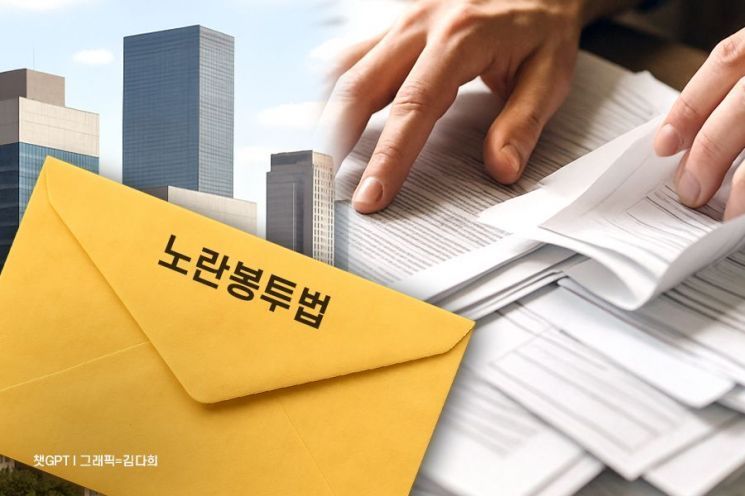
In a statement released the same day, the KEF said, "With only two months left until the implementation of the so-called Yellow Envelope Act (the amendment to Articles 2 and 3 of the Trade Union and Labor Relations Adjustment Act), and with the enforcement ordinance currently under legislative notice, the recognition of labor dispute mediation by subcontractor unions against parent companies is deeply concerning."
The subcontractor unions at Hyundai Steel and Hanwha Ocean had applied for mediation to the Central Labor Relations Commission, claiming that the parent companies were refusing to negotiate. In contrast, both companies rejected the demands for negotiation and did not attend the mediation meetings. When the commission decides to suspend mediation, the unions obtain the legal right to strike.
The KEF pointed out, "In the cases of Hyundai Steel and Hanwha Ocean, there are ongoing legal disputes regarding the appropriate counterpart for collective bargaining with the subcontractor unions," and added, "Despite the need for a final court ruling to determine the bargaining counterpart, the hasty decision to suspend mediation has undermined judicial stability."
The KEF continued, "This decision has effectively rendered the process of unifying bargaining channels meaningless." The federation explained, "When a bargaining representative union (the parent company union) already exists, separate collective bargaining can only proceed if the bargaining unit is divided. Since there was no such division at Hyundai Steel and Hanwha Ocean, the subcontractor unions cannot legitimately be the parties applying for mediation."
The KEF further stated, "The Labor Relations Commission is a key institution that must first determine whether the parent company qualifies as an employer and whether bargaining units should be divided when the revised union law is implemented." The federation criticized, "This unreasonable decision raises doubts about fair judgment and will significantly undermine companies' willingness to comply." It also added, "The Central Labor Relations Commission must not repeatedly make unreasonable decisions by accepting only one side's requests."
© The Asia Business Daily(www.asiae.co.kr). All rights reserved.












