"Highly Skilled, High-Wage Foreign Workers to Be Prioritized"
Regulation to Take Effect February 27 Next Year
U.S. Companies Advise Employees Against International Travel
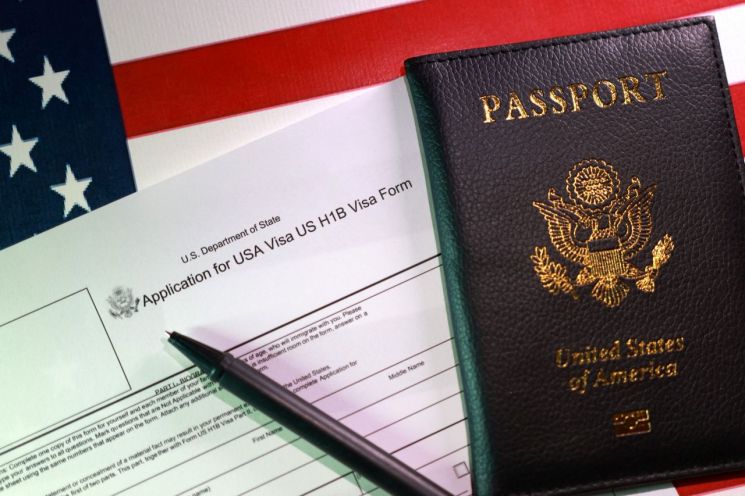
The administration of U.S. President Donald Trump announced on December 23 (local time) that it will change the operation of the so-called "specialty occupation visa," known as the H-1B visa, from a lottery system to a selection process that prioritizes high-wage workers.
The U.S. Department of Homeland Security (DHS) stated on its website that day, "We are transitioning the H-1B visa allocation to prioritize highly skilled and high-wage foreign workers." This regulation will take effect on February 27 of next year.
DHS added, "The core of this regulation is to abolish the existing lottery system, which randomly selected visa recipients, and replace it with a selection process that gives greater weight to applicants with higher skill levels and wage levels."
The H-1B visa applies to specialty occupations in the fields of science, technology, engineering, and mathematics (STEM), and is commonly referred to as the specialty occupation visa. A total of 65,000 are issued annually, with an additional 20,000 allocated to those holding master's or doctoral degrees in the United States, resulting in a total of 85,000 visas granted each year.
This measure is in line with the Trump administration's move to increase H-1B visa fees. Matthew Tragesser, spokesperson for U.S. Citizenship and Immigration Services (USCIS), explained in a statement that day, "This aligns with other major reforms already implemented by the administration, such as the presidential proclamation requiring employers to pay an additional $100,000 (about 140 million won) per application as a visa requirement."
The U.S. Department of Labor has also strengthened wage protection regulations. These measures aim to raise the prevailing wage for H-1B workers. The prevailing wage refers to the minimum wage level determined by the U.S. government based on basic statistical data.
As the United States continues to tighten related regulations, confusion among visa applicants is expected to intensify. According to U.S. business media outlet CNBC, the U.S. Embassy in India began verifying social networking service (SNS) accounts for all H-1B and H-4 visa applicants starting on December 15. During this process, there have been confirmed cases where individual visa interviews have been delayed for several months.
Experts believe that as visa regulations become stricter, companies are likely to reduce their sponsorship of H-1B visas. Manish Daftari of immigration consulting firm Vialto Partners stated, "If the regulations are implemented, companies will reduce their H-1B sponsorships."
According to the U.S. Citizenship and Immigration Services, Amazon is the company that has sponsored the most H-1B visas, followed by Meta, Microsoft, Tata Consultancy Services (TCS), and Google. In fact, according to U.S. public broadcaster NPR and others, companies such as Apple and Google have advised employees holding H-1B and other employment visas to refrain from unnecessary travel and leaving the country for the time being.
However, the Financial Times (FT) pointed out that President Trump is simultaneously taking a dual approach by introducing the so-called "Gold Card" visa program for the wealthy. The Gold Card program is a fast-track version that allows individuals to obtain permanent residency by donating $1 million (about 1.47 billion won) to the U.S. government. Unlike existing investment immigration programs, it eliminates complex steps such as employment creation requirements and phased permanent residency grants.
© The Asia Business Daily(www.asiae.co.kr). All rights reserved.
!["The Woman Who Threw Herself into the Water Clutching a Stolen Dior Bag"...A Grotesque Success Story That Shakes the Korean Psyche [Slate]](https://cwcontent.asiae.co.kr/asiaresize/183/2026021902243444107_1771435474.jpg)
















