National Data Office Releases 2025 Crop Production Survey Results
Government Increases Soybean Stockpile to 60,000 Tons Amid Oversupply Concerns
Apple Production Down 2.6%, Pear Production Up 10.7%
This year, soybean production reached 156,000 tons, marking a 0.8% increase compared to last year. In response to concerns about potential soybean oversupply due to the expansion of paddy field soybean cultivation, the government is increasing its soybean stockpile by 10,000 tons.
The National Data Office announced these findings in its "2025 Confirmed Cultivation Area and Crop Production Survey Results" released on December 24.
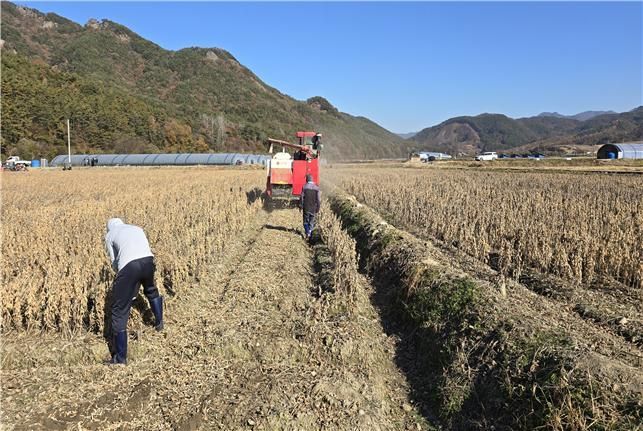
However, the Ministry of Agriculture, Food and Rural Affairs expects that soybean production could reach up to 166,000 tons, considering that the area eligible for the strategic crop direct payment program for paddy field soybeans in 2025 has increased by 8,000 hectares compared to last year.
While implementing the strategic crop direct payment program this year, the Ministry of Agriculture, Food and Rural Affairs has increased the government soybean stockpile for the 2025 harvest by 10,000 tons to 60,000 tons, compared to last year, in order to stabilize the soybean supply and demand in light of concerns about overproduction from expanded paddy field soybean cultivation.
An official from the Ministry of Agriculture, Food and Rural Affairs stated, "We do not anticipate significant supply-demand instability going forward," adding, "We will ensure the smooth progress of the ongoing government soybean procurement, closely monitor the supply-demand situation, and implement appropriate measures as needed."
◆ Apple production down 2.6%, pear production up 10.7% Apple production declined by 2.6% year-on-year to 448,000 tons. Although the area of fruit orchards decreased by 3.7% compared to last year due to varietal changes prompted by climate change and spring wildfires, the reduction in pest and disease damage led to a 1.1% increase in yield per 10 ares. The Ministry of Agriculture, Food and Rural Affairs expects apple storage volumes (for shipments from December to July) to be similar to last year, projecting that there will be sufficient supply available for distribution until the 2026 harvest.
Pear production increased by 10.7% year-on-year to 197,000 tons. Despite a 2.4% decrease in orchard area due to rising labor costs, reduced pest and disease damage and favorable crop conditions during the harvest period led to a 13.4% increase in yield per 10 ares compared to last year.
The Ministry of Agriculture, Food and Rural Affairs also forecasts stable supplies of tangerines and strawberries. According to the Korea Rural Economic Institute’s agricultural outlook, tangerine production is expected to rise by 7.2% year-on-year to 458,000 tons, as damage from fruit splitting and premature fruit drop has decreased and the production of large-sized fruit has increased. In particular, open-field tangerine production is projected at 402,000 tons, up 8.1% from last year, indicating that supply will be sufficient. The cultivation area is estimated to have decreased by 0.8% compared to last year.
For strawberries, favorable winter weather in major production regions and reduced pest and disease damage have resulted in good crop conditions, and December shipments are expected to increase by 4.5% year-on-year. The Ministry of Agriculture, Food and Rural Affairs also expects stable shipment volumes after January, reflecting continued favorable crop conditions.
An official from the Ministry of Agriculture, Food and Rural Affairs stated, "Despite storage volumes for apples being similar to last year, the proportion of large-sized apples is expected to decrease due to spring cold damage, which is likely to drive up prices for premium-grade fruit." The official added, "Until the 2026 apple harvest, the government will expand the supply of apples by designating shipment timing and destinations, and will support stable supply by distributing apples from contract cultivation with the National Agricultural Cooperative Federation according to demand."
© The Asia Business Daily(www.asiae.co.kr). All rights reserved.

















